Geneva

Sexta reunión de la Conferencia de las Partes en el Convenio de Minamata sobre el Mercurio (COP-6)

Geneva, Switzerland, 03 Nov 2025 - 07 Nov 2025
    Información de la reunión

    Programme of work and budget for the biennium 2026–2027

    The Programme of work and budget for the biennium 2026-2027, submitted to COP-6 as information document UNEP/MC/COP.6/INF/38, was updated by the Secretariat based on the COP-6 decisions to guide the work during the intersessional period.

    This publication provides additional information on the work planned for the biennium 2026–2027, including on mandates, background information and rationales, activities and outputs, and costs associated with specific activities.

    La sexta reunión de la Conferencia de las Partes del Convenio de Minamata sobre el Mercurio (COP-6) tendrá lugar en Ginebra, Suiza, del 3 al 7 de noviembre de 2025. Durante la COP-5, la Conferencia de las Partes eligió a Osvaldo Álvarez (Chile) como Presidente de la COP-6.

    Esta página se actualizará a medida que se disponga de nueva información.


    Para consultar los puntos más destacados de la quinta reunión de la Conferencia de las Partes, haga clic en el siguiente enlace.

    Documentos
    Reuniones regionales
    Noticias
    Minamata Background
    From the Executive Secretary
    MC/COP6/2025/76
    | 20 Jun 2025

    Invitation to the Latin America and the Caribbean regional preparatory meeting for the sixth meeting of the Conference of the Parties to the Minamata Convention on Mercury, 3-4 September 2025, Santiago, Chile

    I am pleased to invite your Government to the Latin America and the Caribbean regional preparatory meeting for the sixth meeting of the Conference of the Parties to the Minamata Convention on Mercury (COP-6), scheduled to be held on 3-4 September 2025, in Santiago, Chile.

    Minamata Background
    From the Executive Secretary
    MC/COP6/2025/80
    | 20 Jun 2025

    Invitation to the Eastern European States regional preparatory meeting for the sixth meeting of the Conference of the Parties to the Minamata Convention on Mercury, 16-17 September 2025, Geneva, Switzerland (Observers)

    I am pleased to invite your organisation to the Eastern European States regional preparatory meeting for the sixth meeting of the Conference of the Parties to the Minamata Convention on Mercury (COP-6), scheduled to be held on 16-17 September 2025, in Geneva, Switzerland.

    Minamata Background
    From the Executive Secretary
    MC/COP6/2025/75
    | 20 Jun 2025

    Invitation to the Eastern European States regional preparatory meeting for the sixth meeting of the Conference of the Parties to the Minamata Convention on Mercury, 16-17 September 2025, Geneva, Switzerland

    I am pleased to invite your Government to the Eastern European States regional preparatory meeting for the sixth meeting of the Conference of the Parties to the Minamata Convention on Mercury (COP-6), scheduled to be held on 16 and 17 September 2025, in Geneva, Switzerland.

    Minamata Background
    From the Executive Secretary
    MC/COP6/2025/73
    | 20 Jun 2025

    Invitation to the Asia and the Pacific regional preparatory meeting for the sixth meeting of the Conference of the Parties to the Minamata Convention on Mercury, 23-24 September 2025, Bangkok, Thailand

    I am pleased to invite your Government to the Asia and Pacific regional preparatory meeting for the sixth meeting of the Conference of the Parties to the Minamata Convention on Mercury (COP-6), scheduled to be held on 23-24 September 2025, in Bangkok, Thailand.

    Minamata Background
    From the Executive Secretary
    MC/COP6/2025/78
    | 20 Jun 2025

    Invitation to the Asia and the Pacific regional preparatory meeting for the sixth meeting of the Conference of the Parties to the Minamata Convention on Mercury, 23-24 September 2025, Bangkok, Thailand (Observers)

    I am pleased to invite your organisation to the Asia and Pacific regional preparatory meeting for the sixth meeting of the Conference of the Parties to the Minamata Convention on Mercury (COP-6), scheduled to be held on 23-24 September 2025, in Bangkok, Thailand.

    Minamata Background
    De la Secretaria Ejecutiva
    MC/COP6/2025/60
    | 27 Mayo 2025

    Invitación de observadores a la sexta reunión de la Conferencia de las Partes del Convenio de Minamata sobre el Mercurio

    Tengo el honor de invitar a su Gobierno u organización a la sexta reunión de la Conferencia de las Partes del Convenio de Minamata sobre el Mercurio (COP-6), que se celebrará del 3 al 7 de noviembre de 2025 en el Centro Internacional de Conferencias de Ginebra (CICG), 17 rue de Varembé, Ginebra,

    Minamata Background
    De la Secretaria Ejecutiva
    MC/COP6/2025/59
    | 05 Mayo 2025

    Invitación de Partes a la sexta reunión de la Conferencia de las Partes del Convenio de Minamata sobre el Mercurio

    Tengo el honor de invitar a su gobierno a la sexta reunión de la Conferencia de las Partes del Convenio de Minamata sobre el Mercurio (COP-6), que se celebrará del 3 al 7 de noviembre de 2025 en el Centro Internacional de Conferencias de Ginebra (CICG), 17 rue de Varembé, Ginebra, Suiza.

    COP-5
    Comunicado de prensa
    05 Nov 2023

    La quinta reunión de la Conferencia de las Partes en el Convenio de Minamata da pasos cruciales en su misión de eliminar la contaminación por mercurio

    Entre las decisiones adoptadas en la quinta reunión de la Conferencia de las Partes, estas definieron nuevas fechas para la eliminación progresiva de los productos con mercurio añadido, incluidos los cosméticos, estrecharon lazos con los Pueblos Indígenas, avanzaron en la primera evaluación de la

    Unpacking COP-6: regional groups

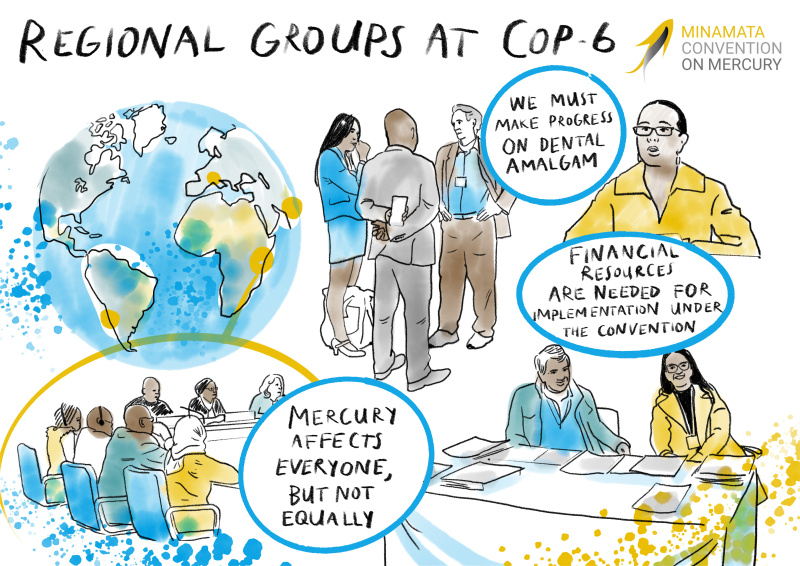
    regional groups

    Regional groups play a central role in shaping negotiations and building a common understanding ahead of each COP. Their preparatory discussions help Parties align positions, identify shared priorities, and ensure that national perspectives are reflected in regional approaches. Thanks to financial support from Switzerland, all regional preparatory meetings convened successfully, and dedicated negotiations and co-chairs training, funded by Germany, strengthened delegates’ capacity to engage effectively in the process. 

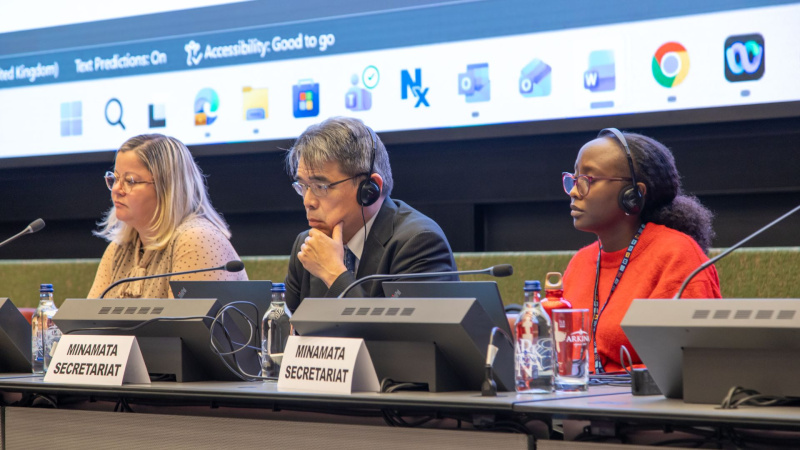
    “At COP-6 Parties were working in a very collegial atmosphere, which proves that multilateralism works,” noted Executive Secretary Monika Stankiewicz. The constructive engagement of regional groups contributed significantly to the spirit of cooperation that defined the week and supported progress across key agenda items.


    To Top

    Knowledge labs (Friday 7 November)

    Knowledge Lab

    On the last day of COP-6, two final knowledge labs concluded a week of information sharing and collaboration. The sessions highlighted practical advances in mercury waste management and in mercury reduction in artisanal and small-scale gold mining (ASGM), reflecting the Convention’s spirit of cooperation across sectors and regions, at both local and global levels.

    “Mercury Wastes Management in Countries: Latest Advances and Experience in Protecting Human Health and the Environment”, was organized by the UNEP Global Mercury Partnership together with the Secretariat of the Basel, Rotterdam and Stockholm (BRS) Conventions. The session showcased the value of harmonized approaches across multilateral environmental agreements, with speakers sharing recent tools supporting the environmentally sound disposal of mercury-containing waste under both the Minamata and Basel Conventions. The discussion featured examples of projects advancing mercury phase-out and capacity-building initiatives, including training materials jointly developed by the Minamata and BRS Secretariats with the Global Mercury Partnership’s Waste Management area of work.

    “Mercury Reduction in Artisanal Gold Mining Using Local Knowledge and Practical Strategies – From Data to Action”, hosted by the Alliance for Responsible Mining (ARM), focused on the importance of stakeholder-driven solutions in reducing mercury use in ASGM. Speakers emphasized the need for technological innovation and both technical and local knowledge-sharing mechanisms. Data transparency and reliability were also identified as essential to support mercury-free solutions centered on community needs and priorities, underlining the importance of stakeholder engagement for both practitioners and policymakers in advancing effective mercury mitigation strategies.

    Taking place in parallel with the negotiations and decisions adopted by the Parties to address mercury pollution, these final knowledge labs helped wrap up the last day of COP-6 with a strong message of cooperation, innovation and inclusivity: key ingredients in the global efforts to make mercury history. Learn more about all knowledge labs here.

    To Top

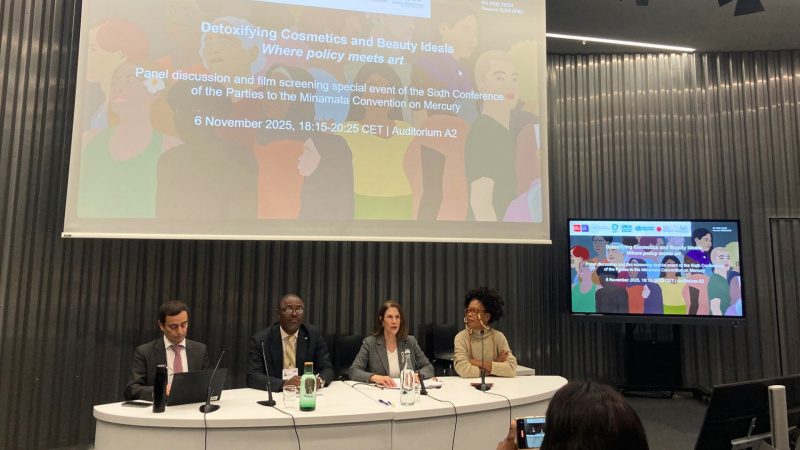
    Detoxifying Cosmetics​ and Beauty Ideals: Movie screening and panel discussion

    Cosmetics Special Event
    © Global Mercury Partnership

    On Thursday 6 November, the final special event of COP-6, Detoxifying Cosmetics and Beauty Ideals, brought together policymakers, artists and experts at the Graduate Institute in Geneva to explore how art and dialogue can drive change in addressing mercury use in cosmetics. Organized by the Global Mercury Partnership in collaboration with the Graduate Institute, World Health Organization (WHO) and Biodiversity Research Institute, the session examined the health, environmental and social dimensions of toxic beauty standards and their links to mercury pollution.

    The event featured representatives of the Minamata Convention alongside photographer Angélica Dass, UNEP’s Ludovic Bernaudat, WHO’s Serge Molly Allo’o Allo’o, and filmmaker Adama Bineta Sow, who shared perspectives on promoting safe and more equitable approaches to beauty and self-image. Bernaudat emphasized the importance of keeping mercury and all harmful chemicals out of cosmetics, noting that when societies face the health impacts caused by cosmetic use, they have already failed to address the core issue of toxic beauty ideals that make people use these products in the first place.

    The discussion was followed by the screening of "Timpi Tampa", a Senegalese film directed by Sow that uses humor and emotion to challenge colorism and celebrate diversity, which was met with strong engagement from a full audience. The director explained that her inspiration came from observing the growing use of skin-lightening products in Senegal and her desire to encourage women to appreciate their natural beauty and not feel the need to change and poison their bodies.

    The special event illustrated how art can complement policy efforts and serve as a powerful medium for awareness-raising and social change, demonstrating that when words fall short, art can carry the message forward.

    Learn more about the event.

    To Top

    Knowledge labs (Thursday 6 November)

    planetGOLD

    The third day of sessions at COP-6 showcased six Knowledge Labs that spotlighted innovation, collaboration and inclusion in tackling mercury pollution, from data-driven chemicals management to community-led monitoring and case studies from across the globe.

    Parties Perú and Bangladesh Present Prototypes for Mercury-Free Dentistry in the Americas and Asia” organized by the World Alliance for Mercury-Free Dentistry, discussed the issues of oral health and mercury in dental treatments. With strong NGO engagement, the session showcased country examples in eliminating dental amalgam: Perú’s new legislation and Bangladesh’s multi-sectoral collaboration involving military, dental schools and civil society.

    The UNEP session “Fostering the Integration of Chemicals Pollution into National Biodiversity Strategies and Action Plans (NBSAPs)” addressed the interlinkages between chemical wastes and biodiversity management, featuring contributions by Claudia Vega and Aileen Mioko Smith. With high attendance, the knowledge lab shared guidance, country experiences and feedback on integrating and mainstreaming pollution into National Biodiversity Strategies and Action Plans under the Convention on Biological Diversity and Kunming-Montreal Global Biodiversity Framework.

    In “Informing Integrated Chemicals Management: Data Needs and Experience from Mercury”, hosted by the UNEP Chemicals and Health Branch and the Intergovernmental Science-Policy Panel on Chemicals, Waste and Pollution, speakers examined how data can support integrated chemicals management. With opening remarks from Global Environment Facility’s Anil Sookdeo, the Basel, Rotterdam and Stockholm Conventions Secretariat's Abiola Olanipekun, and Minamata Convention Secretariat’s Brenda Koekkoek, the panel emphasized the need for data generation, consistency and comparability, called for global collaboration on monitoring, data generation use, and strengthened capacities to support sound management of chemicals and waste.

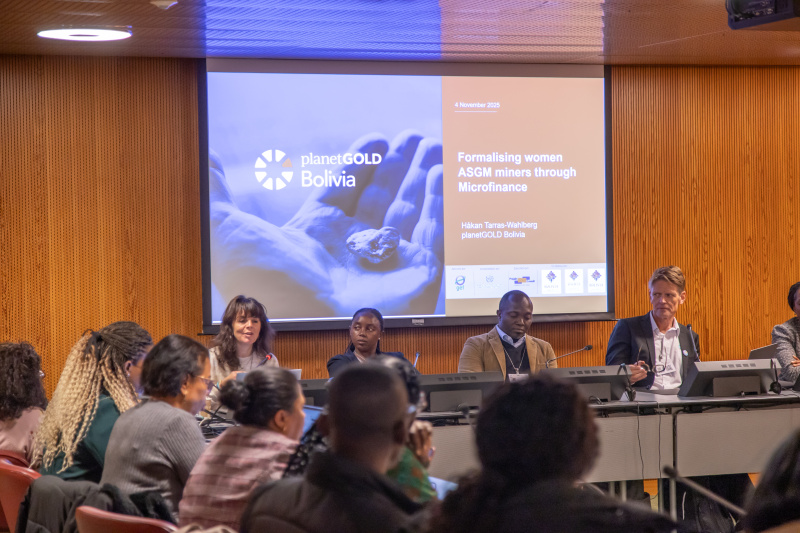
    The planetGOLD programme and Natural Resources Defense Council, together with the World Bank’s AEHPMP, co-hosted “Advancing Gender-Inclusive Solutions in ASGM”. Recognizing the disproportionate impacts of mercury on women, the discussion focused on empowering women in artisanal and small-scale gold mining (ASGM). Speakers from Bolivia, Ghana and Tanzania shared tools, strategies and stories of partnering with women miners to improve opportunities and working conditions through capacity building and technical support for mercury-free technologies.

    Later in the evening, “Indigenous Peoples and Mercury Monitoring: Experiences in Promoting Human Rights and Co-production of Knowledge Approaches in the Arctic and the Amazon” organized by the Inuit Circumpolar Council and Federación Nativa del Río Madre de Dios y Afluentes, highlighted community-led mercury monitoring initiatives. Speakers underscored the importance of safeguarding Indigenous knowledge and ancestral understanding as integral to effective policy and the continuation of traditional ways of life. A key topic was the need for stronger collaboration among authorities, scientists and healthcare professionals to effectively communicate the dangers of mercury exposure. The session emphasized how these efforts can advance human rights, environmental justice and mercury governance.

    At the same time, “GEF-UNDP Experiences on the Elimination of Mercury from Consumer and Healthcare Products” was hosted by the United Nations Development Programme. Representatives from China, Ecuador and Ghana, with insights from several other regions, presented case studies on phasing out mercury devices, promoting safe and accessible alternatives to mercury, and managing mercury waste to protect human health and the environment.

    To Top

    Recognizing the dedication of Parties and delegates at COP-6

    SIP special recognition
    SIP special recognition

    Throughout the COP-6 week, the Secretariat of the Minamata Convention on Mercury has extended its appreciation for the exceptional dedication and support demonstrated by Parties and delegates. 

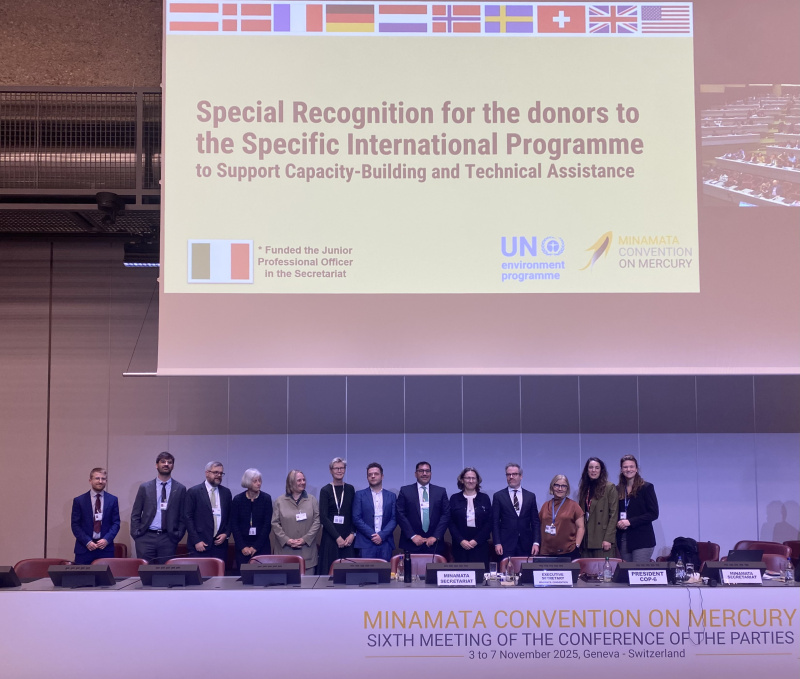
    On Monday 3 November, the Secretariat expressed its gratitude to the donors of the Specific International Programme (SIP) to support Capacity-Building and Technical Assistance (pictured above): Austria, Denmark, France, Germany, the Kingdom of the Netherlands, Norway, Sweden, Switzerland, the United Kingdom of Great Britain and Northern Ireland, and the United States of America. It was also acknowledged the generous support of the Government of Italy, which funded a Junior Professional Officer position within the Secretariat that was instrumental in supporting the SIP. 

    These donors have collectively contributed USD 8.4 million, enabling 34 projects to be approved and implemented across 31 countries through four rounds of funding. A significant number of approved projects have focused on mercury-added products, the environmentally sound management of mercury waste, national regulatory frameworks, and awareness-raising activities. The work of the SIP remains an essential component of the effective implementation of the Minamata Convention.

    On Tuesday 4 November, the Secretariat recognized the Parties that have already submitted their second full national reports, well ahead of the 31 December 2025 deadline. Recognition was accorded to Austria, Burundi, Comoros, Denmark, the Dominican Republic, Mongolia, Sweden, Togo and Uganda. The high reporting rate under the Minamata Convention is a source of great pride for this young multilateral environmental agreement and reflects the continued commitment of its Parties.

    Also instrumental to the effective implementation of the Convention are the co-chairs of its bodies, who were recognized on Wednesday 5 November. The co-chairs of the SIP Governing Board, Andrew Clark and Obed Meringo Baloyi, review and approve projects for the Specific International Programme.

    In the Open-ended Scientific Group, co-chairs Dominique Bally Kpokro and Alexandra Steffan, and previously former co-chair Terry Keating, inform the Convention on mercury research and bridges the gap between science and policy. The Effectiveness Evaluation Group co-chairs, Linroy Christian and Katerina Sebkova, and previously former co-chair Itsuki Kuroda, assess the overall effectiveness of the Convention at the global level.

    The Implementation and Compliance Committee was also acknowledged, with special appreciation extended to chair Yunfang Hu and vice-chair Eva Salplachtova, and previously former vice-chair Musa Kuzumila Ngunila, for their leadership in facilitating the smooth integration of the Convention by Parties and acknowledging their respective national capabilities and circumstances.

    The Secretariat of the Minamata Convention believes that it is important to celebrate the ongoing dedication of Parties and delegates, and looks forward to acknowledge and celebrate even more achievements in the future. See photos from the special recognition occasions on our Flickr account.

    To Top

    Knowledge labs (Wednesday 5 November)

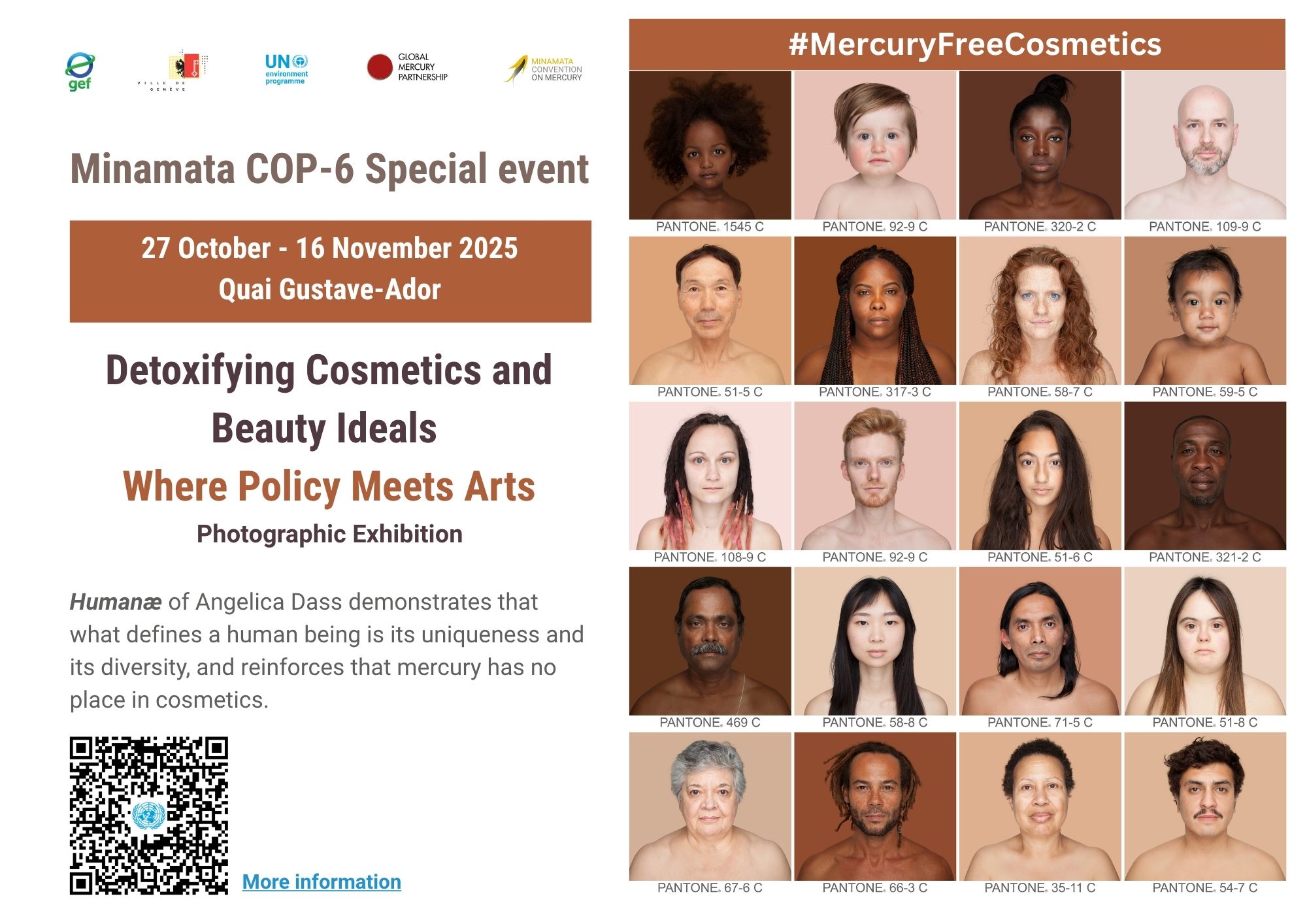
    Detoxifying Cosmetics and Beauty Ideals

    The second day of Knowledge Labs at COP-6 featured six sessions covering a wide range of topics spanning science, policy and art, aimed at raising awareness, sharing tools and fostering collaboration to help tackle mercury pollution.

    The session “Detoxifying Cosmetics and Beauty Ideals: Global Voices and Solutions to Reduce Demand for Mercury and Skin Lightening”, organized by UNEP Chemicals and Health Branch, brought together speakers from governments and the private sector. Participants discussed how businesses can empower consumers to make informed, safe, and equitable choices. Artist Angélica Dass, creator of the Humanae photo exhibition, discussed her creative process and how art can serve as a catalyst for change, illustrating the diversity of human skin tones and challenging discriminatory beauty standards and colorism-fueled cosmetic practices. 

    In “Minamata Disease: Bearing Witness through Photography – Lessons from Minamata for Tomorrow’s Challenges”, organized by the Minamata Photographers’ Eye Project, Aileen Mioko Smith shared her experience documenting the victims of mercury pollution in Japan’s Kumamoto Prefecture. Showcasing the photo exhibition displayed at the venue, she highlighted the importance of using art for activism, motivating action in legislation and management of chemical pollutants, and helping prevent future mercury-related tragedies around the world. 

    The session “How Partnerships and Research Infrastructures Enhance Implementation of the Minamata Convention”, organized by the Czech Republic, RECETOX, and Masaryk University, showcased innovative tools supporting national implementation of the Convention, including a real-time mercury data platform, population exposure and risk mitigation tools, and an open-access research infrastructure for laboratories and monitoring networks. Speakers emphasized the importance of strong links between scientific research and policymaking, highlighting the need for cohesive data frameworks to support effective monitoring and implementation.

    Building the Evidence: Linking Human and Biota Mercury Monitoring under the Minamata Convention”, co-hosted by the Open-ended Scientific Group, Jožef Stefan Institute, Biodiversity Research Institute, and Dartmouth College, presented findings on mercury monitoring in humans and biota, highlighting how harmonized monitoring efforts can provide complementary evidence to evaluate the Convention’s effectiveness and inform efficient global mercury management strategies. 

    In “Shaping Action: Confronting the Illegal Mercury Trade”, organized by the Environmental Investigation Agency (United States), speakers examined regional experiences in addressing illicit mercury trade and use. The discussion underlined the importance of monitoring online platforms and the need for reducing demand for mercury compounds, particularly in artisanal and small-scale gold mining (ASGM), to help prevent illegal mercury flows. 

    The Secretariat of Indigenous Health of the Brazilian Ministry of Health launched the “Technical Manual for the Care of Indigenous Peoples Exposed to Mercury: A Health-Based Approach Rooted in Rights and Territory”, guiding health services in caring for Indigenous Peoples exposed to mercury. The session emphasized the urgent need for coordinated measures on mercury monitoring to reduce the impacts on health and uphold the rights to life and health of impacted communities.
     

    To Top

    Launch of the Women Caucus of the Minamata Convention on Mercury

    women caucus

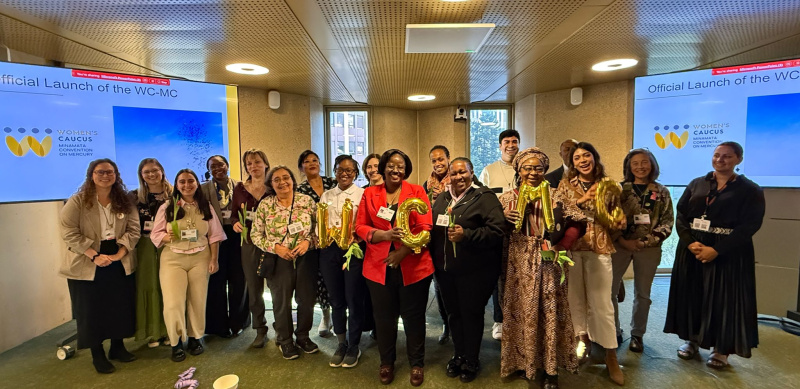
    A milestone moment took place today at #MinamataCOP6 with the official launch of the Women’s Caucus of the Minamata Convention on Mercury, a new space to strengthen the participation and leadership of women in the Convention’s work.

    Co-organized by the Geneva Environment Network (GEN) and co-convened by Women4Biodiversity and the MSP Institute, with the support of the Minamata Convention Secretariat, the event gathered delegates, experts, and advocates from around the world.

    The Women’s Caucus is a space for advancing the equality and empowerment of women within the implementation of the Minamata Convention on Mercury. It provides a self-organized framework for collective action guided by shared experiences and perspectives on preventing women’s exposure to mercury and driving positive change for women in mercury-related decision-making processes.

    The Caucus will work to ensure that women’s experiences, expertise and leadership shape a new era for mercury and chemicals governance through a collaborative and integrated approach. 

    Watch the recording of the event on YouTube.

    To Top

    Inspiring the next generation: Fernando Trujillo meets Ecolint students

    Ecolint

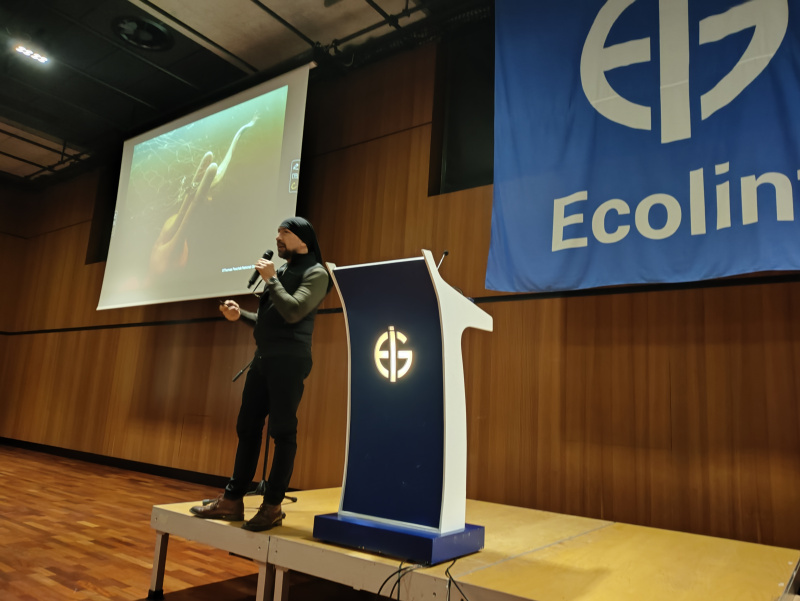
    As part of his activities around the Minamata Convention COP-6, National Geographic Explorer and conservation scientist Fernando Trujillo spent the day with students from the International School of Geneva (Ecolint), visiting both the Nations and La Châtaigneraie campuses. Through three lively sessions, he reached around 450 students, taking them on a journey from his early days as a student to his life’s mission protecting the Amazon and its pink river dolphins.

    With powerful storytelling, Trujillo shared how science, passion, and perseverance can help change the world. He described pink dolphins as sentinels of the Amazon, warning of the threats facing ecosystems and people. These unique and endangered species are increasingly at risk due to habitat degradation, climate change, and mercury pollution. He spoke about the impacts of these pressures and how the Minamata Convention works to reduce such contamination.

    Drawing from more than 80 river expeditions and over 90,000 kilometres of travel through South American rivers, Trujillo encouraged students to stay curious and courageous. “We need to connect science with solutions and with people,” he said, emphasizing the importance of working with local communities and offering them sustainable alternatives. His message was one of hope, passion, humility, teamwork, and discipline, and a call to action: Don’t be passive. Don’t just watch this world, be part of it. Engage. You can make a difference”.

    To Top

    Knowledge labs (Tuesday 4 November)

    Knowledge lab

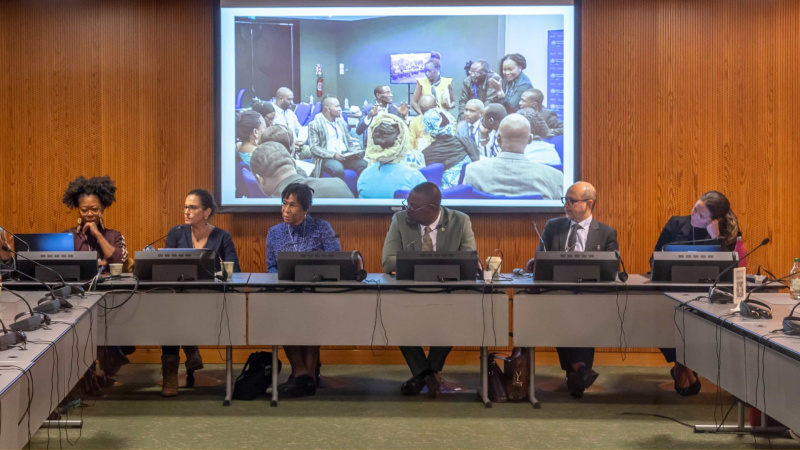
    On Tuesday, the Knowledge Labs began their series of sessions at COP-6, bringing together governments, organizations, and civil society participants to engage in 45-minute exchanges and showcase their work supporting the implementation of the Minamata Convention. 

    The day opened between Plenary sessions with “From Science to Policy – Integrating Data for the First Effectiveness Evaluation”, organized by the Open-Ended Scientific Group and the Minamata Convention Secretariat. With opening remarks by Brenda Koekkoek, Senior Programme Officer of the Secretariat, who underscored the importance of linking science and policy across Multilateral Environmental Agreements, the session provided an overview of the evaluation process. Speakers also shared findings from the scientific community (MCHgMAP) on mercury trends in air, oceans, and land that will inform long-term decision-making. 

    During the evening slot of the knowledge labs, the Office of the United Nations High Commissioner for Human Rights, in cooperation with IPEN, the UN Special Rapporteur on Toxics and Human Rights, and Mexico, led “Health, Human Rights and Mercury Impacts of ASGM: Prioritising Health Interventions”. With strong participation from NGOs and Indigenous Peoples, the session focused on urgent health impacts of mercury and strategies for prevention, diagnosis and treatment. The panel emphasized the importance of dialogue and the power of information, with particular attention to groups in vulnerable situations, especially women, children and Indigenous Peoples. 

    At the same time, the UN Environment Programme Law Division hosted “InforMEA in Action: Supporting Minamata Convention Implementation through Digital Tools and Legal Transparency”. Participants explored with live demos and real-world cases, how digital tools and legal transparency support the implementation of the Minamata Convention, from aligning laws to interoperability and national reporting. Experts from various Multilateral Environmental Agreements joined to share experiences and highlight how digital governance contributes to mercury reduction and broader environmental benefits. 

    Another session, “Learning from the Past Experience and into the Future: from Minamata High School” was organized by the high school with the Ministry of the Environment of Japan. Students Norimi Motoyama and Mio Iwasaka presented the mercury studies curriculum and a high school survey on awareness and understanding of mercury in the affected community, demonstrating how education can preserve and advance the legacy of Minamata and inspire new generations. 

    One more session, "Mining Impacts Calculator: A Tool for Mercury Impact Assessment in ASGM”, was presented by the Brazil Ministry of Environment and the Conservation Strategy Fund Brazil. The session introduced the Mining Impacts Calculator, an online tool already rolled out in Brazil and Peru that quantifies the social and environmental costs of artisanal gold mining, with a focus on mercury pollution. Through a live demonstration centered on its application in the Amazon region, participants explored how the calculator can serve as a tool for evaluating legal frameworks, tracking policy efficacy, and monitoring the effects of mercury on the environment.

    To Top

    The planetGOLD Programme – Learnings and Looking Ahead

    Planet Gold

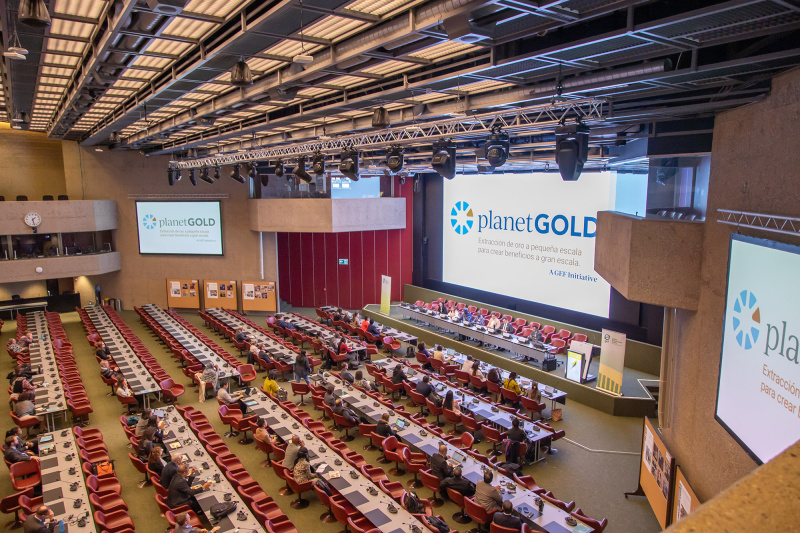
    On Tuesday, 4 November, this special event shared observations and lessons learned from an analysis of the first phase of the planetGOLD programme. The session brought together representatives from participating countries, GEF, UNEP, UNDP and partners to reflect on progress since 2018.

    Speakers outlined how the first phase of planetGOLD, active in nine countries, helped formalize mining operations, promote safer technologies and improve miners’ access to finance and markets. Participants also discussed the challenges that remain, from scaling up mercury-free techniques to strengthening policies and traceability systems that can help miners transition responsibly.

    The event closed with a forward-looking discussion on the upcoming phase of the programme, highlighting its alignment with the Minamata Convention’s goal and its contribution to climate, biodiversity and health benefits.

    Watch the video summary of planetGOLD’s first phase here.

    To Top

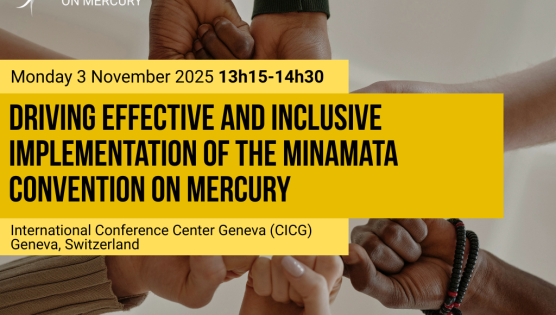
    Driving Effective and Inclusive Implementation of the Minamata Convention on Mercury

    Minamata COP-6

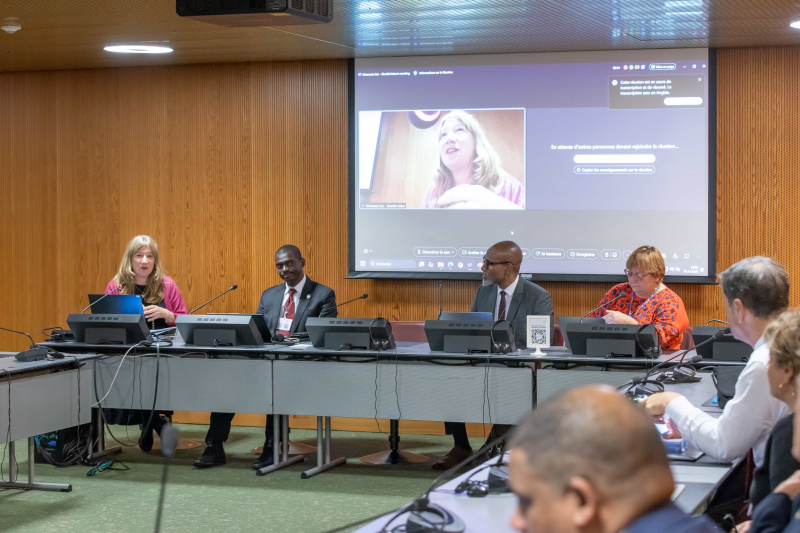
    At the first official day of COP-6, delegates and partners gathered to explore how to accelerate action under the Minamata Convention through cooperation and inclusivity. Opening the session, COP-6 President Osvaldo Álvarez Pérez highlighted that the financial mechanism has been pivotal for the Convention, calling for “resources that are inclusive and aligned with real needs” and for engagement of Indigenous Peoples, women, youth, and local communities.

    After screening the TED talk The Hidden Cost of Buying Gold by Claudia Vega (CINCIA), the speakers shared powerful perspectives, from Vega describing mercury as “the silent toxic,” to UNEP Deputy Executive Director Elizabeth Mrema, who announced the launch of the Women’s Caucus, and Dr. Rüdiger Krech (WHO), who called mercury control “a moral imperative.” Rolph Payet (Executive Secretary, BRS Conventions) underscored the need for collaboration and capacity building, while Fernando Trujillo (Nat GEO Explorer) reminded participants of the Amazon’s fragility and the urgency of national action plans. Chizuru Aoki (GEF) spoke on the financial mechanism and the need for sustainable funding. Youth and Indigenous Peoples representative Alexyss McClellan-Ufugusuku urged the importance of early education and participation rights, while Executive Secretary Monika Stankiewicz reaffirmed that “every COP shows what we can achieve when we work together,” adding that “you give us hope, and I will work hard to meet those expectations.”

    The discussion facilitated the exchange of experiences and featured actions to implement the Minamata Convention that also bring socio-economic, human and environmental benefits. As the Convention moves forward, speakers called for turning words into action and ensuring that no one is left behind in the global effort to make mercury history.

    To Top

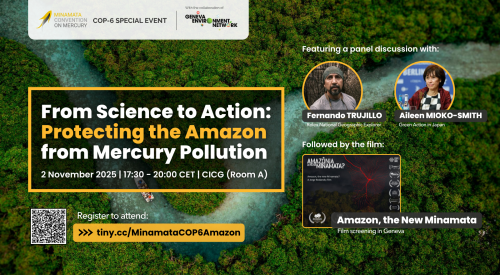
    From Science to Action: Protecting the Amazon from Mercury Pollution

    Amazon

    On the evening before the official opening of the sixth meeting of the Conference of the Parties to the Minamata Convention on Mercury (COP-6), a livestreamed public event was held at the International Conference Centre in Geneva, bringing together participants and guests to focus on the Amazon, a region profoundly affected by mercury pollution. The session, organized with the Geneva Environment Network, connected science, storytelling, and advocacy, linking the legacy of Minamata to the urgent realities facing the Amazon today.

    Executive Secretary Monika Stankiewicz welcomed participants, expressing gratitude for their shared commitment to protecting people and the planet. “I am deeply grateful to all the remarkable speakers who have joined us today. Each of you has inspired me, and I know you will inspire our audience to do everything in our power to make mercury history”, she said.

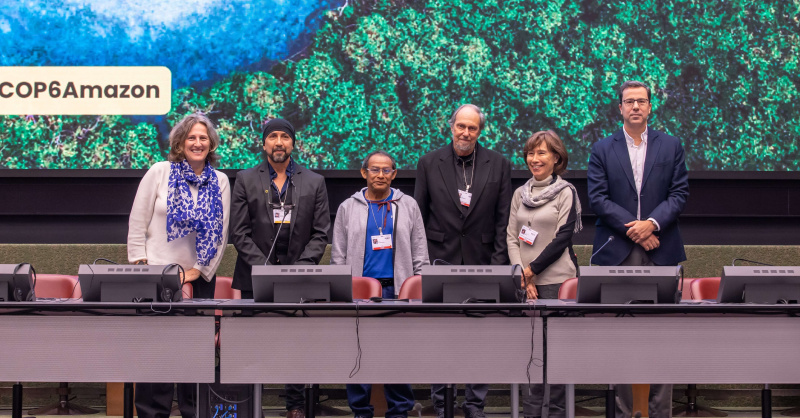
    Conservation scientist and National Geographic Rolex Explorer of the Year Fernando Trujillo shared decades of research revealing alarming levels of mercury in river dolphins, sentinel species that mirror the contamination threatening Amazonian ecosystems and human health. He called for stronger mercury monitoring, gold traceability, and local action in support of the Minamata Convention. Aileen Mioko Smith, Executive Director of Green Action Japan and co-author of Minamata with photographer W. Eugene Smith, reflected on the photographs that exposed the human toll of Minamata disease, reminding the audience that “we still have a long way to go to end mercury pollution.”

    The dialogue was followed by the screening of the documentary Amazon, the New Minamata?, directed by Jorge Bodanzky, which portrays the impacts of mercury on Indigenous Peoples of Brazil’s Tapajós River. Bodanzky shared his nine-year journey documenting the film, and Indigenous leader Jairo Saw Munduruku called for balance and unity: “the Amazon belongs to all of us”, before singing a traditional song for life and harmony.

    Watch the livestream of the panel here.

    To Top

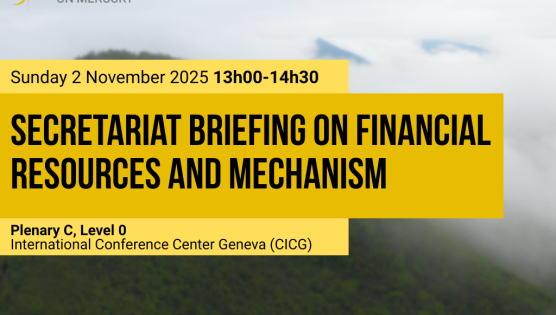
    Secretariat briefing on financial resources and mechanism

    Secretariat briefing

    Ahead of COP-6, the special events began with a dedicated Secretariat briefing on financial resources and mechanism.

    The session opened with remarks by Executive Secretary Monika Stankiewicz, who praised the ongoing efforts of Parties and stakeholders. “When I think about implementation of this Convention, I am so inspired by the work that Parties and a broad range of partners and stakeholders are doing”, she said.

    COP-6 President Osvaldo Álvarez Pérez of Chile underlined that the financial mechanism is central to supporting developing countries in fulfilling their obligations, noting the strong contributions of both the Global Environment Facility (GEF) and the Specific International Programme (SIP), while calling for renewed donor engagement as “the Convention is still young and the coming years will be critical.”

    The Secretariat provided a comprehensive overview of the mechanism’s current status, including updates on GEF and SIP funding, timelines for Party obligations, and preparations for the third review of the financial mechanism. Participants heard reflections on lessons from GEF-8 and SIP projects, and updates on the GEF-9 replenishment process. The interactive discussion closed with a shared sense of purpose: ensuring that the financial mechanism remains responsive, adequately resourced, and effective in enabling all Parties to make mercury history.

    To Top

    Day five: Online events ahead of COP-6

    Friday 17 October

    On Friday 17 October, the final day of online events ahead of COP-6 brought together UN experts, scientists, industry leaders and community advocates to spotlight the real-world challenges of addressing mercury and the opportunities for a healthier, mercury-free future.

    The morning opened with "Managing Mercury in Offshore Oil and Gas: Risks, Challenges, and Opportunities", hosted by the Global Mercury Partnership Oil & Gas Working Group. Speakers examined the significant issue for the offshore oil and gas industry, potentially released through emissions and discharges across the activity life cycle. The session explored the pathways to the marine environment from operations through to decommissioning, discussing challenges and opportunities, including the establishment an Oil & Gas working group under the UNEP Global Mercury Partnership. The presentations and video recording of the session are available.

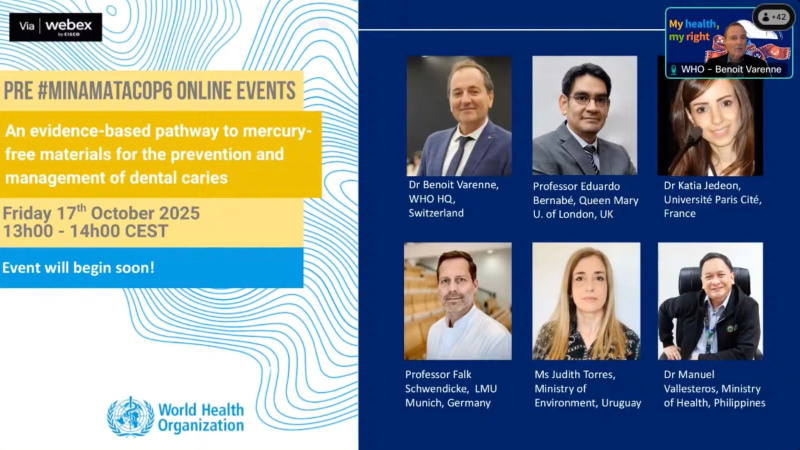
    Midday featured "An Evidence-Based Pathway to Mercury-Free Materials for the Prevention and Management of Dental Caries", organized by the World Health Organization. The event shared new evidence on mercury-free restorative materials and less invasive oral health techniques, exploring the forthcoming WHO Guideline on Environmentally Friendly and Less Invasive Oral Health Care. Speakers also presented country success stories in phasing out dental amalgam, highlighting efforts in line with the implementation of the Minamata Convention, as well as the Global Oral Health Action Plan 2023–2030 and the Bangkok Declaration—No Health without Oral Health. The presentations and video recording of the event are available.

    In the afternoon, the Save Environment and People Agency (SEPA) of Zambia led "Pollution of the Lufupa River by Mercury in Kasempa District". The session presented the impacts of artisanal gold mining on communities, and the ongoing efforts to raise awareness, promote safer mining practices, and call for increased support to protect both people and ecosystems as mining activity expands in the region. The presentations of this event are available.

    The last event of the week was "Evaluating Mercury’s Impact on the Food Chain Across Six Mining Regions in Ghana", organized by Pure Earth in collaboration with the Environmental Protection Agency of Ghana and the UK’s Foreign, Commonwealth and Development Office. The online session presented new study results on mercury contamination in artisanal and small-scale gold mining (ASGM) communities in Ghana, revealing how mercury exposure affects local food chains and human health. The presentations and video recording of this event are available.

    Together, these sessions concluded the week of online events ahead of COP-6, which provided an informal platform for Parties and observers to share knowledge, experiences and innovations, reflecting the Minamata Convention’s commitment to cooperation and shared progress toward a mercury-free future for all.

    To Top

    Day four: Online events ahead of COP-6

    Thursday 16 October

    On Thursday 16 October, the fourth day of online events started with "From Science to Action: Insights from the Minamata Convention and Emerging Priorities", organized by the Intergovernmental Science-Policy Panel on Chemicals, Waste and Pollution (ISP-CWP) and hosted by the Geneva Environment Network. Drawing on lessons from the Minamata Convention, the discussion addressed emerging priorities, especially around metals, metalloids, and minerals, and shared actionable ideas to guide the Panel’s early work. A video recording and further information are available.

    At midday, the Office of the United Nations High Commissioner for Human Rights led "The Impacts of Mercury Exposure on the Rights of Indigenous Peoples and Ways to Address Them", hosted by the Geneva Environment Network as well. The event highlighted the serious threats posed by mercury exposure from artisanal and small-scale gold mining (ASGM) to the health, rights and cultures of Indigenous Peoples. The UN Special Rapporteur on toxics and human rights, Indigenous leaders, and other experts emphasized the importance of meaningful participation of Indigenous Peoples at the COP and in the Convention’s implementation processes. A video recording and further information are available.

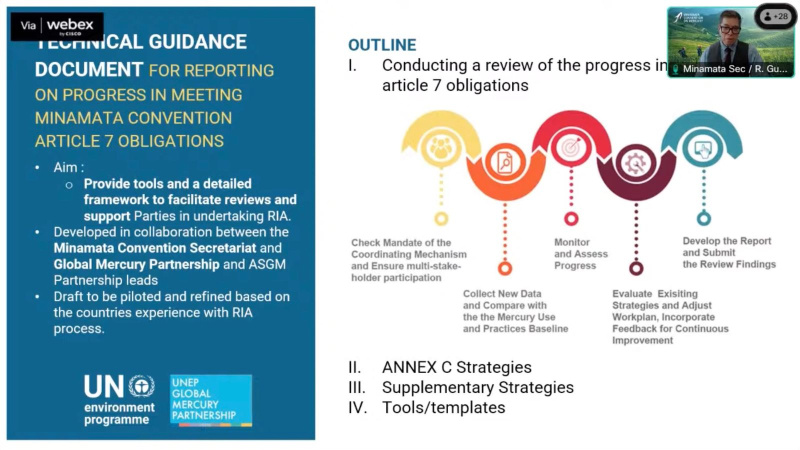
    In the afternoon, the UNEP Global Mercury Partnership presented "Review of the Implementation of Article 7 on ASGM: From Guidance to Implementation". The session outlined progress made since the establishment of ASGM mercury baselines in more than 35 countries, and presented UNEP’s new guidance for the Review of the Implementation of Article 7 (RIA). Participants also explored the first GEF-funded project supporting 23 countries to conduct their RIAs, sharing lessons from both implementing agencies and participating governments. The presentations and video recording of this event are available.

    Later in the day, the International Center for Comparative Environmental Law organized "Measuring the Effectiveness of the Minamata Convention through Legal Indicators", which introduced innovative legal indicators developed by environmental law experts to assess the Convention’s effectiveness in protecting human health and the environment.

    The final event of the day, "Engaging Online Platforms in Enforcing Restricted Product Policies for Mercury-Added Cosmetics", was co-organized by the Sri Lanka Consumer Affairs Authority and the Zero Mercury Working Group. Although the Convention bans the manufacture and trade of mercury-containing skin-lightening products, their production and distribution persist, particularly through online marketplaces. The discussion highlighted case studies (including the Amazon settlement) and explored legal and voluntary measures to strengthen enforcement and prevent the online sale of mercury-added cosmetics. The presentations of this event are available.

    To Top

    Day three: Online events ahead of COP-6

    Wednesday 15 October

    On Wednesday 15 October, The third day of online events ahead of COP-6 opened with "Overview of the Specific International Programme (SIP) and Sharing of Lessons Learned from Completed Projects" organized by the Minamata Convention Secretariat. Speakers, including a Co-Chair of the SIP Governing Board and project managers from Ecuador, North Macedonia, Senegal and Sri Lanka, reflected on the impact of 34 SIP-supported projects worldwide. The presentations and video recording of this session are available.

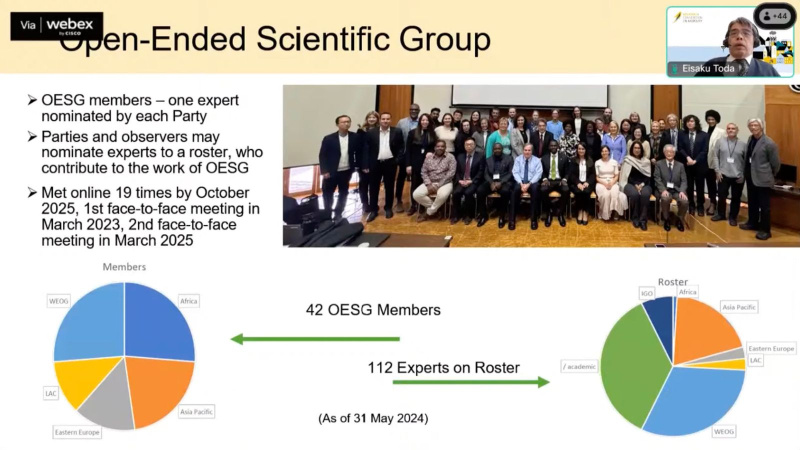
    At midday, the Secretariat hosted "Effectiveness Evaluation: Draft Report of the Open-ended Scientific Group (OESG)". Lead scientists presented findings from ongoing monitoring work across air, biota, and human health, with the OESG members outlining how mercury monitoring data and the development of a scientific report is key for evaluating the Convention’s effectiveness. The presentations and video recording of this event are available.

    In the afternoon, the World Alliance for Mercury-Free Dentistry, in collaboration with the Arab Centre for Environmental Health, organized "Actions and Measures to Phase Out Dental Amalgam by 2030 in the Arab Region". The event explored strategies supported and inspired by the African Proposal to eliminate dental amalgam use, promoting mercury-free dentistry and improving oral health outcomes.

    The following session, "Bridging Generations to #MakeMercuryHistory: New Tools and Partnerships for a Child- and Youth-Responsive Minamata Convention", organized by the Chemicals and Waste Youth Platform, spotlighted the voices of young leaders, UN partners and reseearches. Participants introduced the work to deveop the Minamata Convention for Youth Toolkit and first Global Youth Declaration on Mercury, emphasizing the importance of collaboration and youth engagement to protect children’s health. The presentations of this event are available.

    The day concluded with "An Integrated Approach for the Amazon: International Synergies in Combating Mercury Pollution and Defending Human Rights", organized by the Foundation for Conservation and Sustainable Development Perú. Conducted in Spanish, the session explored proposals for an Amazon Chapter in the Minamata Convention and linkages with the Escazú Agreement and the Convention on Biological Diversity. Speakers underscored the urgent need for coordinated regional and international action to address mercury pollution across the Amazon. The presentations and video recording of this event is available.

    To Top

    Day two: Online events ahead of COP-6

    Tuesday 14 October

    On Tuesday 14 October, the second day of online events ahead of COP-6 continued to provide an informal platform for Parties and observers to exchange experiences and highlight progress in tackling mercury across key sectors.

    The day began with "Managing Mercury Wastes in the Healthcare Sector: From Existing Tools to Inclusive Applications", organized by the UNEP Global Mercury Partnership. The event shared latest tools and case studies illustrating collaborative approaches to reduce mercury exposure and promote environmentally sound waste handling from dental amalgam and mercury containing medical devices. The presentations and video recording of this event are available. 

    The next session, "Multi-country Initiatives Addressing Air Emissions of Mercury", was organized by the Secretariat of the Minamata Convention. The discussion focused on addressing atmospheric emissions of mercury and mercury compounds from specific point sources. The event highlighted initiatives supported by the Global Environment Facility (GEF), including projects targeting emissions from coal-fired power plants and non-ferrous metals production facilities. The presentations and video recording of this event are available.

    In the afternoon, the FDI World Dental Federation (FDI) and the International Association for Dental Research (IADR) co-hosted "Dental Amalgam Phase Down: Alternatives, Access, and Implementation Realities". The session examined the shift from dental amalgam to alternative restorative materials, assessing their performance, accessibility and affordability. Speakers from government, research and clinical sectors discussed the latest updates on dental amalgam and alternative restorative materials. The presentations and video recording of this event are available.

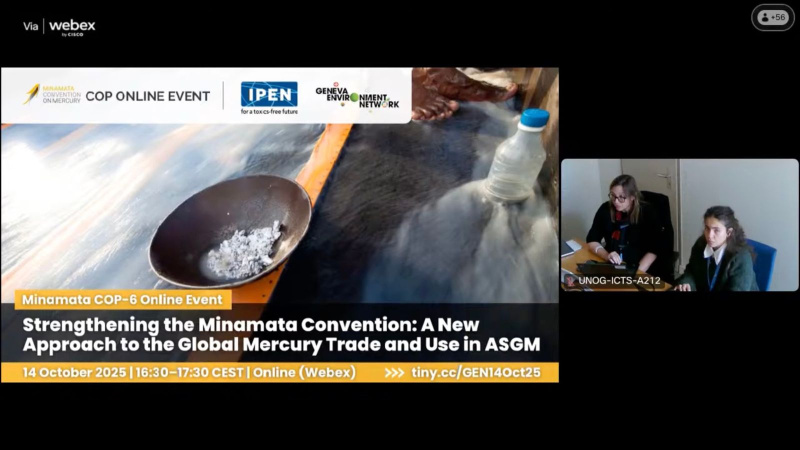
    The final event of the day, "Strengthening the Minamata Convention: A New Approach to the Global Mercury Trade and Use in ASGM", was organized by the International Pollutants Elimination Network (IPEN). The webinar explored the effects of primary mercury mining and legal mercury trade, with a particular focus on mercury use in artisanal and small-scale gold mining (ASGM). Presenters shared new biomonitoring data from Indigenous communities in Peru and Nicaragua, underscoring the human and environmental impacts of mercury use in ASGM.

    To Top

    Day one: Online events ahead of COP-6

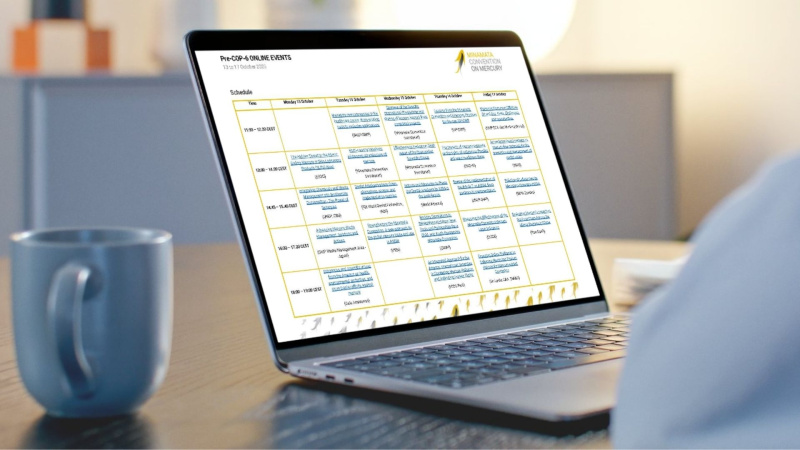
    Schedule

    The week of online events leading up to the sixth meeting of the Conference of the Parties to the Minamata Convention on Mercury (COP-6) began on Monday 13 October, with a full programme of discussions from different regions, partners and stakeholders highlighting global efforts to address mercury pollution.

    The day opened with "The Hidden Threat in the Mirror: Ending Mercury in Skin-Lightening Products (SLPs) Now!", organized by the Environment and Social Development Organization (ESDO) and the Asian Center for Environmental Health. With opening remarks by members of the Secretariat of the Minamata Convention, the inaugural event drew attention to the urgent need to eliminate mercury use in skin-lightening products and showcased new research and collaborative initiatives. The presentations of this event are available.

    This was followed by "Integrating Chemicals and Waste Management into Biodiversity Conservation", organized by UNEP and the Convention on Biological Diversity. The session focused on how chemicals and waste management can strengthen biodiversity conservation, highlighting the value of synergy across multilateral environmental agreements. The presentations and video recording of this event are available.

    In the afternoon, the Global Mercury Partnership Waste Management Area - Japan hosted "Advancing Mercury Waste Management: Solutions and Actions". The session presented practical tools, best practices, and examples of mercury waste management from various sectors, along with updates on partnership activities. The presentations and video recording of this event are available.

    The day concluded with "Indigenous and Scientific Voices from the Amazon on Cross-Border Mercury Protection", organized by Fundación Gaia Amazonas. Conducted in Spanish, the event brought together scientists and Indigenous leaders to discuss the impacts of mercury pollution from gold mining on ecosystems and human health, and to explore collaborative and cross-border solutions for the Amazon region. The presentations and video recording of this event are available.

    To Top

    Africa regional preparatory meeting

    Africa meeting

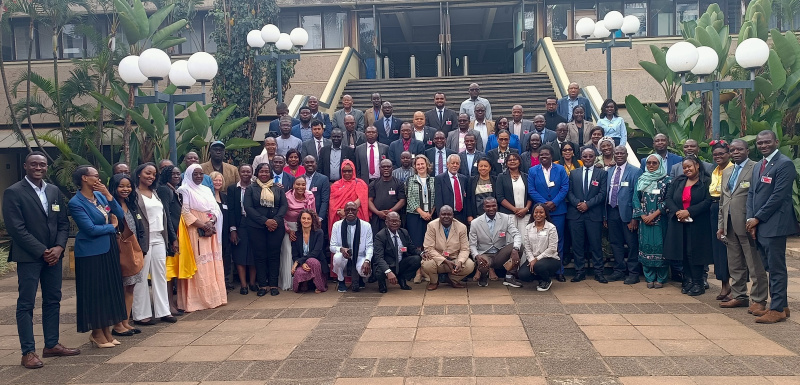
    The African regional preparatory meeting for the sixth meeting of the Conference of the Parties to the Minamata Convention on Mercury (COP-6) was convened from 7 to 9 October at the United Nations Environment Programme (UNEP) headquarters in Nairobi, Kenya.

    Participants expressed their appreciation to the co-chairs, Sidi Ould Aloueimine (Mauritania) and Mohamed Abdulai Kamara (Sierra Leone), whose guidance was instrumental in framing the discussions. Acknowledgement was also given to government delegates and civil society representatives for their active engagement and substantive contributions.

    Conducted in both English and French, this meeting offered a key opportunity for dialogue in the region, allowing stakeholders to review progress made, identify challenges, and coordinate positions in advance of the COP-6 negotiations scheduled for November in Geneva. The event was made possible through the generous financial support provided by Switzerland and Germany.

    Check the Secretariat presentations and the photos of the meeting.

    To Top

    GEN briefing on Minamata Convention COP-6

    GEN briefing

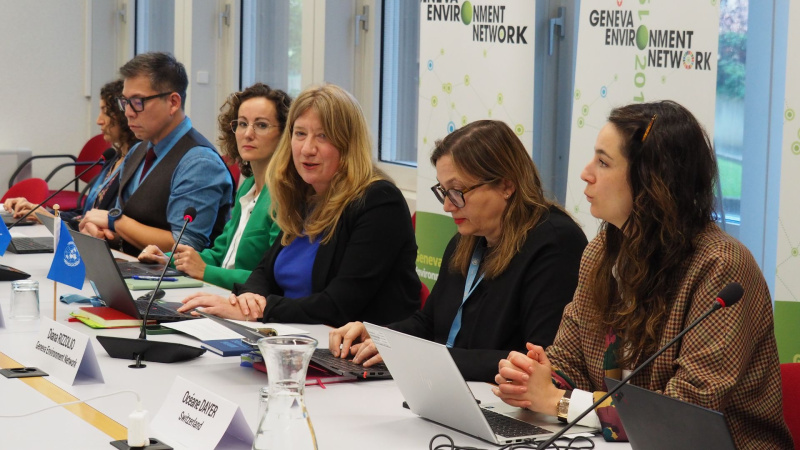
    This hybrid briefing took place in Geneva, Switzerland, on 2 October (13:00–14:30 CEST), organized under the Geneva Environment Network (GEN). The Secretariat of the Minamata Convention provided updates on the preparations for COP-6, including an overview of logistical arrangements, the tentative programme of events, and how the upcoming meeting can best support Parties and the wider community working to reduce mercury pollution.

    The Executive Secretary of the Minamata Convention, Monika Stankiewicz, stated: "As we approach COP-6, I would like to share with you why I remain highly optimistic the Minamata Convention on Mercury will continue making positive impact on people's lives everywhere and will serve as a shining example of multilateral cooperation and a model of an actionable multilateral environmental agreement (MEA)".

    The session was opened by the COP-6 President, Osvaldo Patricio Álvarez Pérez, who underlined: "Let's use this moment to build on our successes, face these challenges head on and push for a mercury-free world".

    Learn more about the event and watch the video recording.

    To Top

    Asia-Pacific regional preparatory meeting

    AP meeting

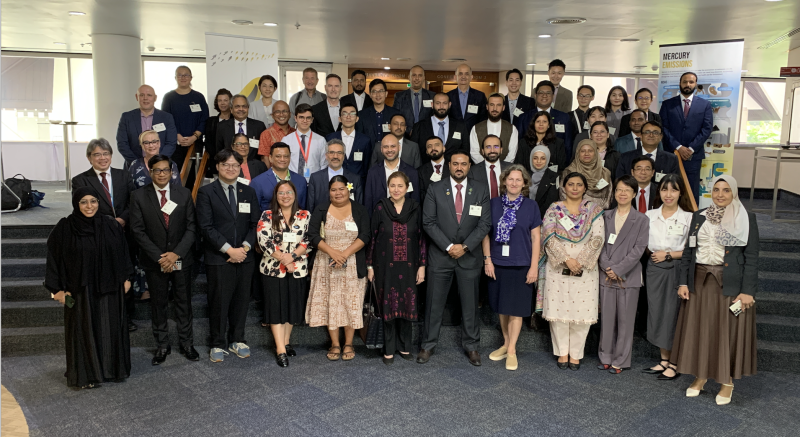
    On 23 and 24 September, the Asia-Pacific regional preparatory meeting for the sixth meeting of the Conference of the Parties to the Minamata Convention on Mercury (COP-6) was held at the United Nations ESCAP headquarters in Bangkok, Thailand.

    Special appreciation was expressed to co-chairs Saeed A. Alzahrani (Saudi Arabia) and Aisha Humera Moriani (Pakistan) for helping frame the discussions, and to all government delegates and civil society participants for their constructive engagement and valuable contributions.

    The preparatory meeting served as an important moment for dialogue, enabling participants to reflect on progress, consider challenges and align positions before negotiations begin in Geneva this November for COP-6. The meeting was organized thanks to the generous financial support provided by Switzerland.

    Check the Secretariat presentations and the photos of the meeting.

    To Top

    Eastern European States regional preparatory meeting

    EES meeting

    The Eastern European States regional preparatory meeting for the sixth meeting of the Conference of the Parties to the Minamata Convention on Mercury (COP-6) took place on 16 and 17 September in Geneva.

    The consultation provided governments and stakeholders with a space to prepare for the negotiations and exchange perspectives, building a shared understanding of regional priorities and supporting Parties in arriving in Geneva in November ready to work together for a successful COP-6.

    Appreciation was extended to all government delegates and civil society participants for their valuable contributions, in particular to co-chairs Claudia Dumitru (Romania) and Irma Gurguliani (Georgia) for guiding the discussions. The regional preparatory meeting was organized thanks to the generous financial support provided by Switzerland.

    Check the Secretariat presentations and photos of the meeting

    To Top

    GRULAC regional preparatory meeting

    GRULAC preparatory meeting

    On 3 and 4 September, Santiago de Chile hosted the regional preparatory meeting for Latin America and the Caribbean in the lead-up to the sixth meeting of the Conference of the Parties to the Minamata Convention on Mercury (COP-6).

    This was the first of the series of regional consultations, which continued in the following weeks with the meetings for Eastern Europe, Asia and the Pacific, and Africa. Through this constructive dialogue, countries of the region moved closer to arriving in Geneva in November prepared to negotiate and contribute to a successful COP-6.

    Sincere appreciation was extended to ECLAC for its hospitality, to the Chair of the meeting, Miriam Medel García, to COP-6 President Osvaldo Álvarez-Pérez, to Bureau member Linroy Christian, and to all government representatives and civil society participants for their active engagement and valuable contributions. The regional preparatory meeting was organized thanks to the generous financial support provided by Switzerland and Germany.

    The meeting also piloted the new training module for co-chairs and negotiators, based on the recently published manual. Check the Secretariat presentations and photos of the meeting.

    To Top
    Labor entre reuniones

    Trabajo entre sesiones y propuestas para la sexta reunión de la Conferencia de las Partes

    La Conferencia de las Partes celebró su quinta reunión del 30 de octubre al 3 de noviembre de 2023 en Ginebra (Suiza) y acordó una serie de medidas. El 22 de enero de 2024, la Secretaria Ejecutiva envió una carta a las Partes y a los observadores solicitando información para el seguimiento de estas medidas.

    Los avances en estas acciones pueden consultarse en las páginas individuales que se enlazan a continuación. Se irán añadiendo enlaces a medida que se disponga de información.


    Pueblos Indígenas y comunidades locales

    Decisión MC-5/1

    Observando con preocupación que los Pueblos Indígenas, al igual que las comunidades locales, son particularmente vulnerables a la exposición al mercurio y se encuentran entre los primeros en sufrir los graves efectos adversos para la salud y el medio ambiente derivados de la contaminación por mercurio debido a su estrecha relación con el medio ambiente y sus recursos, y acogiendo con beneplácito el papel de los Pueblos Indígenas y de las comunidades locales, y en particular la participación de las mujeres y las niñas, que han padecido los efectos del mercurio con resiliencia, en la consecución del objetivo del Convenio de Minamata y las metas y los objetivos de la Agenda 2030 para el Desarrollo Sostenible, la Conferencia de las Partes tomó nota de la importancia de ampliar la participación de los Pueblos Indígenas y de las comunidades locales en la ejecución de los proyectos y programas emprendidos en el marco del Convenio de Minamata y alentó a las Partes a que apoyen, según proceda, la participación de las organizaciones de los Pueblos Indígenas, así como de las comunidades locales y otros interesados pertinentes, en las reuniones de la Conferencia de las Partes y otros procesos conexos.

    Actualmente, la Secretaría está intentando ampliar su red y mejorar la participación activa de los Pueblos Indígenas, así como de las comunidades locales, en la ejecución de los proyectos y los programas emprendidos en el marco del Convenio de Minamata, y tiene previsto preparar un informe sobre las necesidades y prioridades de los Pueblos Indígenas y las comunidades locales en relación con los efectos del mercurio en su salud, medios de subsistencia, cultura y conocimientos.

    Fuentes de suministro y comercio de mercurio

    Decisión MC-5/2

    Para aplicar la mencionada decisión en 2024, la Secretaría está llevando a cabo las actividades que se detallan a continuación.

    Gracias a la generosa contribución de la UE y España, la Secretaría está elaborando orientaciones para ayudar a las Partes a identificar, gestionar y reducir el comercio de mercurio procedente de la extracción primaria de mercurio.

    Los fondos de la UE también están permitiendo a la Secretaría ayudar a las Partes a comprender mejor las disposiciones relativas al comercio, su interrelación con otros artículos del Convenio y el uso de formularios para el comercio mediante seminarios web y recursos en línea que se desarrollarán con socios como la Escuela Superior del Personal del Sistema de las Naciones Unidas, InforMEA y la Organización Mundial de Aduanas.

    En la actualidad, la Secretaría está recaudando fondos para redactar una actualización de la orientación disponible sobre existencias aprobada en la decisión MC-1/2 a fin de incluir los tipos de medidas que podrían adoptarse para cumplir la obligación permanente de esforzarse por identificar las existencias y las fuentes.

    En la decisión MC-5/2 sobre las fuentes de suministro y el comercio de mercurio, la COP-5 invitó a las Partes a presentar a la Secretaría, antes del 25 de marzo de 2025, información sobre las experiencias y los desafíos enfrentados en la implementación del Artículo 3, así como información sobre las actividades realizadas en relación con la Declaración de Bali para combatir el comercio ilegal de mercurio. Esta información será recopilada por la Secretaría para su consideración en la COP-6. Las presentaciones pueden enviarse a mea-minamatasecretariat [at] un.org.

    Estudio sobre el suministro, la producción, el comercio y el uso de compuestos de mercurio a escala mundial (decisión MC-5/3)

    Gracias a la generosa contribución de Canadá, la Secretaría está elaborando el mencionado estudio, que se terminará a principios de 2025. El esquema del estudio está disponible aquí. Se invita a las partes y a los interesados a presentar la información pertinente antes del 31 de diciembre de 2024.

    Anexos A y B (productos y procesos)

    Cosméticos (Decisión MC-5/5)

    The Executive Secretary sent a letter to Parties and observers to invite the submission of information by 30 June 2024 using the submission format. The submissions received have been uploaded here. A consultant is working with WHO and UNEP to draft a report, which will be posted on this page in early 2025 for comments

    La Secretaria Ejecutiva envió una carta a las Partes y a los observadores invitándoles a presentar información antes del 30 de junio de 2024 utilizando el formato de presentación. Las propuestas recibidas se han publicado aquí. Un consultor está trabajando con la OMS y el PNUMA en la redacción de un informe, que se publicará en esta página a principios de 2025 para recabar comentarios

    Producción de monómeros de cloruro de vinilo (Decisión MC-5/6)

    Se invita a las Partes y a las organizaciones pertinentes a presentar, con carácter voluntario, información sobre alternativas viables desde el punto de vista económico y técnico al uso de mercurio y compuestos de mercurio en la producción de monómeros de cloruro de vinilo, de conformidad con el apartado 8 del artículo 5 y el apartado 1 del artículo 17 del Convenio, antes del 31 de marzo de 2025. La información presentada se publicará en esta página.

    Cosmetics (Decision MC-5/5)

    The Executive Secretary sent a letter to Parties and observers to invite the submission of information by 30 June 2024 using the submission format. The submissions received have been uploaded here. A draft report compiling and synthesizing the submitted information is available here, with Annex 1 (excel table) here. Parties and relevant stakeholders are invited to review and comment on the draft, using this comment form by Monday 28 April 2025.

    Extracción de oro artesanal y en pequeña escala

    Se invita a las Partes que hayan notificado a la Secretaría de conformidad con el apartado 3 del artículo 7 y que aún no hayan presentado su plan de acción nacional para la extracción de oro artesanal y en pequeña escala a que lo hagan lo antes posible. Los planes de acción nacionales presentados se encuentran publicados aquí. Se recuerda a las Partes que hayan presentado un plan de acción nacional la obligación de presentar un examen, cada tres años, de los progresos realizados en el cumplimiento de las obligaciones contraídas en virtud del artículo 7 y de incluir esos exámenes en los informes que presente de conformidad con el artículo 21. La fecha límite para los próximos informes nacionales completos es el 31 de diciembre de 2025.

    La Conferencia de las Partes solicitó a la Secretaría que elaborara orientaciones complementarias para los planes de acción nacionales sobre el compromiso y la participación efectivos de los Pueblos Indígenas, las comunidades locales y otros grupos de interés en la elaboración y la aplicación de dichos planes. En 2024 se invitará a las Partes, los Pueblos Indígenas, las comunidades locales y otros grupos de interés a que proporcionen información que pueda servir de base para la elaboración de las orientaciones complementarias.

    Emisiones de mercurio

    Se alienta a las Partes que tengan experiencia en la aplicación de las directrices adoptadas por la Conferencia de las Partes de conformidad con los apartados 8 y 9 del artículo 8 a proporcionar información sobre dicha experiencia a la Secretaría. La información enviada se publicará en esta página web. La información presentada antes del 31 de marzo de 2025 se recopilará para la COP-6.

    Desechos de mercurio

    Se invita a las Partes a que presenten información relativa a sus reglamentos y programas en materia de gestión de desechos, tal como se menciona en el apartado 3 a) del artículo 11, centrándose en las cuestiones no abordadas por las directrices técnicas sobre la gestión ambientalmente racional de los desechos que consten de mercurio o estén compuestos de mercurio, lo contengan o estén contaminados con él en el marco del Convenio de Basilea, a más tardar el 31 de octubre de 2024. The Secretariat is to collect and organize the information and make it available by 1 January 2025. Se han recibido las siguientes presentaciones. La Secretaría debe recopilar y organizar la información y ponerla a disposición antes del 1 de enero de 2025.

    Financial mechanism

    The Secretariat of the Minamata Convention on Mercury is collecting proposals in relation to providing surge capacity in servicing the COP-6 and developing the report on relevant Convention obligations and deadlines and the extent to which such obligations and deadlines are being met by Parties. The deadline for submissions is 12 June 2025. Details can be found here.

    Primera evaluación de la eficacia

    Decisión MC-5/14

    El trabajo entre la COP-4 y la COP-5 puede consultarse aquí.

    Grupo de Evaluación de la Eficacia (EEG)

    En su decisión MC-5/14 sobre la primera evaluación de la eficacia del Convenio de Minamata sobre el Mercurio, la Conferencia de las Partes (COP) estableció el Grupo de Evaluación de la Eficacia («EEG», por sus siglas en inglés), que desarrollará su labor de acuerdo con el mandato establecido en el anexo I de la decisión. El Grupo de Evaluación de la Eficacia será responsable de la preparación del informe de evaluación de la eficacia. Los resultados de esta evaluación serán considerados en la séptima reunión de la Conferencia de las Partes, que se celebrará de manera tentativa en 2027. En la misma decisión, la COP adoptó los indicadores para la primera evaluación de la eficacia, como se contiene en el anexo II de la decisión.

    De acuerdo con su mandato, el Grupo de Evaluación de la Eficacia está compuesto por 25 participantes de las Partes, que incluyen cinco representantes de las Partes de cada una de las cinco regiones de las Naciones Unidas, nominados por las regiones. La lista de los miembros del Grupo de Evaluación de la Eficacia puede consultarse aquí.

    Se invitará a los co-presidentes del Grupo Científico Abierto (ver más abajo) y al presidente del Comité de Implementación y Cumplimiento a participar en el Grupo de Evaluación de la Eficacia como observadores. Además, se invitará a cinco observadores de países desarrollados y en desarrollo, provenientes de la sociedad civil, organizaciones indígenas, organizaciones de comunidades locales, organizaciones intergubernamentales, la industria y la Alianza Global sobre el Mercurio, para contribuir al trabajo del Grupo de Evaluación de la Eficacia. Se podrán invitar observadores adicionales de manera ad hoc.

    El Grupo de Evaluación de la Eficacia trabajará en línea y celebrará hasta dos reuniones presenciales. La primera reunión del Grupo de Evaluación de la Eficacia se celebró en línea el 25 de junio de 2024. Durante la primera reunión, el Grupo de Evaluación de la Eficacia eligió a sus co-presidentes: la Sra. Itsuki Kuroda, de Japón, y el Sr. Linroy Christian, de Antigua y Barbuda, y acordó un cronograma tentativo para el trabajo que se llevará a cabo durante el actual período intersesional, incluyendo fechas tentativas para las reuniones, hitos y revisión por las Partes.

    La segunda y tercera reuniones del EEG se llevarán a cabo en línea los días 4 de septiembre y 5 de diciembre de 2024, respectivamente.

    Los documentos para las reuniones del EEG están disponibles en su espacio de trabajo en línea.

    Los documentos para las reuniones del Grupo de Evaluación de la Eficacia están disponibles a través de su espacio de trabajo en línea.

    Grupo Científico de Composición Abierta

    El Grupo Científico de Composición Abierta («OESG», por sus siglas en inglés) se creó en virtud de la Decisión MC-4/11. La lista actual de miembros del OESG y la lista de expertos que contribuyen a su labor pueden consultarse aquí. Las Partes que no hayan designado a ningún miembro pueden presentar sus candidaturas enviando el formulario de candidatura a la Secretaría. Las Partes y los interesados también pueden proponer expertos para la lista rellenando un formulario en línea o utilizando el mismo formulario de candidatura mencionado anteriormente. 

    El Grupo Científico de Composición Abierta ha desarrollado planes para su labor de elaboración de resúmenes de datos y ha solicitado declaraciones de intenciones para el suministro de datos de vigilancia, emisiones y liberaciones de mercurio de las Partes y los interesados. La Secretaría ha recibido 106 declaraciones de intenciones hasta mayo de 2024. 

    La Secretaría ha firmado un contrato con el Biodiversity Research Institute para crear un repositorio de datos y recibir y compilar los datos. El Biodiversity Research Institute, actuando en nombre del OESG, se comunicará con los puntos de contacto indicados en las declaraciones de intenciones con el objeto de invitarles a presentar datos para el repositorio y les enviará un formulario de autorización de uso de datos en el que los remitentes podrán especificar las condiciones de uso de los datos, según proceda.  

    El OESG, advirtiendo la actual falta de datos, ha reiterado su solicitud de declaraciones de intenciones para la presentación de datos. Se alienta a las Partes y a los interesados a presentar sus declaraciones de intenciones a través de un formulario en línea. El OESG está preparando la recogida de estos datos, así como la solicitud de nuevas declaraciones de intenciones. 

    En relación con la recopilación y análisis de datos sobre emisiones y liberaciones de mercurio, la Secretaría convocó un taller global sobre la comparabilidad de los datos de emisiones y liberaciones de mercurio en Ciudad del Cabo, Sudáfrica, los días 18 y 19 de julio de 2024, con el apoyo financiero de la Unión Europea(el documento conceptual).  El informe del trabajo sobre inventarios de emisiones/liberaciones está disponible aquí.

    El OESG tiene previsto celebrar su segunda reunión presencial en Minamata, Japón, del 17 al 21 de marzo de 2025. Se han enviado cartas a los miembros y expertos en el registro, invitándoles a informar a la Secretaría sobre su plan de participación antes del 25 de noviembre de 2024.


    Género

    Plan de Acción sobre el Género (decisión MC-5/15)

    Se invita a las Partes y a los interesados a participar en actividades prioritarias del Plan de Acción sobre el Género para el bienio 2024-2025.

    Como parte de la aplicación del Plan de Acción sobre el Género para el bienio 2024-2025, la Secretaría está llevando a cabo las actividades prioritarias que se detallan a continuación.

    Con motivo del Día Internacional de la Mujer, la Secretaría organizó el primer seminario web de la serie Minamata Online 2024, que lleva por título Mainstreaming gender in capacity-building projects: practical approaches (Integración de la perspectiva de género en los proyectos de creación de capacidades: enfoques prácticos). Durante el mismo se expuso de qué modo el Programa Internacional Específico, el Fondo para el Medio Ambiente Mundial y el Programa especial de fortalecimiento institucional para el ámbito de los productos químicos integran las consideraciones de género en los criterios de solicitud de financiación, las directrices para las solicitudes, las solicitudes de proyectos, los formularios de presentación de informes y los procesos de evaluación de proyectos. La realización del seminario web es una de las actividades prioritarias para este bienio en el marco del Plan de Acción sobre el Género del Convenio de Minamata.

    Gracias al generoso apoyo de Finlandia, la Secretaría también está planificando la realización de otras dos actividades prioritarias en materia de género para 2024: la revisión de los elementos de género en los planes de acción nacionales existentes y la elaboración de estudios de casos sobre las dimensiones de género de los proyectos financiados por el Programa Internacional Específico.

    La Secretaría también está revisando, de acuerdo con consideraciones de género, los informes nacionales presentados por las partes en virtud del artículo 21 para identificar las medidas relacionadas con el control de los productos con mercurio añadido utilizados principalmente por mujeres y niños, como los cosméticos y las amalgamas dentales.

    Biodiversidad

    En la Decisión MC-5/17, la COP alentó a las Partes e invitó a otros Gobiernos y a gobiernos locales y subnacionales, así como también a las organizaciones y los interesados pertinentes, según proceda, a que:

    • Promuevan las investigaciones sobre los efectos del mercurio en la diversidad biológica y las funciones y los servicios de los ecosistemas;
    • Reflejen las metas nacionales de reducción y control del mercurio en sus estrategias y planes de acción nacionales en materia de diversidad biológica revisados o actualizados para que concuerden con el Marco Mundial de Biodiversidad de Kumming-Montreal;
    • Pongan en común la experiencia adquirida a fin de promover la coordinación y la integración de las prioridades asociadas a la diversidad biológica y el mercurio por medio del desarrollo y la aplicación de políticas, incluidas las enseñanzas extraídas y los retos afrontados; 
    • Difundan información sobre las medidas que pueden generar beneficios secundarios para el Convenio de Minamata y el Marco Mundial de Biodiversidad de Kumming-Montreal.

    Se solicitó a la Secretaría que preste apoyo a las Partes y a otros interesados a la hora de poner en común sus experiencias, y que compile y resuma la información recabada y prepare un proyecto de hoja de ruta en el que figuren, por ejemplo, posibles medidas e indicadores para apoyar a las Partes en la demostración y el aprovechamiento al máximo de los beneficios secundarios derivados de la aplicación del Convenio de Minamata y el Marco Mundial de Biodiversidad de Kumming-Montreal, para que la Conferencia de las Partes lo examine en su sexta reunión.

    En consecuencia, durante el segundo trimestre de 2024, la Secretaría tiene previsto invitar a las Partes, otros Gobiernos, gobiernos locales y subnacionales, organizaciones y otros interesados a poner en común sus experiencias con vistas a preparar un primer proyecto de la hoja de ruta para finales de septiembre de 2024.

    Proyecto de documento técnico para orientar la integración de acciones para reducir la contaminación por mercurio procedente de la minería artesanal y en pequeña escala del oro en las Estrategias Nacionales de Biodiversidad y Planes de Acción revisados o actualizados. Se invita a las Partes e interesados a enviar sus comentarios y aportaciones utilizando este formulario y enviándolos por correo electrónico a la Secretaría (mea-minamatasecretariat [at] un.org) antes del 4 de julio de 2025.


    Trabajo intersesional previo


    Información para participantes
    Cómo formar Parte del Convenio de Minamata sobre el mercurio en el momento de la quinta reunión de la Conferencia de las Partes

    El Convenio de Minamata entró en vigor el 16 de agosto de 2017, el nonagésimo día después de la fecha de depósito del quincuagésimo instrumento de ratificación, aceptación, aprobación o adhesión. Para cada Estado u organización de integración económica regional que ratifique, acepte o apruebe el Convenio o se adhiera a él después del depósito de este 50.º instrumento, el Convenio entrará en vigor el nonagésimo día siguiente a la fecha de depósito por dicho Estado u organización de integración económica regional de su instrumento de ratificación, aceptación, aprobación o adhesión. Por lo tanto, para ser Partes en el Convenio de Minamata en el momento de la quinta reunión de la Conferencia de las Partes, los países y las organizaciones de integración económica regional que aún no lo hayan hecho deberán depositar su instrumento de ratificación, aceptación, aprobación o adhesión ante el Secretario General de las Naciones Unidas, que es el depositario del Convenio, a más tardar el 4 de agosto de 2025. La lista actualizada de las Partes puede consultarse en el sitio web del Convenio.

    Registro y asistencia de viaje

    Como en años anteriores, el registro de delegados se realiza en dos pasos:

    1. Registro en línea: Los nombres, títulos e información de contacto de sus representantes designados para atender la sexta reunión de la Conferencia de las Partes deben ser comunicados a la Secretaría mediante la plataforma de registro en línea Kronos, que estará disponible desde el 7 de julio de 2025. El enlace individual de acceso con las instrucciones será enviado a los Puntos Focales Nacionales y/o a las Misiones Permanentes ante el PNUMA y la ONU en Ginebra. Se les invita a verificar los datos de contacto de los Puntos Focales Nacionales y notificar a la Secretaría cualquier actualización.
    2. Envío de documentos de respaldo: las Partes deben enviar a la Secretaría (MEA-MinamataMeetings [at] un.org (MEA-MinamataMeetings[at]un[dot]org)) una carta oficial de nominación del Ministerio de Relaciones Exteriores o una Nota Verbal de la Misión Permanente ante la ONU en Ginebra con los nombres y datos de contacto de los representantes. Documentos emitidos por otras entidades no serán aceptados.

    La fecha límite para el registro en línea y el envío de la carta de nominación para todos los delegados que no soliciten apoyo para viajes es el 24 de octubre de 2025.

    Se podrá conceder ayuda financiera para apoyar la participación de un delegado por cada país Parte en desarrollo elegible. La ayuda para el viaje debe solicitarse claramente y el participante patrocinado debe especificarse claramente en la carta de nominación oficial. La fecha límite para la inscripción en línea y para el envío de la carta de nominación oficial de los delegados patrocinados es el 5 de septiembre de 2025.

    El registro en el sitio será posible, pero se anticipan tiempos de espera prolongados. Se recomienda encarecidamente registrarse con antelación.

    La validación del registro queda sujeta a la entrega completa de toda la información requerida y a la confirmación de la Secretaría. Se ruega no hacer arreglos de viaje antes de recibir la confirmación por parte de la Secretaría. Una vez validado el registro en Kronos, cada miembro de la delegación recibirá un correo de confirmación con más información logística.

    Credenciales para las Partes del Convenio de Minamata

    Para participar en la toma de decisiones durante la reunión, las Partes deben estar acreditadas. Las credenciales del jefe de delegación y sus representantes deben ser emitidas por el Jefe de Estado o de Gobierno o por el Ministro de Relaciones Exteriores. Para organizaciones regionales de integración económica, las credenciales deben ser emitidas por su autoridad competente. La información relativa a cualquier cambio en la composición de la delegación deberá presentarse siguiendo el mismo procedimiento.

    Las muestras de credenciales están disponibles en árabechinoinglésfrancésruso español.

    Las credenciales originales deberán presentarse a la Secretaría a más tardar veinticuatro horas después de la apertura de la reunión (por lo tanto, antes de las 10.00 horas del martes 4 de noviembre de 2025). Para facilitar el proceso de autorización, se invita a las Partes a presentar sus credenciales originales antes de la reunión, preferiblemente antes del 17 de octubre de 2025, a:

    Secretaria Ejecutiva
    Secretaría del Convenio de Minamata sobre el Mercurio
    Programa de las Naciones Unidas para el Medio Ambiente
    Avenue de la Paix 8-14, 1211
    Ginebra 10, Suiza

    Si no se presentan antes de la reunión, las Partes pueden entregar las credenciales originales de sus representantes en el mostrador de inscripción a su llegada al lugar de la reunión el primer día de esta.

    Pueden enviarse copias electrónicas anticipadas de las credenciales a MEA-MinamataMeetings [at] un.org.

    Ayudas para los viajes

    Podrá disponerse de ayuda financiera para apoyar la participación de un participante por cada Parte que sea país en desarrollo y que pueda optar a la ayuda. La ayuda incluirá dietas al tipo de cambio de las Naciones Unidas y billete de ida y vuelta. La carta oficial de nominación debe especificar claramente quién es el participante patrocinado.

    Importante: la fecha límite para inscribirse en la plataforma en línea y para enviar la carta de nominación oficial de los delegados patrocinados es el 5 de septiembre de 2025.

    Una vez confirmada su participación, los participantes patrocinados recibirán instrucciones adicionales sobre los preparativos de su viaje. Los viajes en avión se organizarán de acuerdo con la normativa de las Naciones Unidas, por el medio más económico y directo posible en todos los casos. Tenga en cuenta que no se permitirán cambios en los billetes de avión una vez emitidos.

    Para facilitar el pago de las dietas en el lugar de la reunión, se pedirá a los participantes patrocinados que presenten copias de su pasaporte y tarjetas de embarque al personal de la Secretaría en el lugar y a la hora indicados durante la reunión. Para cualquier consulta relacionada con el viaje y las dietas, se invita a los participantes patrocinados a ponerse en contacto con la Secretaría en: mea-minamatameetings [at] un.org (mea-minamatameetings[at]un[dot]org).

    Alojamiento

    Los participantes son responsables de hacer sus propios arreglos de alojamiento antes de la reunión y de cubrir cualquier gasto asociado incurrido. La Secretaría anima a todas las Partes a que realicen estos trámites lo antes posible.

    Tenga en cuenta que es posible que el Centro Internacional de Bienvenida de Ginebra (CAGI, por sus siglas en inglés) proporcione alojamiento a los representantes de gobiernos y ONG no patrocinados y que participen en COP-6. Consulte el sitio web de CAGI o contacte delegates.cagi [at] etat.ge.ch para obtener más información sobre los criterios de admisibilidad y las condiciones aplicables.

    Se puede consultar una lista actualizada de los hoteles que ofrecen tarifas preferentes a las Naciones Unidas aquí.

    Visados

    Todos los participantes deben obtener por su cuenta el visado para entrar a Suiza y los visados de tránsito correspondientes. La Secretaría puede emitir cartas de apoyo si se solicitan.

    Observadores

    El artículo 6 del reglamento de la Conferencia de las Partes dispone que las Naciones Unidas, sus organismos especializados, el Organismo Internacional de Energía Atómica, así como cualquier Estado que no sea parte en el Convenio y cualquier entidad que gestione el mecanismo a que se refiere el párrafo 5 del artículo 13 del Convenio podrán, previa invitación del Presidente, participar en los debates de cualquier reunión sin derecho de voto, a menos que se oponga a ello al menos un tercio de las Partes presentes en la reunión.

    El artículo 7 del reglamento interno establece que cualquier órgano u organismo (ya sea nacional o internacional, gubernamental o no gubernamental) admitido como observador podrá, previa invitación del Presidente, participar sin derecho a voto en los debates de cualquier reunión sobre asuntos que conciernan directamente al órgano u organismo que represente, a menos que se oponga a ello al menos un tercio de las Partes presentes en la reunión.

    Previa invitación del Presidente, los observadores podrán presentar oralmente sus declaraciones. El número de declaraciones orales que se pronunciarán en la reunión dependerá del tiempo disponible. En cuanto a las ONG, se dará preferencia a las que hablen en nombre de grupos de organizaciones o coaliciones. Las declaraciones escritas también pueden presentarse en una de las lenguas oficiales de las Naciones Unidas (árabe, chino, español, francés, inglés o ruso).

    Las organizaciones aprobadas para participar en las reuniones anteriores de la Conferencia de las Partes no necesitan volver a presentar dicha solicitud de admisión. Véanse las organizaciones enumeradas en los documentos UNEP/MC/COP.1/INF/16, UNEP/MC/COP.2/INF/19, UNEP/MC/COP.3/INF/27, UNEP/MC/COP.4/INF/28/Rev.1 y UNEP/MC/COP.5/INF/39.

    Las organizaciones que deseen obtener el estatuto de observador deberán presentar a la Secretaría, por correo electrónico: mea-minamatameetings [at] un.org, al menos dos meses antes de la apertura de la reunión, una solicitud de admisión como observador en las reuniones de la COP, incluyendo información que demuestre que está cualificada en los asuntos cubiertos por el Convenio. La Secretaría examinará las solicitudes para comprobar si están completas y se ajustan a los requisitos del Convenio. Las solicitudes aceptadas se presentarán a la COP-6.

    Más información sobre la participación de observadores en las reuniones de la Conferencia de las Partes en la página web.

    Medios de comunicación

    Se invita a los profesionales de los medios de comunicación que representen a organizaciones de medios de comunicación de buena fe (registradas formalmente como organización de medios de comunicación en un país reconocido por la Asamblea General de las Naciones Unidas) a asistir a la sexta reunión del Convenio de Minamata (COP-6) que tendrá lugar en Ginebra, Suiza, del 3 al 7 de noviembre de 2025. Siguiendo el proceso de acreditación, cada periodista podrá recibir credenciales que le permitirán acceder a las sesiones plenarias, los eventos paralelos y la zona de exhibiciones.

    La admisión de los medios de comunicación se rige por las Directrices para la acreditación y el acceso de los medios de comunicación.

    La acreditación se concederá previa presentación de credenciales de prensa válidas, incluidos cada uno de los siguientes elementos:

    1. Formulario de acreditación cumplimentado.
    2. Carta de asignación con el membrete oficial de un medio de comunicación firmada por el editor/editor de asignación, redactor jefe o jefe de oficina en la que se especifique el nombre y el cargo funcional del periodista. No se aceptarán cartas o correos electrónicos sin firmar.
    3. Fotocopia de un carné de prensa/pase de trabajo válido.
    4. Fotocopia del pasaporte/documento nacional de identidad.

    Envíe mediante correo electrónico el Formulario de Acreditación junto con los documentos arriba indicados lo antes posible a la Secretaría a través de la Responsable de Comunicación y Gestión del Conocimiento, Anna García Sans (anna.garcia [at] un.org (anna[dot]garcia[at]un[dot]org)).

    Tenga en cuenta que no se permite la doble acreditación (por ejemplo: como prensa y delegado o como prensa y organización no gubernamental).

    Lugar de celebración

    La sexta reunión de la Conferencia de las Partes en el Convenio de Minamata sobre el Mercurio se celebrará en Ginebra (Suiza) del lunes 3 de noviembre al 7 de noviembre de 2025. Las consultas regionales y otras reuniones preparatorias tendrán lugar en la tarde del domingo 2 de noviembre de 2025.

    La reunión tendrá lugar en:

    Centro Internacional de Conferencias de Ginebra - Centre International de Conférences Genève (CICG)
    Rue de Varembé 17. 1211 Ginebra 20
    Tel.: + 41 (0) 22 791 91 11, Fax: + 41 (0) 22 791 90 64
    Website: www.cicg.ch

    Acceso a Internet

    Hay acceso inalámbrico a Internet gratuito en todas las salas de conferencias y reuniones y en las zonas públicas del CICG.

    Restaurantes / Servicios de catering

    El Centro Internacional de Conferencias de Ginebra dispondrá de servicios de catering para el almuerzo, en el bar y el restaurante situados en la planta baja y el primer piso. Hay otras cafeterías, restaurantes y tiendas a poca distancia del lugar de celebración.

    Servicios bancarios

    En los alrededores, hay servicios bancarios; el más cercano es UBS Switzerland AG Vermont-Nations, situado en Chemin Camille-Vidart 17b, 1202 Ginebra.

    Registro in situ y expedición de tarjetas de identificación

    Se ruega a los participantes que se inscriban en línea antes de la reunión y obtengan su tarjeta de identificación en el mostrador de inscripción del lugar de celebración, previa presentación de uno de los siguientes documentos de identidad válidos, en alfabeto latino:

    • Pasaporte nacional válido expedido por un gobierno reconocido por las Naciones Unidas:
    • Documentos nacionales de identidad válidos expedidos por un Estado Schengen;
    • Documento de viaje válido reconocido por la ONU.

    El mostrador de inscripción está situado en la planta baja del Centro Internacional de Conferencias de Ginebra y tendrá el siguiente horario de apertura:

    • Domingo, 2 de noviembre: de 10:00 a 17:00 horas
    • Lunes a viernes, 3 de noviembre a 7 de noviembre: de 8:00. a 17:00 horas

    El acceso al lugar de la reunión está sujeto a la presentación de una tarjeta de identificación válida. Por razones de seguridad, es obligatorio mostrar las tarjetas de identificación de la conferencia en todo momento para acceder al lugar y a las salas de reuniones. Toda pérdida de una tarjeta de identificación deberá comunicarse inmediatamente en el mostrador de inscripción.

    Animamos a los delegados a que obtengan su tarjeta de identificación para la conferencia o se inscriban antes del 3 de noviembre por la mañana, a fin de reducir las colas el día de la inauguración oficial.

    NOTA: Sólo se incluirán en la lista de participantes de la reunión los nombres de los participantes debidamente inscritos.

    Horario y retransmisión de las sesiones plenarias

    La apertura oficial de la COP-6 tendrá lugar el lunes 3 de noviembre de 2025 a las 10.00 horas. Está previsto que las sesiones plenarias de la reunión se celebren diariamente de 10.00 a 13.00 horas y de 15.00 a 18.00 horas. Las sesiones plenarias de la reunión se retransmitirán en directo en 6 idiomas a través de la página web de la COP-6 y del canal de YouTube.

    Código de Conducta para prevenir el acoso en eventos organizados en el marco del Convenio de Minamata

    Las Naciones Unidas publicaron el Código de Conducta para prevenir el acoso, incluido el acoso sexual, en los eventos del Sistema de las Naciones Unidas, que incluyen reuniones, conferencias, eventos paralelos, talleres y otros eventos organizados en el marco del Convenio de Minamata sobre el Mercurio. La Secretaría del Convenio de Minamata se compromete a facilitar eventos en los que todos puedan participar en un entorno inclusivo, respetuoso y seguro. Se invita a los delegados a familiarizarse con el Código de Conducta, al que pueden acceder aquí.

    Una Conferencia de las Partes más ecológica*

    La Secretaría del Convenio de Minamata ha tomado medidas para mejorar y promover la sostenibilidad medioambiental de sus actividades, incluso en la preparación y celebración de sus reuniones.

    La sexta reunión de la Conferencia de las Partes del Convenio de Minamata (COP-6) se desarrollará de acuerdo con los esfuerzos de sostenibilidad medioambiental de la Secretaría. Se pondrán en marcha una serie de medidas para reducir el impacto medioambiental de COP-6 y compensar las inevitables emisiones de gases de efecto invernadero relacionadas con ella.

    La Secretaría trabajará con el Centro Internacional de Conferencias de Ginebra (CICG) y el servicio de catering para reducir el impacto medioambiental de sus servicios. El CICG y el servicio de catering han adoptado varias medidas para reducir su huella medioambiental. Para más información sobre las medidas medioambientales adoptadas por el CICG, consulte el diagrama medioambiental de la Fundación de Edificios para Organizaciones Internacionales (FIPOI).

    Todos los participantes tienen un papel esencial que desempeñar en la reducción de la huella medioambiental de COP-6 y se valora enormemente su apoyo en este importante esfuerzo.

    Medidas de sostenibilidad que se adoptarán en el lugar de celebración

    Reducción de la producción de residuos: La COP-6 tratará de reducir los residuos, especialmente los plásticos, en el lugar de la reunión, en colaboración con el CICG y el servicio de comidas:

    1. El uso de plástico en envases, botellas, envoltorios para bocadillos, cubiertos y vasos se reducirá al mínimo y se sustituirá por alternativas. Véase a continuación una tabla de los artículos que estarán disponibles en la COP-6, y las acciones sugeridas para reducir la producción de residuos;
    2. Se recomienda encarecidamente a los participantes que traigan recipientes rellenables para beber (vasos, tazas, botellas) para utilizarlos en el Café/Restaurante y en los puestos de hidratación situados en todo el recinto;
    3. El servicio de catering ofrecerá un descuento en bebidas calientes en el Café le 6ème Continent (planta baja) y en el Restaurante (primera planta) a los participantes que utilicen sus propios vasos reutilizables;
    4. El recinto cuenta con un programa de reciclaje, y hay contenedores de reciclaje en varios lugares del recinto.

    Reunión sin papel: La reunión se celebrará sin papel y no se facilitarán documentos impresos. Los documentos previos a la reunión estarán disponibles en el sitio web de la reunión y los documentos de la reunión (como los documentos de sesión) estarán disponibles electrónicamente a través de la página web de la COP-6. Se anima a los participantes a traer ordenadores portátiles o tabletas. 

    Propuestas para apoyar la ecologización de la COP-6

    Se anima a los participantes que organicen su propio viaje de ida y vuelta a Ginebra a que tomen las siguientes medidas:

    1. Calcular las emisiones de CO2 relacionadas con sus viajes, utilizando la calculadora de emisiones de vuelos de de la OACI;
    2. Compensar sus emisiones, utilizando la plataforma de compensación de carbono de las Naciones Unidas y enviar una copia del certificado a la Secretaría (mea-minamatameetings [at] un.org (mea-minamatameetings[at]un[dot]org)) para que sea más fácil hacer el seguimiento de la neutralidad climática de la COP-6;
    3. Sustituir los vuelos cortos por viajes en tren, siempre que sea posible;
    4. Optar por rutas directas que eviten las emisiones adicionales asociadas a los despegues y aterrizajes múltiples;
    5. Bajar voluntariamente de clase de vuelo para evitar el mayor gasto de los viajes en clase preferente;
    6. Siempre que sea posible, utilizar medios de transporte sostenibles, como el autobús, la bicicleta, los desplazamientos a pie o el coche compartido para los trayectos locales;
    7. En la medida de lo posible, optar por comidas a base de plantas, de producción local, de temporada o con certificación ecológica;
    8. Buscar alojamientos que cuenten con un programa ecológico para huéspedes o que hayan obtenido una certificación ecológica;
    9. Alojarse a poca distancia del lugar de la reunión;
    10. Reducir el desperdicio de alimentos y otros residuos;
    11. Traer recipientes rellenables para beber (vasos, tazas, botellas) que se utilizarán en el Café/Restaurante y en los puestos de hidratación;
    12. Descargar cualquier documento electrónico para utilizarlo in situ. No se proporcionarán copias impresas, pero los participantes podrán recargar sus dispositivos;
    13. Participar en el programa de reciclaje de la sede.


    Los siguientes artículos estarán disponibles en la sede de la COP. Tenga en cuenta las medidas sugeridas para reducir los residuos y hacer que la COP-6 sea más ecológica.

    Artículos

    Composición

    Eliminación

    Acciones sugeridas para #greeningCOP6

    Vasos de agua

    Papel

    Reciclaje

    1. PREVENIR: trae tu vaso/taza/botella reutilizable
    2. REUTILIZAR: reutilízalos tantas veces como sea posible
    3. RECICLAR: desecha el vaso de papel en el contenedor de reciclaje de papel

    Vasos para bebidas calientes

    Bambú

    Incineración

    1. PREVENIR: opta por las tazas reutilizables de la cafetería o lleva su propia taza/taza reutilizable
    2. RECUPERAR: tira la taza de bambú a la papelera para su incineración

    Envoltorio para bocadillos

    Ácido poliláctico y papel

    Incineración

    1. RECUPERAR: deposita el envoltorio del bocadillo en la papelera para su incineración

    Servilleta de papel

    Papel

    Incineración

    1. PREVENIR: úsela sólo si es necesario
    2. RECUPERAR: deseche la servilleta de papel en la papelera para su incineración

    Envases para aperitivos

    Plástico (tipo)

    Incineración

    1. PREVENIR: elige tentempiés más sanos y sin envasar, como frutas de temporada y de la zona
    2. RECUPERAR: deposita los envases de plástico en las papeleras para su incineración

    Botellas de bebidas

    Vidrio


    1. DEVOLVER: a la cafetería/restaurante, ya que las botellas de vidrio son reutilizables

    Latas de bebidas

    Aluminio

    Reciclaje

    1. RECICLAR: deposite las latas de aluminio en el contenedor de reciclaje de aluminio

    Envases de vidrio

    Vidrio


    1. DEVOLVER: tal café/restaurante, ya que los envases de vidrio son reutilizables

    Platos de porcelana

    Porcelana


    1. DEVOLVER: al café/restaurante, ya que los platos de porcelana son reutilizables

    Cubiertos de acero inoxidable

    Acero inoxidable


    1. DEVOLVER: a la cafetería/restaurante, ya que los cubiertos de acero inoxidable son reutilizables

    Cubiertos desechables

    Ácido poliláctico

    Incineración

    1. PREVENIR: opta por cubiertos reutilizables de acero inoxidable, siempre que sea posible
    2. RECUPERAR: deposita los cubiertos en los contenedores de residuos para su incineración

    Verrinas de cóctel

    Ácido poliláctico

    Incineración

    1. PREVENIR: opta por alternativas reutilizables si están disponibles
    2. DEVOLVER: a la cafetería/restaurante, ya que las verrinas se pueden lavar y reutilizar si no están rotas o dañadas
    3. RECUPERAR: si están rotas o dañadas, deposita las verrinas en los contenedores de residuos para su incineración

    Residuos alimentarios


    Incineración

    1. PREVENIR: cualquier residuo alimentario
    2. RECUPERAR: delimina cualquier residuo alimentario en los contenedores de residuos para su incineración.


    ¡Gracias por su esfuerzo para #greeningCOP6!

    Para más información, póngase en contacto con Maria Irene Rizzo, Experta Asociada, en irene.rizzo [at] un.org.

    **Algunas de estas acciones están extraídas del documento “United Nations Ozone Secretariat Event EMS Green Travel and Event Tips”.

    Salud

    El CICG dispone de servicios de primeros auxilios y de atención médica de urgencia. Los delegados con una enfermedad crónica deberán llevar consigo todos los medicamentos y artículos médicos necesarios durante todo el viaje, en sus envases originales, claramente etiquetados.

    Se aconseja a los delegados que contraten un seguro médico con cobertura adecuada en el extranjero, es decir, accidente, enfermedad, repatriación sanitaria y fallecimiento. Las Naciones Unidas no cubren los seguros de vida o médicos de los participantes. Por lo tanto, es responsabilidad de los participantes o de sus Gobiernos obtener un seguro adecuado antes de viajar a Suiza.

    Se invita a los participantes con problemas de movilidad que requieran arreglos especiales a ponerse en contacto con la Secretaría del Convenio de Minamata antes de la reunión en: mea-minamatameetings [at] un.org

    Más información

    Currency and rate of exchange

    Franco suizo (CHF). Media de los tipos de cambio medios con fecha 8 April 2025: 1 CHF ~1.17 USD. En la mayoría de los hoteles y restaurantes de Suiza se aceptan las principales tarjetas de crédito.

    Conexión eléctrica

    Se ruega a los participantes que traigan sus propios adaptadores de corriente.

    Voltage: 220 volts.
    Frequency: 50 Hz.
    Plug/socket: C (CEE 7/16), J.

    Zona horaria

    Suiza está en la zona horaria CET (UTC+1).


    Para más información sobre la reunión, no dude en ponerse en contacto con la Secretaría, por correo electrónico a MEA-MinamataMeetings [at] un.org, o consultar nuestra página web.


    Online Events
    Introduction and calendar

    COP-6 events provide an informal platform for Parties and observers to share information and highlight advances in technology, research and policy for the attention of Parties and the global community that the Convention serves. Two types of COP-6 events are offered: online events and Knowledge Lab sessions.

    Online events run for one hour and are held virtually via the WebEx platform. The online events are scheduled for the week of 13-17 October. Check the full calendar here and register now.

    DISCLAIMER: The views expressed by speakers, moderators, and participants during the pre-COP-6 online events are those of the individuals concerned and do not necessarily reflect the views or policies of the Secretariat of the Minamata Convention on Mercury. Presentations delivered by representatives of the Secretariat reflect the official positions or perspectives of the Secretariat, unless otherwise stated.

    Monday 13 October
    Save the date and register now:
    • 13h00-14h00 CEST: The Hidden Threat in the Mirror: Ending Mercury in Skin-Lightening Products (SLPs) Now! (Environment and Social Development Organization - ESDO, Asian Center for Environmental Health), check the presentations here.

      Join the Pre-COP-6 Online Event on 13 Oct 2025, 13:00–14:00 CEST: “The Hidden Threat in the Mirror: Ending Mercury in Skin-Lightening Products Now!”. Environment and Social Development Organization (ESDO), in partnership with The Asian Center for Environmental Health (ACEH), presents this webinar to highlight urgent action, share new research, and inspire global collaboration. Don’t miss this vital dialogue!

    • 14h45-15h45 CEST: Integrating Chemicals and Waste Management into Biodiversity Conservation (UNEP, Convention on Biological Diversity), check the presentations and video recording here.

      This is an official online side event at the 2025 sixth meeting of the Conference of the Parties to the Minamata Convention on Mercury (COP-6) that aims to strengthen implementation of global environmental commitments through coherent and synergistic implementation of MEAs, the KMGBF and the Global Framework on Chemicals.

    • 16h30-17h30 CEST: Advancing Mercury Waste Management: Solutions and Actions (Global Mercury Partnership Waste Management Area - Japan), check the presentations and video recording here.

      Join the Global Mercury Partnership Waste Management Area (GMP-WMA) for an interactive event on mercury waste management. Explore practical tools, best practices, and real examples, with updates on GMP-WMA activities and perspectives from key sectors. Open to governments, industry, NGOs, experts & organizations - especially those facing challenges in mercury waste management. Let's connect, share, and learn together!

    • 18h00-19h00 CEST: Indigenous and Scientific Voices from the Amazon on Cross-Border Mercury Protection (Fundación Gaia Amazonas), check the presentations and video recording here.

      Amazonian indigenous leaders and scientists describe how mercury pollution from gold mining endangers vital ecosystems, indigenous territories, and human health. They will present firsthand evidence from the field, rigorous research, and possible solutions to protect the Amazon basin, focusing on border regions. Both traditional knowledge and Western science combine insights to tackle this serious crisis. This online event is conducted in Spanish.

    Tuesday 14 October
    Save the date and register now:
    • 11h00-12h00 CEST: Managing mercury wastes in the healthcare sector: from existing tools to inclusive applications (UNEP Global Mercury Partnership), check the presentations and video recording here.

      The management of wastes from mercury containing products has been raising increasing concerns. This event will present latest tools and case studies highlighting collaborative efforts to support the safe and sound handling of wastes resulting from dental amalgam and mercury containing medical devices, with an emphasis on actions to reduce mercury exposure to protect human health and the environment.

    • 13h00-14h00 CEST: Multi-country initiatives addressing air emissions of mercury (Minamata Convention Secretariat), check the presentations and video recording here.

      "Article 8 and Annex D of the Minamata Convention on Mercury address the emissions of mercury and mercury compounds to the atmosphere from specific point sources. The event will highlight initiatives supported by the Global Environment Facility (GEF), focusing on emissions from two major point source categories: 1. Coal-fired power plants in high-potential countries in Asia and Africa, and 2. Non-ferrous metals production facilities in six countries across Africa, Asia, and Latin America.

    • 14h45-15h45 CEST: Dental Amalgam phase down: alternatives, access, and implementation realities (FDI World Dental Federation, IADR), check the presentations and video recording here.

      Dental amalgam, valued for durability and affordability, is increasingly replaced by alternative restorative materials. This session unites global experts to review the clinical performance of these alternatives, address accessibility and affordability, and discuss the importance of collaboration for the successful implementation of dental amalgam phase-down or phase-out policies. Hear from leaders in government, research, and clinical practice to know the latest on dental amalgam and alternative restorative materials.

    • 16h30-17h30 CEST: Strengthening the Minamata Convention: A new approach to the global mercury trade and use in ASGM (International Pollutants Elimination Network), more information and video recording here.

      This webinar addresses the important need to strengthen the convention by accelerating the end of the legal trade of mercury and primary mercury mining while establishing a phase-out date for mercury use in the ASGM sector. New biomonitoring data from indigenous communities impacted by ASGM and mercury pollution in Peru and Nicaragua will also be presented to highlight the human rights implications of allowing mercury use in ASGM to continue indefinitely.

    Wednesday 15 October
    Save the date and register now:
    • 11h00-12h00 CEST: Overview of the Specific International Programme and sharing of lessons learned from completed projects (Minamata Convention Secretariat), check the presentations and video recording here.

      Article 13 of the Minamata Convention establishes a financial mechanism to support eligible parties to implement their Convention obligations. It includes the Specific International Programme (SIP) to support capacity-building and technical assistance which has to date supported 34 projects around the world. The side event will include remarks from a Co-Chair of the SIP Governing Board and presentations from project managers of Ecuador, North Macedonia, Senegal and Sri Lanka on the results and impacts of their SIP projects.

    • 13h00-14h00 CEST: Effectiveness Evaluation: Draft report of the Open-ended Scientific Group (Minamata Convention Secretariat), check the presentations and video recording here.

      The Open-Ended Scientific Group (OESG) was established by COP-4 in 2022 to put together the mercury monitoring data and develop a scientific report for evaluating the effectiveness of the Minamata Convention. At this event, lead scientists working on air, biota, human and other monitoring, as well as mercury emission and modelling will present the work of OESG.

    • 14h45-15h45 CEST: Actions and Measures to Phase Out Dental Amalgam by 2030 in the Arab Region (World Alliance for Mercury-Free Dentistry).

      Join us! In collaboration with the Arab Centre for Environmental Health and with the approval of the Minamata Secretariat, the World Alliance for Mercury-Free Dentistry is hosting a pivotal event ahead of COP 6: "Actions and Measures to Phase Out Dental Amalgam by 2030 in the Arab Region". This event aims to support and learn from the African Proposal, promoting strategies to eliminate dental amalgam for a healthier, mercury-free future. Be a part of the movement!

    • 16h30-17h30 CEST: Bridging Generations to #MakeMercuryHistory: New Tools and Partnerships for a Child- and Youth-Responsive Minamata Convention (Chemicals and Waste Youth Platform), check the presentations here.

      What will it take – technically, politically, and financially – to achieve a mercury-free future for all children and youth? Join this first-of-its-kind event spotlighting children & youth’s health, rights, and solutions to mercury pollution under the Minamata Convention. Youth leaders, UN partners and researchers will share the latest science and new resources, including the work to develop the Minamata Convention for Youth Toolkit and first Global Youth Declaration on Mercury.

    • 18h00-19h00 CEST: An Integrated Approach for the Amazon: International Synergies in Combating Mercury Pollution and Defending Human Rights (Foundation for Conservation and Sustainable Development Perú), check the presentations and video recording here.

      Join us for the online event “An Integrated Approach for the Amazon” on the road to COP-6! We will explore the proposal for an Amazon Chapter in the Minamata Convention and how it connects with other key international treaties, such as the Escazú Agreement and the Convention on Biological Diversity (CBD). The event is conducted in Spanish.

    Thursday 16 October
    Save the date and register now:
    • 11h00-12h00 CEST: From Science to Action: Insights from the Minamata Convention and Emerging Priorities (Intergovernmental Science-Policy Panel on Chemicals, Waste and Pollution), more information and video recording here.

      How can science better inform global action on chemicals, waste & pollution? Join our event exploring examples from the Minamata Convention and opportunities for the new Intergovernmental Science-Policy Panel on Chemicals, Waste and Pollution (ISP-CWP). Policymakers, scientists, and stakeholders will share experience, discuss emerging priorities, especially around metals, metalloids & minerals, and share actionable ideas for the Panel’s early work.

    • 13h00-14h00 CEST: The impacts of mercury exposure on the rights of Indigenous Peoples and ways to address them (Office of the United Nations High Commissioner for Human Rights), more information and video recording here.

      This event will explore how mercury exposure, particularly from artisanal and small-scale gold mining (ASGM), threatens the health, rights, and cultures of Indigenous Peoples, including those in voluntary isolation. Building on voices of the UN Special Rapporteur on toxics and human rights, Indigenous Peoples, and other experts, the discussion will highlight human rights impacts and pathways to strengthen Indigenous Peoples’ participation at the COP and in implementing the Minamata Convention.

    • 14h45-15h45 CEST: Review of the Implementation of the Article 7 on ASGM: from guidance to implementation (UNEP Global Mercury Partnership), check the presentations and video recording here.

      After establishing ASGM mercury baselines in 35+ countries, UNEP and the GEF, with the Minamata Convention Secretariat are now supporting Parties to review their National Action Plans. This side-event will present UNEP’s new guidance on the Review of the Implementation of the Article 7 (RIA) and the first GEF funded project supporting 23 countries to conduct their RIA, hearing from all the teams involved in their development as well as from countries participating in the first round of RIA.

    • 16h30-17h30 CEST: Measuring the Effectiveness of the Minamata Convention through Legal Indicators (International Center for Comparative Environmental Law).

      The Minamata Convention protects health and the environment from mercury. How to measure its effectivity? With innovative legal indicators, developed by experts and coordinated by CIDCE. Stay tuned — we will present them to you!

    • 18h00-19h00 CEST: Engaging Online Platforms in Enforcing Restricted Product Policies for Mercury-added Cosmetics (Sri Lanka Consumer Affairs Authority, Zero Mercury Working Group), check the presentations here.

      Despite health risks, mercury is frequently added to skin lightening products (Hg/SLPs). While the Convention bans manufacture and trade of Hg/SLPs, their production and distribution continue based on testing by ZMWG, Sri Lanka and others. To curtail online trade, actions may be necessary that go beyond the reach of national legislation. This event will showcase complementary regulatory and voluntary approaches and case law example (e.g. Amazon settlement) to prevent online sale of Hg/SLPs. Read the agenda here.

    Friday 17 October
    Save the date and register now:
    • 11h00-12h00 CEST: Managing Mercury in Offshore Oil and Gas: Risks, Challenges, and Opportunities (Global Mercury Partnership Oil & Gas Working Group), check the presentations and video recording here.

      Mercury is a significant issue for the offshore oil and gas industry, potentially released through emissions and discharges across the activity life cycle. This event will examine pathways to the marine environment from operations through to decommissioning, discuss challenges and opportunities for managing mercury, and conclude with envisaged opportunities, including the establishment an Oil & Gas working group under the UNEP Global Mercury Partnership.

    • 13h00-14h00 CEST: An evidence-based pathway to mercury-free materials for the prevention and management of dental caries (World Health Organization), check the presentations and video recording here.

      Join us to explore the latest evidence on mercury-free materials and techniques to prevent, arrest and restore carious teeth. Learn about the forthcoming WHO Guideline on Environmentally Friendly and Less Invasive Oral Health Care, and hear country success stories in transitioning away from dental amalgam. These efforts support the implementation of the Minamata Convention and are aligned with the Global Oral Health Action Plan 2023–2030, and the Bangkok Declaration—No Health without Oral Health.

    • 14h45-15h45 CEST: Pollution of Lufupa river by Mercury in Kasempa district (Save Environment and People Agency Zambia), check the presentations here.

      Mercury pollution from artisanal gold mining threatens communities along the Lufupa River in Zambia’s Kasempa district. With limited resources, Save Environment and People Agency (SEPA) has raised awareness and promoted safer practices, but expanding gold discoveries demand greater support to safeguard people and the environment. Join Mailes Zulu Muke (SEPA), Tukiya Muke (SEPA) and Vincent Kyamasengo (Vincent Green Environmental Foundation) to learn more.

    • 16h30-17h30 CEST: Evaluating Mercury’s Impact on the Food Chain Across Six Mining Regions in Ghana (Pure Earth), check the presentations and video recording here.

      Join this Minamata Convention Online Event: Evaluating Mercury’s Impact on the Food Chain Across Six Mining Regions in Ghana. Hosted by Pure Earth with the Environmental Protection Agency of Ghana and the UK’s Foreign, Commonwealth and Development Office, this virtual workshop will present findings from a new study on mercury contamination in artisanal and small-scale gold mining communities in Ghana.

    Organizers’ tasks and responsibilities
    It should be noted that organizers of the online events are fully responsible for the following tasks and responsibilities:
    • Organizing and promoting the event,
    • Mainstreaming the event beyond the Minamata Convention website so that it secures as broad an audience as possible,
    • Inviting panelists and speakers,
    • Ensuring that relevant team members (e.g. moderator and technical assistants) attend the training session arranged by the Secretariat,
    • Covering any expenses related to the participation of the panelists and speakers, e.g., communications allowance, etc. (if and as relevant),
    • Preparing a short final report with a summary of the outcomes of the event for the purpose of being published on the Minamata Convention website (if consent is not given to record and livestream), and
    • Giving due consideration to any media / social media activities relating to events, in cooperation with the Secretariat media team.
    NOTE:
    • Online events are limited to 60 minutes in duration, conducted using the WebEx platform and will be broadcasted on the Convention’s YouTube channel.
    • Organizers must make sure that all the panelists join at least 15 minutes before their respective events and test their Audio-Video settings.
    • Online Events seek to take account of global time zones. Organizers are expected to strictly keep to the schedule.


    Special Events
    Introduction

    online events

    Special events will be primarily in-person and held in Geneva alongside COP-6 (3–7 November), starting on the preceding day and continuing throughout the week. The programme will feature high-level discussions, thematic panels, movie screenings, and a photo exhibition displayed on the lakeshore of Geneva.

    Sunday 2 November 

    river

    Secretariat briefing on financial resources and mechanism

    This in-person briefing will provide detailed information in accordance with Article 13 of the Convention. It will be held from 13h00 to 14h30 CET at the International Conference Centre Geneva (CICG), Switzerland, level 0, Plenary C.

    This briefing will focus on Party obligations and deadlines under the Convention as well as related progress and identified challenges; status of the Global Environment Facility financing on mercury and the Specific International Programme; update on the GEF-9 replenishment process; and elements related to the third review of the financial mechanism. The session will include an interactive question and answer session. More information coming soon.


    river

    From Science to Action: Protecting the Amazon from Mercury Pollution

    This in-person event, organized in coordination with the Geneva Environment Network, will take place from 17h30 to 20h00 CET at the CICG, level 0, Room A.

    The event will highlight the work of Fernando Trujillo, conservation scientist and National Geographic Rolex Explorer of the Year, who will share insights from decades of research and his advocacy against mercury pollution. Aileen Mioko Smith, Executive Director of Green Action in Japan and co-author of Minamata with photographer W. Eugene Smith, will connect the legacy of Minamata disease to current challenges in the Amazon and introduce the COP-6 photo exhibit Minamata: Photographer’s Eye Project.

    The dialogue will be followed by a screening of the documentary Amazon, the New Minamata?, which portrays the impacts of mercury on Indigenous Peoples of Brazil’s Tapajós River. Learn more.

    Monday 3 November

    minamata

    Driving Effective and Inclusive Implementation of the Minamata Convention on Mercury

    This special event with high-level participation will facilitate the exchange of experiences and feature actions to implement the Minamata Convention that also bring other socio-economic, human and environmental benefits. It will take place in-person from 13h15 to 14h30 CET at the CICG, level 0, Room A.

    The event will feature diverse voices, including high-level representatives from Parties, IGOs and MEA secretariats, NGOs, Indigenous Peoples, youth and scientists engaged in environmental causes. Learn more.

    Tuesday 4 November

    planetgold

    The planetGOLD Programme – Learnings and Looking Ahead

    This in-person special event will share observations and lessons learned from an analysis of the first phase of the planetGOLD programme, from 13h15 to 14h45 CET at the CICG, level 0, Room A.

    The event will focus on best practices and challenges for formalization, technology transfer, and improving miner access to finance and markets, and will look ahead to the next phase of the programme. Lunch will be served. Information on speakers and additional details will be shared shortly. Learn more.

    Wednesday 5 November

    Launch of the Women Caucus of the Minamata Convention on Mercury

    For the first time, the Women's Caucus will participate to the sixth meeting of the Conference of the Parties to the Minamata Convention, which will be held from 3 to 7 November 2025 in Geneva. The launch will take place from 13h00 to 14h00 CET at the CICG, level 2, Room 14.

    The Women’s Caucus is a space for advancing the equality and empowerment of women within the implementation of the Minamata Convention on Mercury. It provides a self-organized framework for collective action guided by shared experiences and perspectives on preventing women’s exposure to mercury and driving positive change for women in mercury-related decision-making processes. Learn more.

    Thursday 6 November

    cosmetics

    Detoxifying Cosmetics​ and Beauty Ideals: Movie screening and panel discussion

    The Global Mercury Partnership together with the Graduate Institute, World Health Organization, and Biodiversity Research Institute will organize an in-person event from 18h15 to 20h15 CET at the Graduate Institute, Geneva, Switzerland.

    The panel will feature representatives of the Minamata Convention, influential artists, voices, and changemakers who will share stories, solutions, and a vision for a safer, more equitable future. The discussion will be followed by the screening of Timpi Tampa, a Senegalese film that uses humor and emotion to challenge toxic beauty standards and celebrates the power of diversity. Learn more.

    In the margins of COP-6

    Humanæ of Angelica Dass: photo exhibition 

    A photographic exhibition will be on display on the lakeshore of Geneva (Quai Gustave-Ador) by the Global Mercury Partnership from 27 October to 16 November.

    Humanæ of Angelica Dass is a reflection on the color of the skin, attempting to document humanity’s true colors rather than the untrue labels “white”, “red”, “black” and “yellow” associated with race. Challenging stereotypes and narrow beauty ideals, the exhibition reinforces that mercury has no place in cosmetics and calls for beauty standards that embrace uniqueness and diversity, not toxic chemicals. Learn more about the exhibiton.


    © Shiota Takeshi
    © Shiota Takeshi

    Minamata Photographers' Eye Project

    A photographic exhibition will be on display at the International Conference Centre Geneva, Switzerland, throughout COP-6 from 3 to 7 November.

    At COP-6, the Secretariat is proud to showcase the powerful photographic legacy of Minamata, the tragedy that sparked a global movement and the treaty to address mercury pollution. The images in the exhibit, captured over 65 years, reveal both the devastating impact of methylmercury poisoning and the resilience of affected communities. Through this exhibit, the organizer, Minamata Eye Project, aims to preserve these visual testimonies and engage participants in meaningful dialogue on how we can raise global awareness and prevent future environmental disasters. Join us in honoring Minamata’s story and shaping a safer, mercury-free future.


    Knowledge Labs
    Introduction

    online events

    Knowledge Lab sessions take place during the COP at the International Conference Centre Geneva (CICG) and are designed to provide an opportunity for organizers to engage with COP-6 participants and showcase their work in an open space set-up through a 45-minute knowledge-sharing session. You can check the calendar of knowledge labs here.

    Tuesday 4 November 
    Save the date:
    • 14:00–14:45: From Science to Policy – Integrating Data for the First Effectiveness Evaluation (Open-Ended Scientific Group, Minamata Convention Secretariat). Location: Room 3, Level -1. Watch the recording here and full presentations here.

      The first effectiveness evaluation of the Minamata Convention integrates science and policy. Our Knowledge Lab will provide an overview of the evaluation process and share findings from the scientific modelling community (MCHgMAP) on mercury trends in air, oceans & land to support long-term decision-making.

    • 18:00–18:45: Health, Human Rights and Mercury Impacts of ASGM: Prioritising health interventions (Office of the United Nations High Commissioner for Human Rights). Location: Room 3, Level -1

      This meeting, co-organized by IPEN, OHCHR, the UN Special Rapporteur on Toxics and Human Rights, and Mexico, will address the lack of implementation of Article 16 of the Minamata Convention on health. With a focus on the human rights of groups in vulnerable situations, especially women, children, and Indigenous Peoples, the event will highlight urgent health impacts of mercury, explore strategies for prevention, diagnosis, and treatment, and share guidance to strengthen health systems and professional capacity.

    • 18:00–18:45: InforMEA in Action: Supporting Minamata Convention Implementation through Digital Tools and Legal Transparency (UN Environment Programme Law Division). Location: Space A, Level 0

      At #MinamataCOP6, step into our Knowledge Lab. Discover how digital tools & legal transparency support the Minamata Convention; from aligning laws to tracking COP decisions and national reporting. With live demos, expert insights from other Conventions, and real-world cases, see how #InforMEA drives mercury reduction, justice & #SDG16.
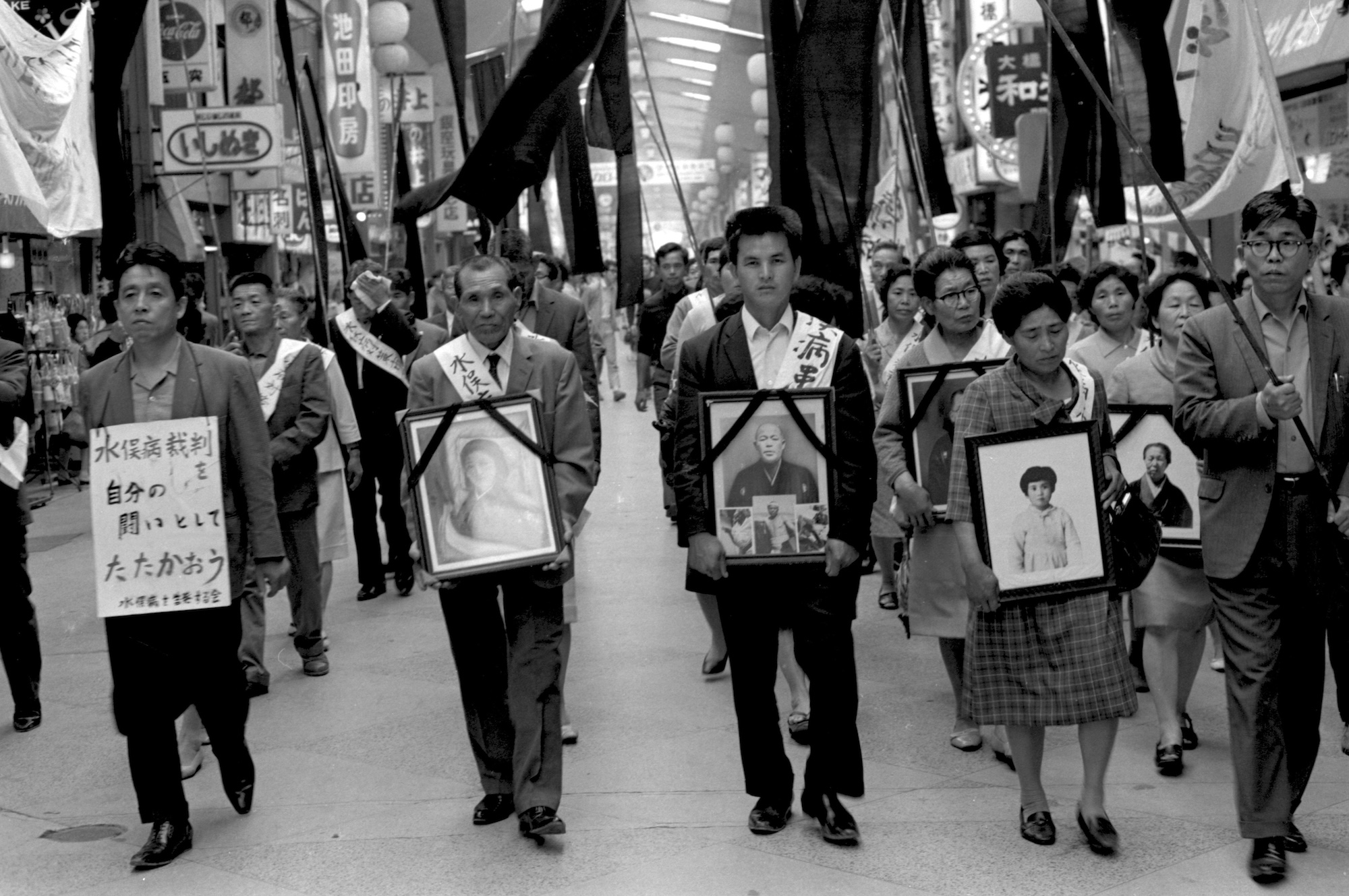
    • 18:00–18:45: Learning from the Past Experience and into the Future: from Minamata High School  (Minamata High School, Japan; Ministry of Environment, Japan). Location: Space B, Level 0

      Minamata High School students are turning their local history into global action! Hear from Norimi Motoyama on their intensive Mercury Studies curriculum, which includes expert lectures, visits to the JNC factory, and research into the science behind Minamata Disease. Additionally, Mio Iwasaka will share results from her critical survey on High School students' awareness and understanding of mercury in the affected community. Don't miss this presentation that connects education, local legacy, and global health.

    • 18:00–18:45: Mining Impacts Calculator: A Tool for Mercury Impact Assessment in ASGM (Brazil Ministry of Environment, Conservation Strategy Fund Brazil). Location: Room 4, Level -1

      Discover the Mining Impacts Calculator at #COP6! This innovative tool quantifies the social & environmental costs of artisanal gold mining, focusing on #mercury pollution. Learn how it helps calculate financial compensation, plan mitigation, including investigations and legal proceedings. Join our #KnowledgeLab to see a live demo and explore its application in the Amazon.

    Wednesday 5 November
    Save the date:
    • 14:00–14:45: Detoxifying Cosmetics and Beauty Ideals: Global voices and solutions to reduce demand for mercury and skin lightening (UNEP Chemicals and Health Branch). Location: Room 3, Level -1

      Mercury in skin lightening products threatens health, the environment, and human rights, yet harmful beauty norms drive their use. This panel unites governments, advocates, and the private sector to share solutions – from public education and policy change to ethical consumer engagement. Join us to spotlight the risks, challenge discriminatory beauty standards, and elevate global voices working to end mercury and colorism-fueled cosmetics.

    • 14:00–14:45: Minamata Disease: Bearing Witness through Photography - Lessons from Minamata for Tomorrow’s Challenges  (Minamata Photographers' Eye Project). Location: Space A, Level 0

      2026 marks the 70th anniversary of the official discovery of Minamata Disease. For over half a century, photographers have documented this devastating case of industrial pollution in Japan. Aileen Mioko Smith co-authored the landmark book Minamata, which inspired the 2020 Hollywood film. At the event, she will share images from her three years photographing the tragedy, reflect on its lessons, and introduce the other photographers of the Minamata Photographers’ Eye Project.

    • 14:00–14:45: How Partnerships and Research Infrastructures Enhance Implementation of the Minamata Convention (Czech Republic / RECETOX, Masaryk University). Location: Space B, Level 0

      This Knowledge Lab brings together three organizations to showcase innovative tools supporting the national implementation of Minamata Convention. GEO showcases GOS4M, a platform for real-time mercury data; PARC presents tools for population exposure and risk mitigation; and EIRENE offers open-access research infrastructure for labs and monitoring networks. Join this session to discover how science–policy partnerships are strengthening the global response to mercury challenges.

    • 18:00–18:45: Building the Evidence: Linking Human and Biota Mercury Monitoring under the Minamata Convention (Open-Ended Scientific Group, Jožef Stefan Institute, Biodiversity Research Institute, Dartmouth College). Location: Space A, Level 0

      This Knowledge Lab highlights how harmonized human biomonitoring and biota mercury monitoring provide complementary evidence to evaluate the effectiveness of the Minamata Convention. Presentations will show new data and tools developed through the OESG and UNEP collaborations, demonstrating how coordinated global measurements strengthen policy and community protection.

    • 18:00–18:45: Shaping Action: Confronting the Illegal Mercury Trade (Environmental Investigation Agency - US). Location: Room 3, Level -1

      Join our Knowledge Lab inspired by the Environmental Investigation Agency-US report, Traffickers Leave No Stone Unturned. We’ll discuss the role of illegal mercury flows--especially tied to illicit gold mining--in reducing the effectiveness of the Minamata  Convention  on  Mercury. Panelists will explore the scale of illicit trade, how to strengthen cooperation across Parties and stakeholders, and identify actionable steps for addressing criminal supply chains and supporting impacted communities.

    • 18:00–18:45: Technical Manual for the Care of Indigenous Peoples Exposed to Mercury: A Health-Based Approach Rooted in Rights and Territory (Secretariat of Indigenous Health - Brazilian Ministry of Health). Location: Space B, Level 0

      Brazil presents a new Technical Manual to guide health services in caring for Indigenous peoples exposed to mercury. Rooted in rights, territory and equity, the Manual translates evidence into clinical pathways, screening and follow-up within the SUS. Join us at COP-6 to discuss implementation and cooperation to protect communities and strengthen health responses.

    Thursday 6 November
    Save the date:
    • 14:00–14:45: Parties Perú and Bangladesh Present Prototypes for Mercury-Free Dentistry in the Americas and Asia (World Alliance for Mercury-Free Dentistry). Location: Space A, Level 0

      With the unanimous statement of the African Ministerial Conference on the Environment and amalgam bans across Europe, attention shifts to Asia and the Americas. Perú and Bangladesh have model plans! Perú adopted legislation, strictest in the mercury-laden Amazon. Bangladesh went step-by-step: military, dental schools, civil society MOU. Co-sponsored by the World Alliance for Mercury-Free Dentistry and with dentist speakers, this Knowledge Lab will show the world that amalgam can be phased out on a rapid timetable. Now is the time to end the amalgam era in dentistry.

    • 14:00–14:45: Fostering the integration of chemicals pollution into National Biodiversity Strategies and Action Plans (NBSAPs): latest tools and countries’ perspectives (UNEP). Location: Room 2, Level -1

      The world faces a triple planetary crisis, with biodiversity loss fueled by pollution and waste mismanagement. Mercury from artisanal and small-scale gold mining and other processes and uses contaminates ecosystems and species such as fish and seafood. This session will share guidance, country experiences, and feedback on integrating and mainstreaming pollution into National Biodiversity Strategies and Action Plans under the CBD and Kunming-Montreal Global Biodiversity Framework.

    • 14:00–14:45: Informing Integrated Chemicals Management: Data Needs and Experience from Mercury (UNEP Chemicals and Health Branch, Intergovernmental Science-Policy Panel on Chemicals, Waste and Pollution). Location: Space B, Level 0

      How can data drive better chemicals management? Join UNEP’s Knowledge Lab on 6 Nov to explore the power of data to support integrated chemicals management, learn from mercury success stories, and discover ideas in science-policy collaboration. 

    • 14:00–14:45: Advancing Gender-Inclusive Solutions in ASGM (Natural Resources Defense Council - planetGOLD programme). Location: Room 3, Level -1

      Join the planetGOLD Programme and the World Bank’s Africa Environmental Health and Pollution Management Programme (AEHPMP) on Thursday, November 6 at 14:00 in the exhibition area for a Knowledge Lab on empowering women in artisanal and small-scale gold mining. Hear from planetGOLD Bolivia and AEHPMP projects in Ghana and Tanzania as they share tools, strategies, and stories of partnering with women miners to improve opportunities and working conditions through training and technical support.

    • 18:00–18:45: Indigenous Peoples and Mercury Monitoring: Experiences in Promoting Human Rights and Co-production of Knowledge Approaches in the Arctic and the Amazon (Inuit Circumpolar Council, Federación Nativa del Río Madre de Dios y Afluentes). Location: Plenary C, Level 0

      This Knowledge Lab will showcase community-led mercury monitoring initiatives in Indigenous territories of the Arctic and the Amazon. It will highlight how these efforts contribute to safeguarding human rights, advancing environmental justice, and co-producing knowledge that strengthens global mercury governance.

    • 18:00–18:45: GEF-UNDP Experiences on the Elimination of Mercury from Consumer and Healthcare Products (United Nations Development Programme). Location: Room 3, Level -1

      Join us at #COP6Minamata! Discover GEF-UNDP experiences in eliminating mercury from consumer and healthcare products. Learn from China, Ecuador, and Ghana on their journey of phasing out mercury devices, promoting mercury-free alternatives, and managing wastes.

    Friday 7 November
    Save the date:
    • 14:00–14:45: Mercury Wastes Management in countries: latest advances and experience in protecting human health and the Environment (UNEP Global Mercury Partnership, BRS Conventions Secretariat). Location: Space A, Level 0

      Learn more about recent tools and projects on the environmentally sound disposal of mercury containing waste under both the Minamata and the Basel Conventions. The session will highlight progress made by sharing recent knowledge from countries involved in the phase out/down of mercury containing products, including on training tools developed by the Minamata Secretariat, the Basel, Rotterdam and Stockholm Conventions Secretariat in cooperation with the Global Mercury Partnership and its area of work on Mercury Waste Management.

    • 14:00–14:45: Mercury reduction in artisanal gold mining using local knowledge and practical strategies - from data to action (Alliance for Responsible Mining). Location: Space B, Level 0

      This presentation explores strategies to eliminate mercury use in Artisanal and Small-Scale Gold Mining through stakeholder engagement. It shows that effective mercury mitigation depends not only on data transparency and reliability, but also on technologies that incorporate local knowledge. Using real-life examples of community-led practices, it highlights why effective stakeholder engagement is critical for practitioners and decision-makers in mercury mitigation.


    Schedule

    Tentative schedule, additional details forthcoming. All times are in the Geneva time zone.

    Streaming