Geneva

Sixième réunion de la conférence des parties à la convention de Minamata sur le mercure (COP-6)

Geneva, Switzerland, 03 nov 2025 - 07 nov 2025
    Informations sur la réunion

    Programme of work and budget for the biennium 2026–2027

    The Programme of work and budget for the biennium 2026-2027, submitted to COP-6 as information document UNEP/MC/COP.6/INF/38, was updated by the Secretariat based on the COP-6 decisions to guide the work during the intersessional period.

    This publication provides additional information on the work planned for the biennium 2026–2027, including on mandates, background information and rationales, activities and outputs, and costs associated with specific activities.

    La sixième réunion de la conférence des parties à la convention de Minamata sur le mercure (COP-6) se tiendra à Genève, en Suisse, du 3 au 7 novembre 2025. Au cours de la COP-5, la Conférence des Parties a élu Osvaldo Álvarez (Chili) président de la COP-6.

    Cette page sera mise à jour au fur et à mesure que de nouvelles informations seront disponibles.


    Pour les faits marquants de la cinquième réunion de la Conférence des Parties, veuillez cliquer sur le lien ci-dessous.

    Documents
    Réunions régionales
    Salle de presse
    Minamata Background
    From the Executive Secretary
    MC/COP6/2025/79
    | 27 juin 2025

    Invitation to the Africa regional preparatory meeting for the sixth meeting of the Conference of the Parties to the Minamata Convention on Mercury, 7-9 October 2025, Gaborone, Botswana (Observers)

    I am pleased to invite your organisation to the Africa regional preparatory meeting for the sixth meeting of the Conference of the Parties to the Minamata Convention on Mercury (COP-6), scheduled to be held on 7-9 October 2025, Gaborone, Botswana.

    Minamata Background
    From the Executive Secretary
    MC/COP6/2025/74
    | 27 juin 2025

    Invitation to the Africa regional preparatory meeting for the sixth meeting of the Conference of the Parties to the Minamata Convention on Mercury, 7-9 October 2025, Gaborone, Botswana

    I am pleased to invite your Government to the Africa regional preparatory meeting for the sixth meeting of the Conference of the Parties to the Minamata Convention on Mercury (COP-6), scheduled to be held on 7-9 October 2025, in Gaborone, Botswana.

    Minamata Background
    From the Executive Secretary
    MC/COP6/2025/81
    | 20 juin 2025

    Invitation to the Latin America and the Caribbean regional preparatory meeting for the sixth meeting of the Conference of the Parties to the Minamata Convention on Mercury, 3-4 September 2025, Santiago, Chile (Observers)

    I am pleased to invite your organisation to the Latin America and the Caribbean regional preparatory meeting for the sixth meeting of the Conference of the Parties to the Minamata Convention on Mercury (COP-6), scheduled to be held on 3-4 September 2025, in Santiago, Chile.

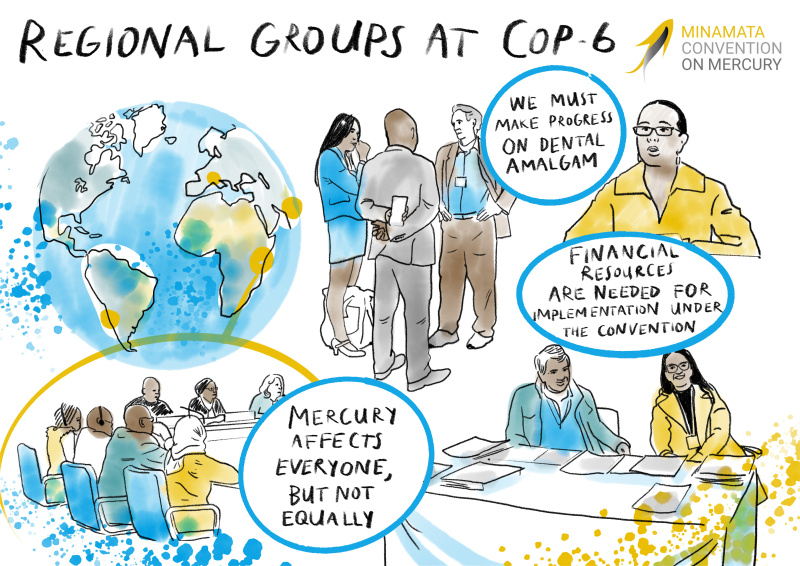
    Unpacking COP-6: regional groups

    regional groups

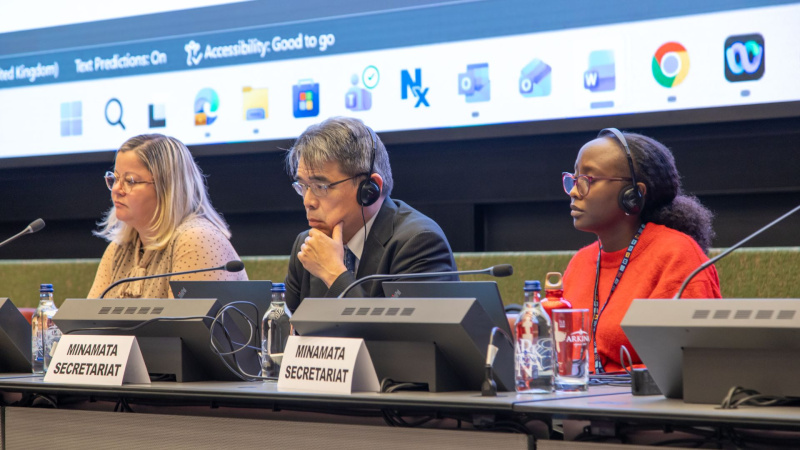
    Regional groups play a central role in shaping negotiations and building a common understanding ahead of each COP. Their preparatory discussions help Parties align positions, identify shared priorities, and ensure that national perspectives are reflected in regional approaches. Thanks to financial support from Switzerland, all regional preparatory meetings convened successfully, and dedicated negotiations and co-chairs training, funded by Germany, strengthened delegates’ capacity to engage effectively in the process. 

    “At COP-6 Parties were working in a very collegial atmosphere, which proves that multilateralism works,” noted Executive Secretary Monika Stankiewicz. The constructive engagement of regional groups contributed significantly to the spirit of cooperation that defined the week and supported progress across key agenda items.


    To Top

    Knowledge labs (Friday 7 November)

    Knowledge Lab

    On the last day of COP-6, two final knowledge labs concluded a week of information sharing and collaboration. The sessions highlighted practical advances in mercury waste management and in mercury reduction in artisanal and small-scale gold mining (ASGM), reflecting the Convention’s spirit of cooperation across sectors and regions, at both local and global levels.

    “Mercury Wastes Management in Countries: Latest Advances and Experience in Protecting Human Health and the Environment”, was organized by the UNEP Global Mercury Partnership together with the Secretariat of the Basel, Rotterdam and Stockholm (BRS) Conventions. The session showcased the value of harmonized approaches across multilateral environmental agreements, with speakers sharing recent tools supporting the environmentally sound disposal of mercury-containing waste under both the Minamata and Basel Conventions. The discussion featured examples of projects advancing mercury phase-out and capacity-building initiatives, including training materials jointly developed by the Minamata and BRS Secretariats with the Global Mercury Partnership’s Waste Management area of work.

    “Mercury Reduction in Artisanal Gold Mining Using Local Knowledge and Practical Strategies – From Data to Action”, hosted by the Alliance for Responsible Mining (ARM), focused on the importance of stakeholder-driven solutions in reducing mercury use in ASGM. Speakers emphasized the need for technological innovation and both technical and local knowledge-sharing mechanisms. Data transparency and reliability were also identified as essential to support mercury-free solutions centered on community needs and priorities, underlining the importance of stakeholder engagement for both practitioners and policymakers in advancing effective mercury mitigation strategies.

    Taking place in parallel with the negotiations and decisions adopted by the Parties to address mercury pollution, these final knowledge labs helped wrap up the last day of COP-6 with a strong message of cooperation, innovation and inclusivity: key ingredients in the global efforts to make mercury history. Learn more about all knowledge labs here.

    To Top

    Detoxifying Cosmetics​ and Beauty Ideals: Movie screening and panel discussion

    Cosmetics Special Event
    © Global Mercury Partnership

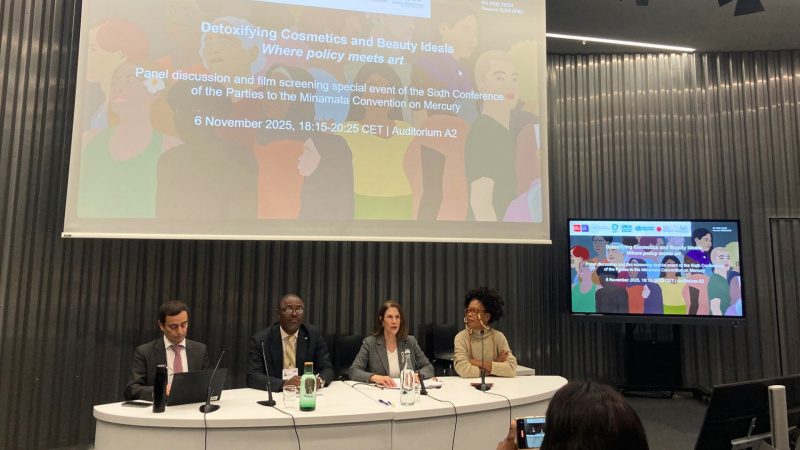
    On Thursday 6 November, the final special event of COP-6, Detoxifying Cosmetics and Beauty Ideals, brought together policymakers, artists and experts at the Graduate Institute in Geneva to explore how art and dialogue can drive change in addressing mercury use in cosmetics. Organized by the Global Mercury Partnership in collaboration with the Graduate Institute, World Health Organization (WHO) and Biodiversity Research Institute, the session examined the health, environmental and social dimensions of toxic beauty standards and their links to mercury pollution.

    The event featured representatives of the Minamata Convention alongside photographer Angélica Dass, UNEP’s Ludovic Bernaudat, WHO’s Serge Molly Allo’o Allo’o, and filmmaker Adama Bineta Sow, who shared perspectives on promoting safe and more equitable approaches to beauty and self-image. Bernaudat emphasized the importance of keeping mercury and all harmful chemicals out of cosmetics, noting that when societies face the health impacts caused by cosmetic use, they have already failed to address the core issue of toxic beauty ideals that make people use these products in the first place.

    The discussion was followed by the screening of "Timpi Tampa", a Senegalese film directed by Sow that uses humor and emotion to challenge colorism and celebrate diversity, which was met with strong engagement from a full audience. The director explained that her inspiration came from observing the growing use of skin-lightening products in Senegal and her desire to encourage women to appreciate their natural beauty and not feel the need to change and poison their bodies.

    The special event illustrated how art can complement policy efforts and serve as a powerful medium for awareness-raising and social change, demonstrating that when words fall short, art can carry the message forward.

    Learn more about the event.

    To Top

    Knowledge labs (Thursday 6 November)

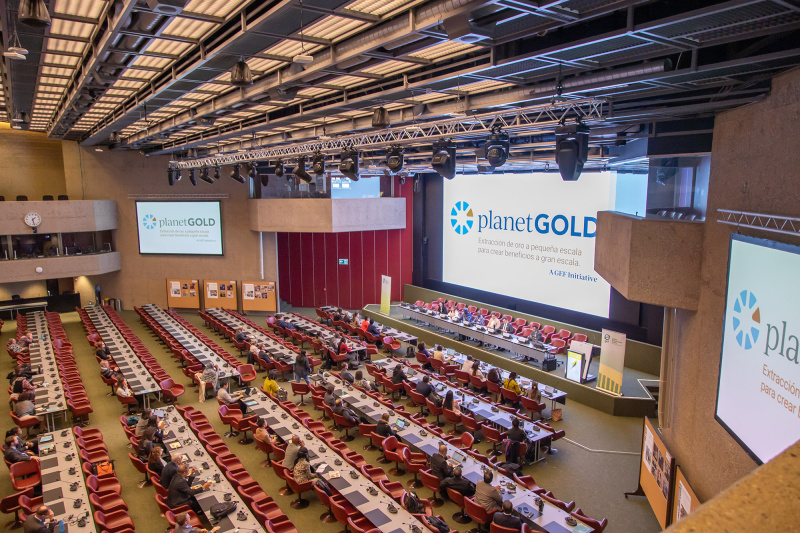
    planetGOLD

    The third day of sessions at COP-6 showcased six Knowledge Labs that spotlighted innovation, collaboration and inclusion in tackling mercury pollution, from data-driven chemicals management to community-led monitoring and case studies from across the globe.

    Parties Perú and Bangladesh Present Prototypes for Mercury-Free Dentistry in the Americas and Asia” organized by the World Alliance for Mercury-Free Dentistry, discussed the issues of oral health and mercury in dental treatments. With strong NGO engagement, the session showcased country examples in eliminating dental amalgam: Perú’s new legislation and Bangladesh’s multi-sectoral collaboration involving military, dental schools and civil society.

    The UNEP session “Fostering the Integration of Chemicals Pollution into National Biodiversity Strategies and Action Plans (NBSAPs)” addressed the interlinkages between chemical wastes and biodiversity management, featuring contributions by Claudia Vega and Aileen Mioko Smith. With high attendance, the knowledge lab shared guidance, country experiences and feedback on integrating and mainstreaming pollution into National Biodiversity Strategies and Action Plans under the Convention on Biological Diversity and Kunming-Montreal Global Biodiversity Framework.

    In “Informing Integrated Chemicals Management: Data Needs and Experience from Mercury”, hosted by the UNEP Chemicals and Health Branch and the Intergovernmental Science-Policy Panel on Chemicals, Waste and Pollution, speakers examined how data can support integrated chemicals management. With opening remarks from Global Environment Facility’s Anil Sookdeo, the Basel, Rotterdam and Stockholm Conventions Secretariat's Abiola Olanipekun, and Minamata Convention Secretariat’s Brenda Koekkoek, the panel emphasized the need for data generation, consistency and comparability, called for global collaboration on monitoring, data generation use, and strengthened capacities to support sound management of chemicals and waste.

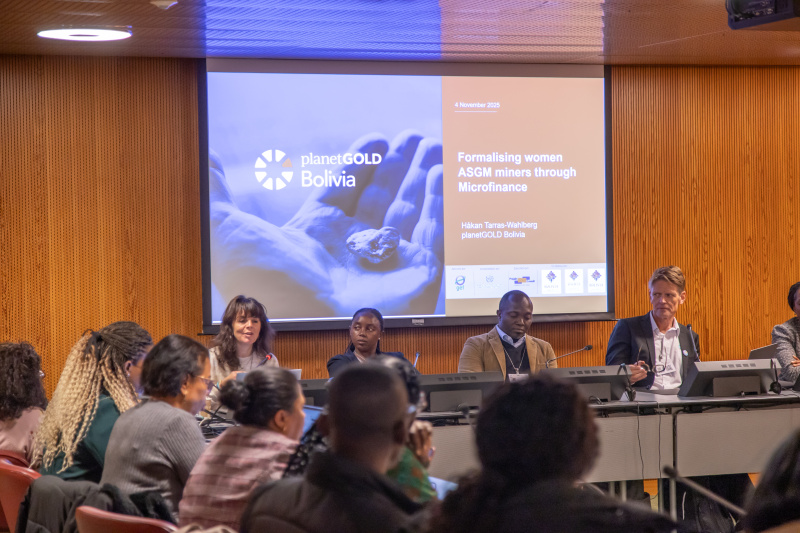
    The planetGOLD programme and Natural Resources Defense Council, together with the World Bank’s AEHPMP, co-hosted “Advancing Gender-Inclusive Solutions in ASGM”. Recognizing the disproportionate impacts of mercury on women, the discussion focused on empowering women in artisanal and small-scale gold mining (ASGM). Speakers from Bolivia, Ghana and Tanzania shared tools, strategies and stories of partnering with women miners to improve opportunities and working conditions through capacity building and technical support for mercury-free technologies.

    Later in the evening, “Indigenous Peoples and Mercury Monitoring: Experiences in Promoting Human Rights and Co-production of Knowledge Approaches in the Arctic and the Amazon” organized by the Inuit Circumpolar Council and Federación Nativa del Río Madre de Dios y Afluentes, highlighted community-led mercury monitoring initiatives. Speakers underscored the importance of safeguarding Indigenous knowledge and ancestral understanding as integral to effective policy and the continuation of traditional ways of life. A key topic was the need for stronger collaboration among authorities, scientists and healthcare professionals to effectively communicate the dangers of mercury exposure. The session emphasized how these efforts can advance human rights, environmental justice and mercury governance.

    At the same time, “GEF-UNDP Experiences on the Elimination of Mercury from Consumer and Healthcare Products” was hosted by the United Nations Development Programme. Representatives from China, Ecuador and Ghana, with insights from several other regions, presented case studies on phasing out mercury devices, promoting safe and accessible alternatives to mercury, and managing mercury waste to protect human health and the environment.

    To Top

    Recognizing the dedication of Parties and delegates at COP-6

    SIP special recognition
    SIP special recognition

    Throughout the COP-6 week, the Secretariat of the Minamata Convention on Mercury has extended its appreciation for the exceptional dedication and support demonstrated by Parties and delegates. 

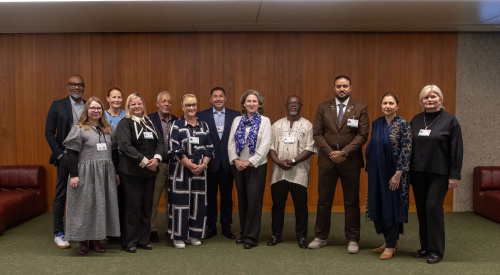
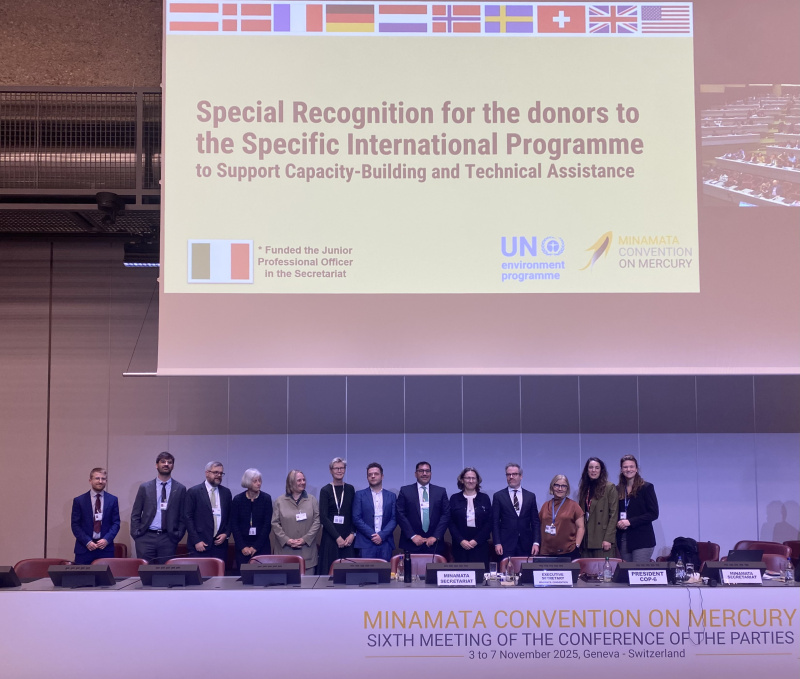
    On Monday 3 November, the Secretariat expressed its gratitude to the donors of the Specific International Programme (SIP) to support Capacity-Building and Technical Assistance (pictured above): Austria, Denmark, France, Germany, the Kingdom of the Netherlands, Norway, Sweden, Switzerland, the United Kingdom of Great Britain and Northern Ireland, and the United States of America. It was also acknowledged the generous support of the Government of Italy, which funded a Junior Professional Officer position within the Secretariat that was instrumental in supporting the SIP. 

    These donors have collectively contributed USD 8.4 million, enabling 34 projects to be approved and implemented across 31 countries through four rounds of funding. A significant number of approved projects have focused on mercury-added products, the environmentally sound management of mercury waste, national regulatory frameworks, and awareness-raising activities. The work of the SIP remains an essential component of the effective implementation of the Minamata Convention.

    On Tuesday 4 November, the Secretariat recognized the Parties that have already submitted their second full national reports, well ahead of the 31 December 2025 deadline. Recognition was accorded to Austria, Burundi, Comoros, Denmark, the Dominican Republic, Mongolia, Sweden, Togo and Uganda. The high reporting rate under the Minamata Convention is a source of great pride for this young multilateral environmental agreement and reflects the continued commitment of its Parties.

    Also instrumental to the effective implementation of the Convention are the co-chairs of its bodies, who were recognized on Wednesday 5 November. The co-chairs of the SIP Governing Board, Andrew Clark and Obed Meringo Baloyi, review and approve projects for the Specific International Programme.

    In the Open-ended Scientific Group, co-chairs Dominique Bally Kpokro and Alexandra Steffan, and previously former co-chair Terry Keating, inform the Convention on mercury research and bridges the gap between science and policy. The Effectiveness Evaluation Group co-chairs, Linroy Christian and Katerina Sebkova, and previously former co-chair Itsuki Kuroda, assess the overall effectiveness of the Convention at the global level.

    The Implementation and Compliance Committee was also acknowledged, with special appreciation extended to chair Yunfang Hu and vice-chair Eva Salplachtova, and previously former vice-chair Musa Kuzumila Ngunila, for their leadership in facilitating the smooth integration of the Convention by Parties and acknowledging their respective national capabilities and circumstances.

    The Secretariat of the Minamata Convention believes that it is important to celebrate the ongoing dedication of Parties and delegates, and looks forward to acknowledge and celebrate even more achievements in the future. See photos from the special recognition occasions on our Flickr account.

    To Top

    Knowledge labs (Wednesday 5 November)

    Detoxifying Cosmetics and Beauty Ideals

    The second day of Knowledge Labs at COP-6 featured six sessions covering a wide range of topics spanning science, policy and art, aimed at raising awareness, sharing tools and fostering collaboration to help tackle mercury pollution.

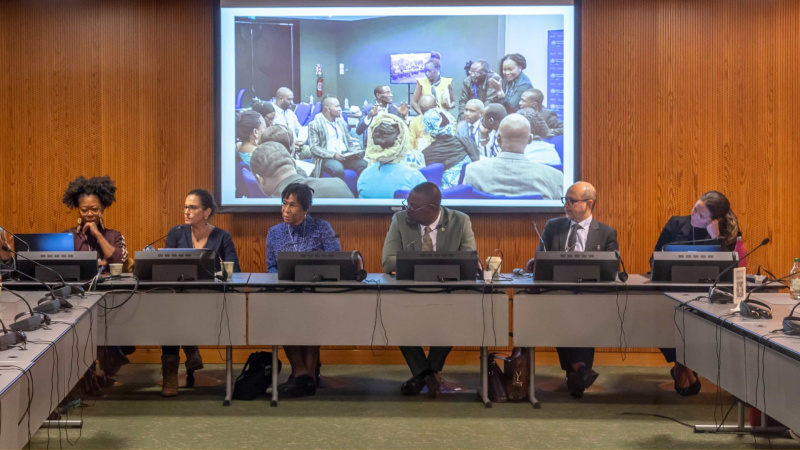
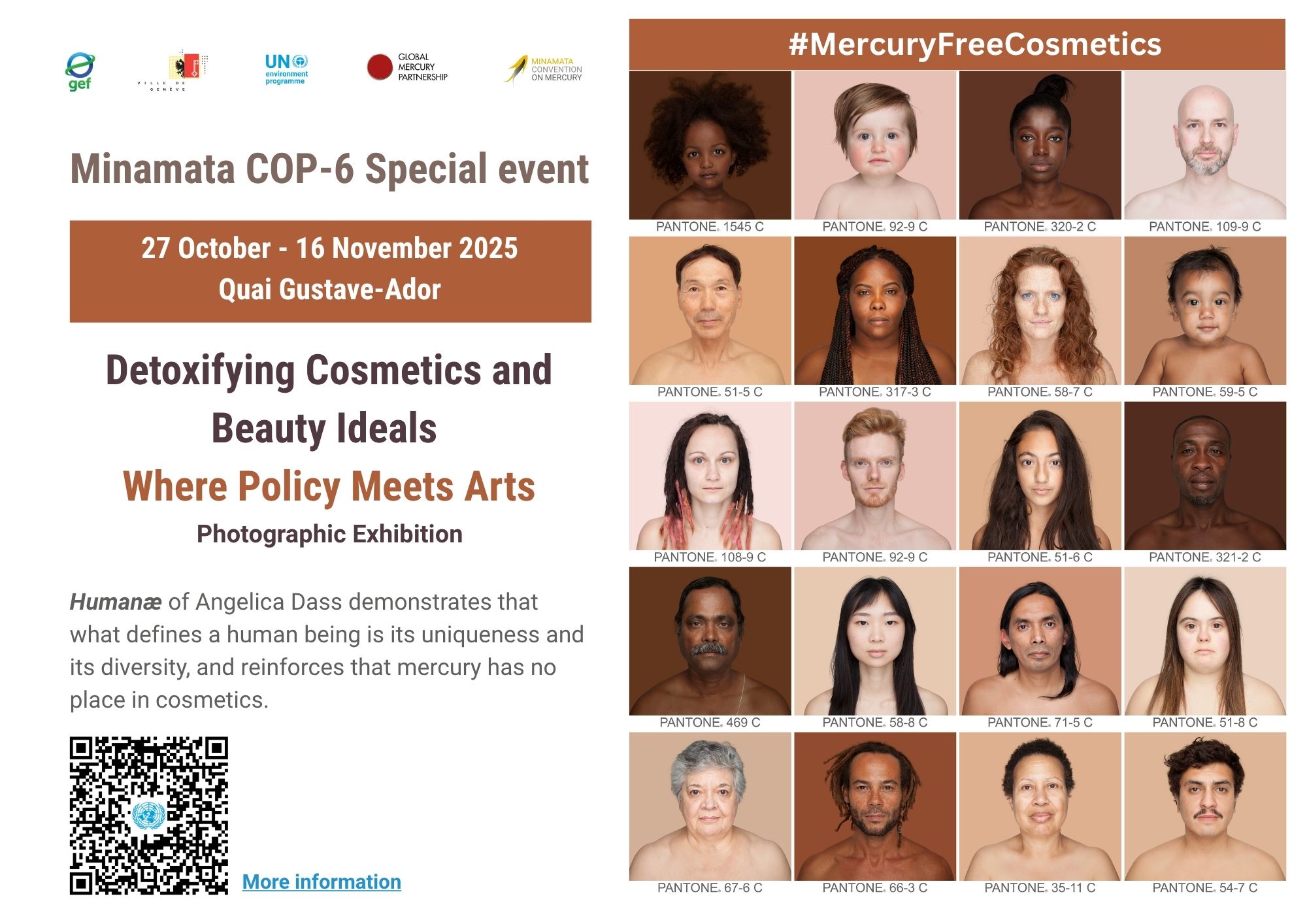
    The session “Detoxifying Cosmetics and Beauty Ideals: Global Voices and Solutions to Reduce Demand for Mercury and Skin Lightening”, organized by UNEP Chemicals and Health Branch, brought together speakers from governments and the private sector. Participants discussed how businesses can empower consumers to make informed, safe, and equitable choices. Artist Angélica Dass, creator of the Humanae photo exhibition, discussed her creative process and how art can serve as a catalyst for change, illustrating the diversity of human skin tones and challenging discriminatory beauty standards and colorism-fueled cosmetic practices. 

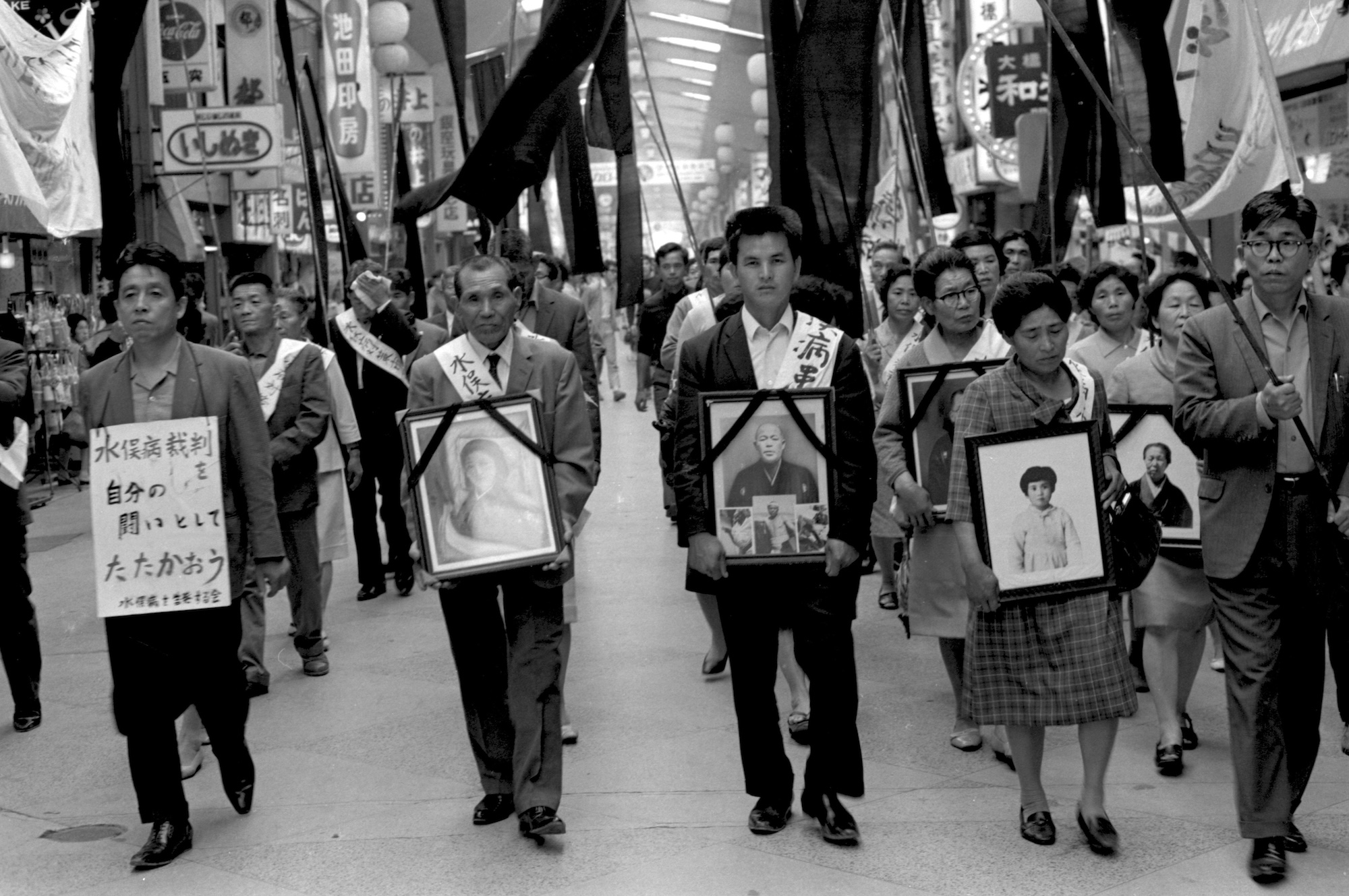
    In “Minamata Disease: Bearing Witness through Photography – Lessons from Minamata for Tomorrow’s Challenges”, organized by the Minamata Photographers’ Eye Project, Aileen Mioko Smith shared her experience documenting the victims of mercury pollution in Japan’s Kumamoto Prefecture. Showcasing the photo exhibition displayed at the venue, she highlighted the importance of using art for activism, motivating action in legislation and management of chemical pollutants, and helping prevent future mercury-related tragedies around the world. 

    The session “How Partnerships and Research Infrastructures Enhance Implementation of the Minamata Convention”, organized by the Czech Republic, RECETOX, and Masaryk University, showcased innovative tools supporting national implementation of the Convention, including a real-time mercury data platform, population exposure and risk mitigation tools, and an open-access research infrastructure for laboratories and monitoring networks. Speakers emphasized the importance of strong links between scientific research and policymaking, highlighting the need for cohesive data frameworks to support effective monitoring and implementation.

    Building the Evidence: Linking Human and Biota Mercury Monitoring under the Minamata Convention”, co-hosted by the Open-ended Scientific Group, Jožef Stefan Institute, Biodiversity Research Institute, and Dartmouth College, presented findings on mercury monitoring in humans and biota, highlighting how harmonized monitoring efforts can provide complementary evidence to evaluate the Convention’s effectiveness and inform efficient global mercury management strategies. 

    In “Shaping Action: Confronting the Illegal Mercury Trade”, organized by the Environmental Investigation Agency (United States), speakers examined regional experiences in addressing illicit mercury trade and use. The discussion underlined the importance of monitoring online platforms and the need for reducing demand for mercury compounds, particularly in artisanal and small-scale gold mining (ASGM), to help prevent illegal mercury flows. 

    The Secretariat of Indigenous Health of the Brazilian Ministry of Health launched the “Technical Manual for the Care of Indigenous Peoples Exposed to Mercury: A Health-Based Approach Rooted in Rights and Territory”, guiding health services in caring for Indigenous Peoples exposed to mercury. The session emphasized the urgent need for coordinated measures on mercury monitoring to reduce the impacts on health and uphold the rights to life and health of impacted communities.
     

    To Top

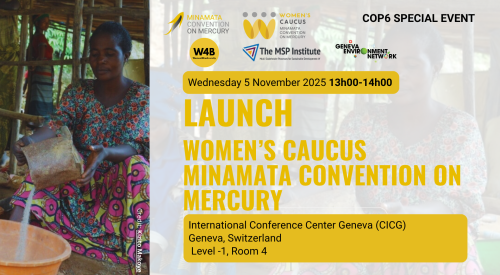
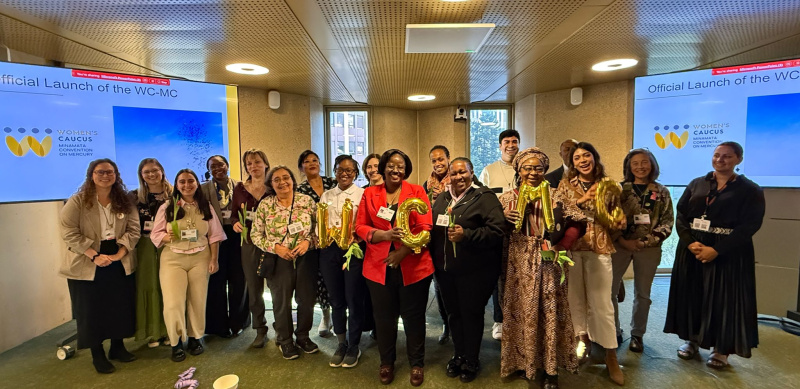
    Launch of the Women Caucus of the Minamata Convention on Mercury

    women caucus

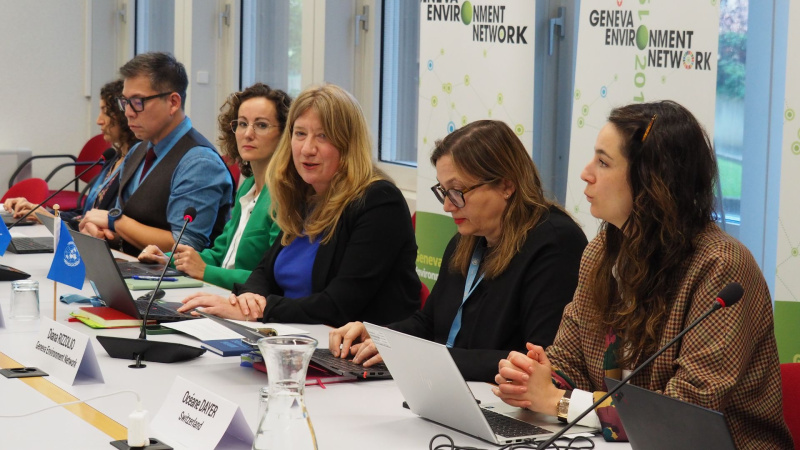
    A milestone moment took place today at #MinamataCOP6 with the official launch of the Women’s Caucus of the Minamata Convention on Mercury, a new space to strengthen the participation and leadership of women in the Convention’s work.

    Co-organized by the Geneva Environment Network (GEN) and co-convened by Women4Biodiversity and the MSP Institute, with the support of the Minamata Convention Secretariat, the event gathered delegates, experts, and advocates from around the world.

    The Women’s Caucus is a space for advancing the equality and empowerment of women within the implementation of the Minamata Convention on Mercury. It provides a self-organized framework for collective action guided by shared experiences and perspectives on preventing women’s exposure to mercury and driving positive change for women in mercury-related decision-making processes.

    The Caucus will work to ensure that women’s experiences, expertise and leadership shape a new era for mercury and chemicals governance through a collaborative and integrated approach. 

    Watch the recording of the event on YouTube.

    To Top

    Inspiring the next generation: Fernando Trujillo meets Ecolint students

    Ecolint

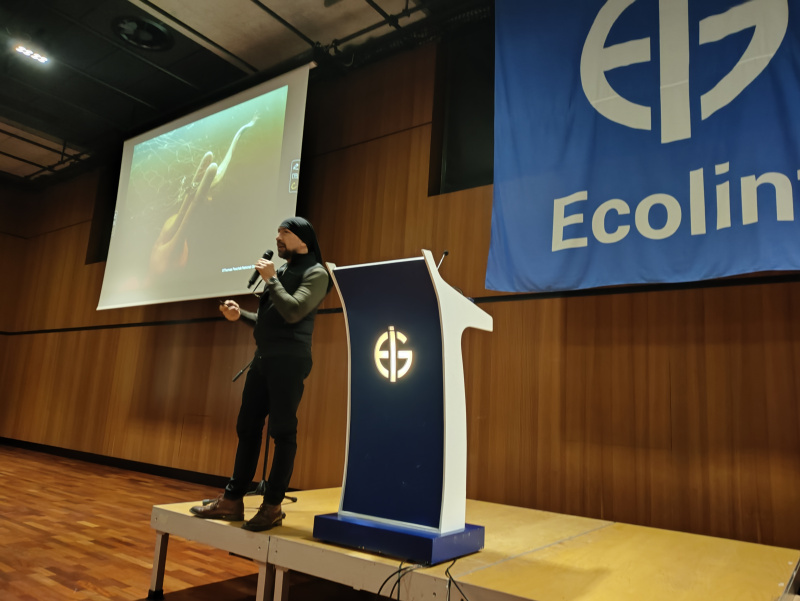
    As part of his activities around the Minamata Convention COP-6, National Geographic Explorer and conservation scientist Fernando Trujillo spent the day with students from the International School of Geneva (Ecolint), visiting both the Nations and La Châtaigneraie campuses. Through three lively sessions, he reached around 450 students, taking them on a journey from his early days as a student to his life’s mission protecting the Amazon and its pink river dolphins.

    With powerful storytelling, Trujillo shared how science, passion, and perseverance can help change the world. He described pink dolphins as sentinels of the Amazon, warning of the threats facing ecosystems and people. These unique and endangered species are increasingly at risk due to habitat degradation, climate change, and mercury pollution. He spoke about the impacts of these pressures and how the Minamata Convention works to reduce such contamination.

    Drawing from more than 80 river expeditions and over 90,000 kilometres of travel through South American rivers, Trujillo encouraged students to stay curious and courageous. “We need to connect science with solutions and with people,” he said, emphasizing the importance of working with local communities and offering them sustainable alternatives. His message was one of hope, passion, humility, teamwork, and discipline, and a call to action: Don’t be passive. Don’t just watch this world, be part of it. Engage. You can make a difference”.

    To Top

    Knowledge labs (Tuesday 4 November)

    Knowledge lab

    On Tuesday, the Knowledge Labs began their series of sessions at COP-6, bringing together governments, organizations, and civil society participants to engage in 45-minute exchanges and showcase their work supporting the implementation of the Minamata Convention. 

    The day opened between Plenary sessions with “From Science to Policy – Integrating Data for the First Effectiveness Evaluation”, organized by the Open-Ended Scientific Group and the Minamata Convention Secretariat. With opening remarks by Brenda Koekkoek, Senior Programme Officer of the Secretariat, who underscored the importance of linking science and policy across Multilateral Environmental Agreements, the session provided an overview of the evaluation process. Speakers also shared findings from the scientific community (MCHgMAP) on mercury trends in air, oceans, and land that will inform long-term decision-making. 

    During the evening slot of the knowledge labs, the Office of the United Nations High Commissioner for Human Rights, in cooperation with IPEN, the UN Special Rapporteur on Toxics and Human Rights, and Mexico, led “Health, Human Rights and Mercury Impacts of ASGM: Prioritising Health Interventions”. With strong participation from NGOs and Indigenous Peoples, the session focused on urgent health impacts of mercury and strategies for prevention, diagnosis and treatment. The panel emphasized the importance of dialogue and the power of information, with particular attention to groups in vulnerable situations, especially women, children and Indigenous Peoples. 

    At the same time, the UN Environment Programme Law Division hosted “InforMEA in Action: Supporting Minamata Convention Implementation through Digital Tools and Legal Transparency”. Participants explored with live demos and real-world cases, how digital tools and legal transparency support the implementation of the Minamata Convention, from aligning laws to interoperability and national reporting. Experts from various Multilateral Environmental Agreements joined to share experiences and highlight how digital governance contributes to mercury reduction and broader environmental benefits. 

    Another session, “Learning from the Past Experience and into the Future: from Minamata High School” was organized by the high school with the Ministry of the Environment of Japan. Students Norimi Motoyama and Mio Iwasaka presented the mercury studies curriculum and a high school survey on awareness and understanding of mercury in the affected community, demonstrating how education can preserve and advance the legacy of Minamata and inspire new generations. 

    One more session, "Mining Impacts Calculator: A Tool for Mercury Impact Assessment in ASGM”, was presented by the Brazil Ministry of Environment and the Conservation Strategy Fund Brazil. The session introduced the Mining Impacts Calculator, an online tool already rolled out in Brazil and Peru that quantifies the social and environmental costs of artisanal gold mining, with a focus on mercury pollution. Through a live demonstration centered on its application in the Amazon region, participants explored how the calculator can serve as a tool for evaluating legal frameworks, tracking policy efficacy, and monitoring the effects of mercury on the environment.

    To Top

    The planetGOLD Programme – Learnings and Looking Ahead

    Planet Gold

    On Tuesday, 4 November, this special event shared observations and lessons learned from an analysis of the first phase of the planetGOLD programme. The session brought together representatives from participating countries, GEF, UNEP, UNDP and partners to reflect on progress since 2018.

    Speakers outlined how the first phase of planetGOLD, active in nine countries, helped formalize mining operations, promote safer technologies and improve miners’ access to finance and markets. Participants also discussed the challenges that remain, from scaling up mercury-free techniques to strengthening policies and traceability systems that can help miners transition responsibly.

    The event closed with a forward-looking discussion on the upcoming phase of the programme, highlighting its alignment with the Minamata Convention’s goal and its contribution to climate, biodiversity and health benefits.

    Watch the video summary of planetGOLD’s first phase here.

    To Top

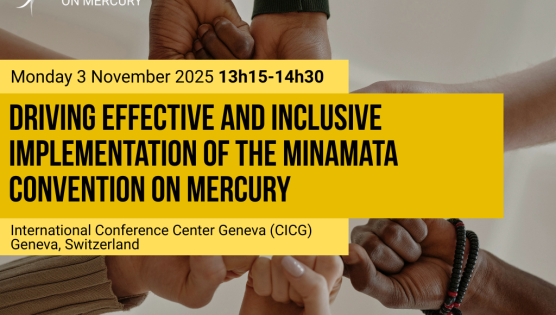
    Driving Effective and Inclusive Implementation of the Minamata Convention on Mercury

    Minamata COP-6

    At the first official day of COP-6, delegates and partners gathered to explore how to accelerate action under the Minamata Convention through cooperation and inclusivity. Opening the session, COP-6 President Osvaldo Álvarez Pérez highlighted that the financial mechanism has been pivotal for the Convention, calling for “resources that are inclusive and aligned with real needs” and for engagement of Indigenous Peoples, women, youth, and local communities.

    After screening the TED talk The Hidden Cost of Buying Gold by Claudia Vega (CINCIA), the speakers shared powerful perspectives, from Vega describing mercury as “the silent toxic,” to UNEP Deputy Executive Director Elizabeth Mrema, who announced the launch of the Women’s Caucus, and Dr. Rüdiger Krech (WHO), who called mercury control “a moral imperative.” Rolph Payet (Executive Secretary, BRS Conventions) underscored the need for collaboration and capacity building, while Fernando Trujillo (Nat GEO Explorer) reminded participants of the Amazon’s fragility and the urgency of national action plans. Chizuru Aoki (GEF) spoke on the financial mechanism and the need for sustainable funding. Youth and Indigenous Peoples representative Alexyss McClellan-Ufugusuku urged the importance of early education and participation rights, while Executive Secretary Monika Stankiewicz reaffirmed that “every COP shows what we can achieve when we work together,” adding that “you give us hope, and I will work hard to meet those expectations.”

    The discussion facilitated the exchange of experiences and featured actions to implement the Minamata Convention that also bring socio-economic, human and environmental benefits. As the Convention moves forward, speakers called for turning words into action and ensuring that no one is left behind in the global effort to make mercury history.

    To Top

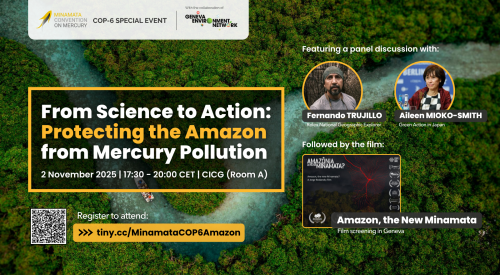
    From Science to Action: Protecting the Amazon from Mercury Pollution

    Amazon

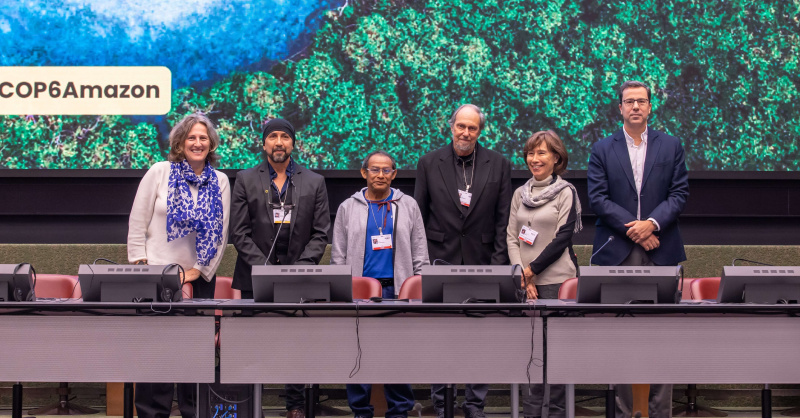
    On the evening before the official opening of the sixth meeting of the Conference of the Parties to the Minamata Convention on Mercury (COP-6), a livestreamed public event was held at the International Conference Centre in Geneva, bringing together participants and guests to focus on the Amazon, a region profoundly affected by mercury pollution. The session, organized with the Geneva Environment Network, connected science, storytelling, and advocacy, linking the legacy of Minamata to the urgent realities facing the Amazon today.

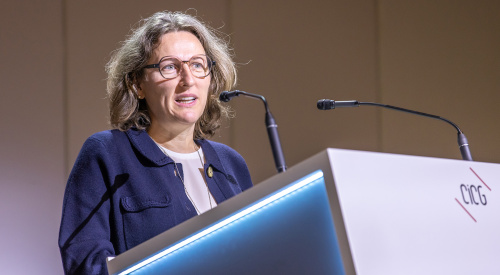
    Executive Secretary Monika Stankiewicz welcomed participants, expressing gratitude for their shared commitment to protecting people and the planet. “I am deeply grateful to all the remarkable speakers who have joined us today. Each of you has inspired me, and I know you will inspire our audience to do everything in our power to make mercury history”, she said.

    Conservation scientist and National Geographic Rolex Explorer of the Year Fernando Trujillo shared decades of research revealing alarming levels of mercury in river dolphins, sentinel species that mirror the contamination threatening Amazonian ecosystems and human health. He called for stronger mercury monitoring, gold traceability, and local action in support of the Minamata Convention. Aileen Mioko Smith, Executive Director of Green Action Japan and co-author of Minamata with photographer W. Eugene Smith, reflected on the photographs that exposed the human toll of Minamata disease, reminding the audience that “we still have a long way to go to end mercury pollution.”

    The dialogue was followed by the screening of the documentary Amazon, the New Minamata?, directed by Jorge Bodanzky, which portrays the impacts of mercury on Indigenous Peoples of Brazil’s Tapajós River. Bodanzky shared his nine-year journey documenting the film, and Indigenous leader Jairo Saw Munduruku called for balance and unity: “the Amazon belongs to all of us”, before singing a traditional song for life and harmony.

    Watch the livestream of the panel here.

    To Top

    Secretariat briefing on financial resources and mechanism

    Secretariat briefing

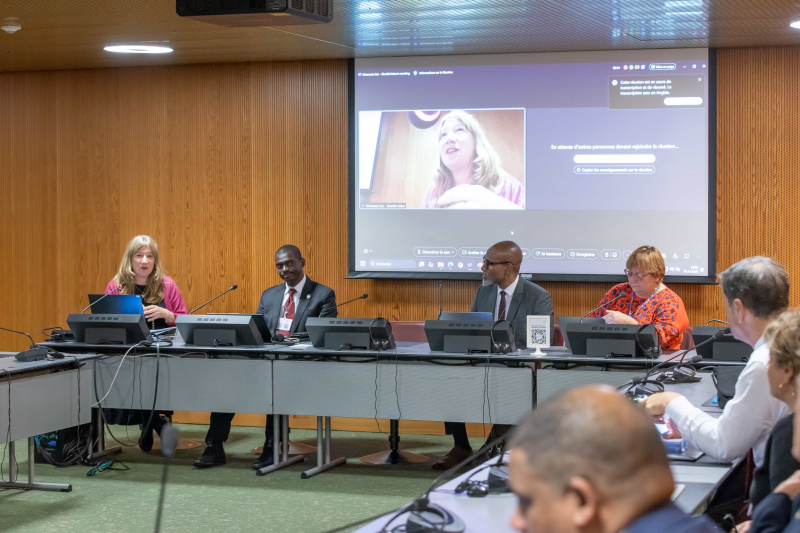
    Ahead of COP-6, the special events began with a dedicated Secretariat briefing on financial resources and mechanism.

    The session opened with remarks by Executive Secretary Monika Stankiewicz, who praised the ongoing efforts of Parties and stakeholders. “When I think about implementation of this Convention, I am so inspired by the work that Parties and a broad range of partners and stakeholders are doing”, she said.

    COP-6 President Osvaldo Álvarez Pérez of Chile underlined that the financial mechanism is central to supporting developing countries in fulfilling their obligations, noting the strong contributions of both the Global Environment Facility (GEF) and the Specific International Programme (SIP), while calling for renewed donor engagement as “the Convention is still young and the coming years will be critical.”

    The Secretariat provided a comprehensive overview of the mechanism’s current status, including updates on GEF and SIP funding, timelines for Party obligations, and preparations for the third review of the financial mechanism. Participants heard reflections on lessons from GEF-8 and SIP projects, and updates on the GEF-9 replenishment process. The interactive discussion closed with a shared sense of purpose: ensuring that the financial mechanism remains responsive, adequately resourced, and effective in enabling all Parties to make mercury history.

    To Top

    Day five: Online events ahead of COP-6

    Friday 17 October

    On Friday 17 October, the final day of online events ahead of COP-6 brought together UN experts, scientists, industry leaders and community advocates to spotlight the real-world challenges of addressing mercury and the opportunities for a healthier, mercury-free future.

    The morning opened with "Managing Mercury in Offshore Oil and Gas: Risks, Challenges, and Opportunities", hosted by the Global Mercury Partnership Oil & Gas Working Group. Speakers examined the significant issue for the offshore oil and gas industry, potentially released through emissions and discharges across the activity life cycle. The session explored the pathways to the marine environment from operations through to decommissioning, discussing challenges and opportunities, including the establishment an Oil & Gas working group under the UNEP Global Mercury Partnership. The presentations and video recording of the session are available.

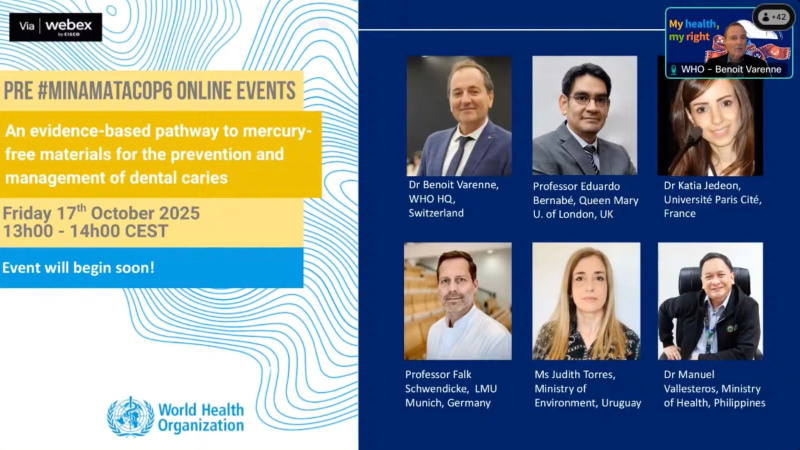
    Midday featured "An Evidence-Based Pathway to Mercury-Free Materials for the Prevention and Management of Dental Caries", organized by the World Health Organization. The event shared new evidence on mercury-free restorative materials and less invasive oral health techniques, exploring the forthcoming WHO Guideline on Environmentally Friendly and Less Invasive Oral Health Care. Speakers also presented country success stories in phasing out dental amalgam, highlighting efforts in line with the implementation of the Minamata Convention, as well as the Global Oral Health Action Plan 2023–2030 and the Bangkok Declaration—No Health without Oral Health. The presentations and video recording of the event are available.

    In the afternoon, the Save Environment and People Agency (SEPA) of Zambia led "Pollution of the Lufupa River by Mercury in Kasempa District". The session presented the impacts of artisanal gold mining on communities, and the ongoing efforts to raise awareness, promote safer mining practices, and call for increased support to protect both people and ecosystems as mining activity expands in the region. The presentations of this event are available.

    The last event of the week was "Evaluating Mercury’s Impact on the Food Chain Across Six Mining Regions in Ghana", organized by Pure Earth in collaboration with the Environmental Protection Agency of Ghana and the UK’s Foreign, Commonwealth and Development Office. The online session presented new study results on mercury contamination in artisanal and small-scale gold mining (ASGM) communities in Ghana, revealing how mercury exposure affects local food chains and human health. The presentations and video recording of this event are available.

    Together, these sessions concluded the week of online events ahead of COP-6, which provided an informal platform for Parties and observers to share knowledge, experiences and innovations, reflecting the Minamata Convention’s commitment to cooperation and shared progress toward a mercury-free future for all.

    To Top

    Day four: Online events ahead of COP-6

    Thursday 16 October

    On Thursday 16 October, the fourth day of online events started with "From Science to Action: Insights from the Minamata Convention and Emerging Priorities", organized by the Intergovernmental Science-Policy Panel on Chemicals, Waste and Pollution (ISP-CWP) and hosted by the Geneva Environment Network. Drawing on lessons from the Minamata Convention, the discussion addressed emerging priorities, especially around metals, metalloids, and minerals, and shared actionable ideas to guide the Panel’s early work. A video recording and further information are available.

    At midday, the Office of the United Nations High Commissioner for Human Rights led "The Impacts of Mercury Exposure on the Rights of Indigenous Peoples and Ways to Address Them", hosted by the Geneva Environment Network as well. The event highlighted the serious threats posed by mercury exposure from artisanal and small-scale gold mining (ASGM) to the health, rights and cultures of Indigenous Peoples. The UN Special Rapporteur on toxics and human rights, Indigenous leaders, and other experts emphasized the importance of meaningful participation of Indigenous Peoples at the COP and in the Convention’s implementation processes. A video recording and further information are available.

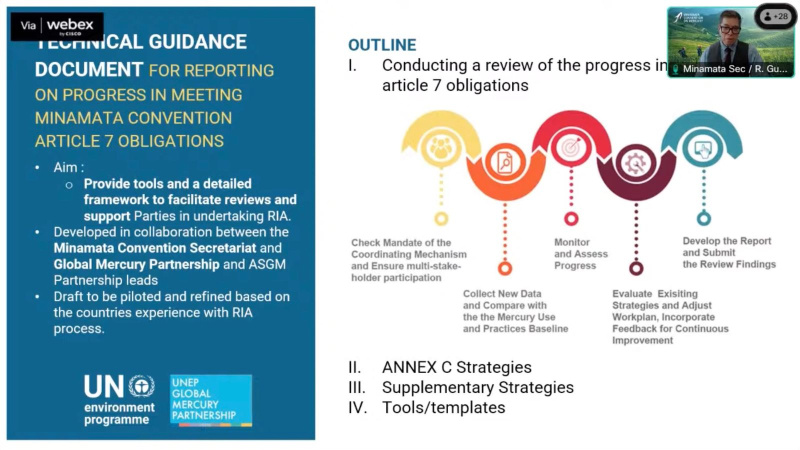
    In the afternoon, the UNEP Global Mercury Partnership presented "Review of the Implementation of Article 7 on ASGM: From Guidance to Implementation". The session outlined progress made since the establishment of ASGM mercury baselines in more than 35 countries, and presented UNEP’s new guidance for the Review of the Implementation of Article 7 (RIA). Participants also explored the first GEF-funded project supporting 23 countries to conduct their RIAs, sharing lessons from both implementing agencies and participating governments. The presentations and video recording of this event are available.

    Later in the day, the International Center for Comparative Environmental Law organized "Measuring the Effectiveness of the Minamata Convention through Legal Indicators", which introduced innovative legal indicators developed by environmental law experts to assess the Convention’s effectiveness in protecting human health and the environment.

    The final event of the day, "Engaging Online Platforms in Enforcing Restricted Product Policies for Mercury-Added Cosmetics", was co-organized by the Sri Lanka Consumer Affairs Authority and the Zero Mercury Working Group. Although the Convention bans the manufacture and trade of mercury-containing skin-lightening products, their production and distribution persist, particularly through online marketplaces. The discussion highlighted case studies (including the Amazon settlement) and explored legal and voluntary measures to strengthen enforcement and prevent the online sale of mercury-added cosmetics. The presentations of this event are available.

    To Top

    Day three: Online events ahead of COP-6

    Wednesday 15 October

    On Wednesday 15 October, The third day of online events ahead of COP-6 opened with "Overview of the Specific International Programme (SIP) and Sharing of Lessons Learned from Completed Projects" organized by the Minamata Convention Secretariat. Speakers, including a Co-Chair of the SIP Governing Board and project managers from Ecuador, North Macedonia, Senegal and Sri Lanka, reflected on the impact of 34 SIP-supported projects worldwide. The presentations and video recording of this session are available.

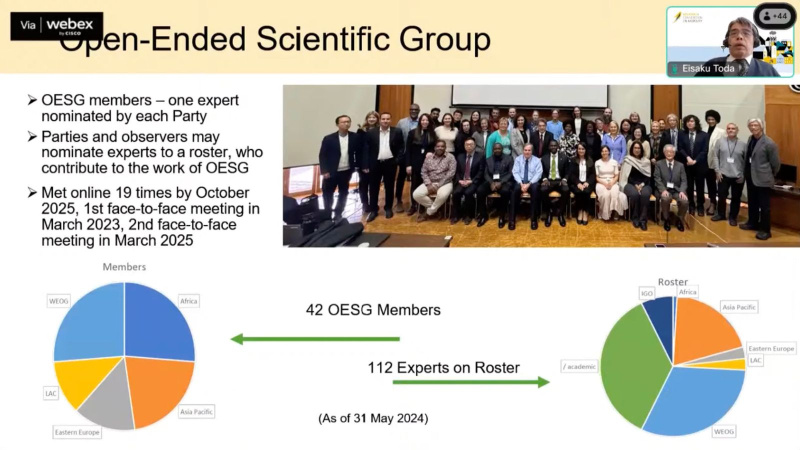
    At midday, the Secretariat hosted "Effectiveness Evaluation: Draft Report of the Open-ended Scientific Group (OESG)". Lead scientists presented findings from ongoing monitoring work across air, biota, and human health, with the OESG members outlining how mercury monitoring data and the development of a scientific report is key for evaluating the Convention’s effectiveness. The presentations and video recording of this event are available.

    In the afternoon, the World Alliance for Mercury-Free Dentistry, in collaboration with the Arab Centre for Environmental Health, organized "Actions and Measures to Phase Out Dental Amalgam by 2030 in the Arab Region". The event explored strategies supported and inspired by the African Proposal to eliminate dental amalgam use, promoting mercury-free dentistry and improving oral health outcomes.

    The following session, "Bridging Generations to #MakeMercuryHistory: New Tools and Partnerships for a Child- and Youth-Responsive Minamata Convention", organized by the Chemicals and Waste Youth Platform, spotlighted the voices of young leaders, UN partners and reseearches. Participants introduced the work to deveop the Minamata Convention for Youth Toolkit and first Global Youth Declaration on Mercury, emphasizing the importance of collaboration and youth engagement to protect children’s health. The presentations of this event are available.

    The day concluded with "An Integrated Approach for the Amazon: International Synergies in Combating Mercury Pollution and Defending Human Rights", organized by the Foundation for Conservation and Sustainable Development Perú. Conducted in Spanish, the session explored proposals for an Amazon Chapter in the Minamata Convention and linkages with the Escazú Agreement and the Convention on Biological Diversity. Speakers underscored the urgent need for coordinated regional and international action to address mercury pollution across the Amazon. The presentations and video recording of this event is available.

    To Top

    Day two: Online events ahead of COP-6

    Tuesday 14 October

    On Tuesday 14 October, the second day of online events ahead of COP-6 continued to provide an informal platform for Parties and observers to exchange experiences and highlight progress in tackling mercury across key sectors.

    The day began with "Managing Mercury Wastes in the Healthcare Sector: From Existing Tools to Inclusive Applications", organized by the UNEP Global Mercury Partnership. The event shared latest tools and case studies illustrating collaborative approaches to reduce mercury exposure and promote environmentally sound waste handling from dental amalgam and mercury containing medical devices. The presentations and video recording of this event are available. 

    The next session, "Multi-country Initiatives Addressing Air Emissions of Mercury", was organized by the Secretariat of the Minamata Convention. The discussion focused on addressing atmospheric emissions of mercury and mercury compounds from specific point sources. The event highlighted initiatives supported by the Global Environment Facility (GEF), including projects targeting emissions from coal-fired power plants and non-ferrous metals production facilities. The presentations and video recording of this event are available.

    In the afternoon, the FDI World Dental Federation (FDI) and the International Association for Dental Research (IADR) co-hosted "Dental Amalgam Phase Down: Alternatives, Access, and Implementation Realities". The session examined the shift from dental amalgam to alternative restorative materials, assessing their performance, accessibility and affordability. Speakers from government, research and clinical sectors discussed the latest updates on dental amalgam and alternative restorative materials. The presentations and video recording of this event are available.

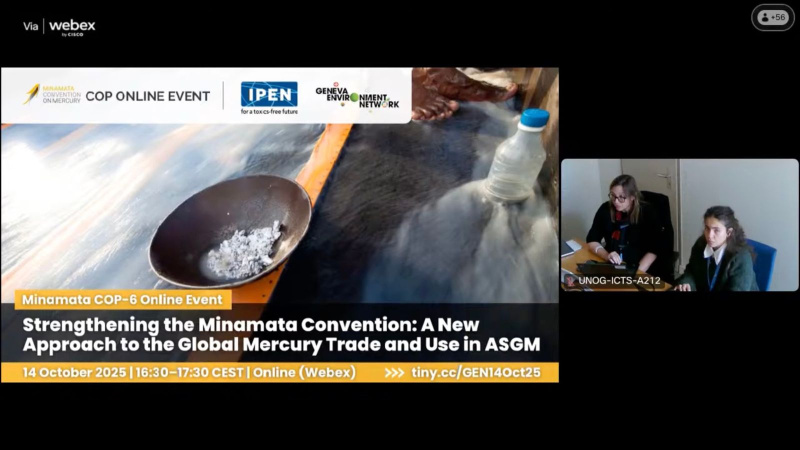
    The final event of the day, "Strengthening the Minamata Convention: A New Approach to the Global Mercury Trade and Use in ASGM", was organized by the International Pollutants Elimination Network (IPEN). The webinar explored the effects of primary mercury mining and legal mercury trade, with a particular focus on mercury use in artisanal and small-scale gold mining (ASGM). Presenters shared new biomonitoring data from Indigenous communities in Peru and Nicaragua, underscoring the human and environmental impacts of mercury use in ASGM.

    To Top

    Day one: Online events ahead of COP-6

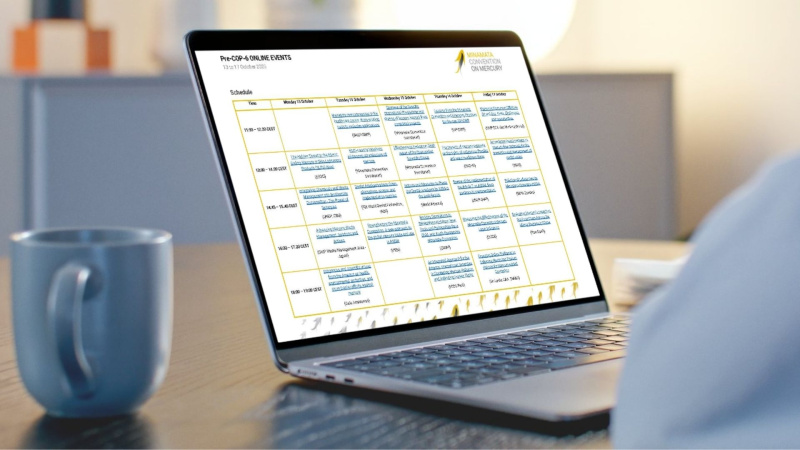
    Schedule

    The week of online events leading up to the sixth meeting of the Conference of the Parties to the Minamata Convention on Mercury (COP-6) began on Monday 13 October, with a full programme of discussions from different regions, partners and stakeholders highlighting global efforts to address mercury pollution.

    The day opened with "The Hidden Threat in the Mirror: Ending Mercury in Skin-Lightening Products (SLPs) Now!", organized by the Environment and Social Development Organization (ESDO) and the Asian Center for Environmental Health. With opening remarks by members of the Secretariat of the Minamata Convention, the inaugural event drew attention to the urgent need to eliminate mercury use in skin-lightening products and showcased new research and collaborative initiatives. The presentations of this event are available.

    This was followed by "Integrating Chemicals and Waste Management into Biodiversity Conservation", organized by UNEP and the Convention on Biological Diversity. The session focused on how chemicals and waste management can strengthen biodiversity conservation, highlighting the value of synergy across multilateral environmental agreements. The presentations and video recording of this event are available.

    In the afternoon, the Global Mercury Partnership Waste Management Area - Japan hosted "Advancing Mercury Waste Management: Solutions and Actions". The session presented practical tools, best practices, and examples of mercury waste management from various sectors, along with updates on partnership activities. The presentations and video recording of this event are available.

    The day concluded with "Indigenous and Scientific Voices from the Amazon on Cross-Border Mercury Protection", organized by Fundación Gaia Amazonas. Conducted in Spanish, the event brought together scientists and Indigenous leaders to discuss the impacts of mercury pollution from gold mining on ecosystems and human health, and to explore collaborative and cross-border solutions for the Amazon region. The presentations and video recording of this event are available.

    To Top

    Africa regional preparatory meeting

    Africa meeting

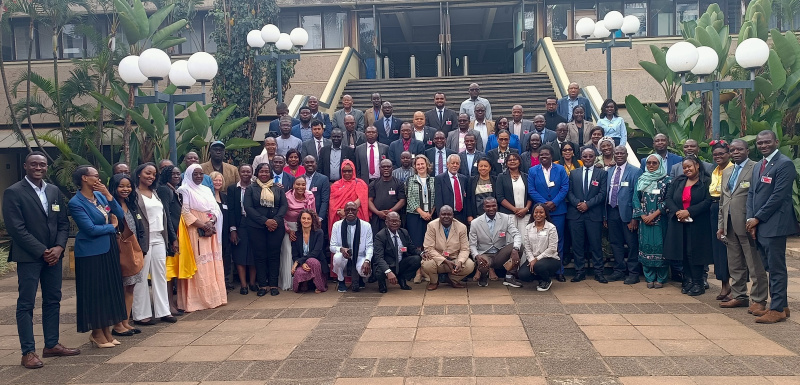
    The African regional preparatory meeting for the sixth meeting of the Conference of the Parties to the Minamata Convention on Mercury (COP-6) was convened from 7 to 9 October at the United Nations Environment Programme (UNEP) headquarters in Nairobi, Kenya.

    Participants expressed their appreciation to the co-chairs, Sidi Ould Aloueimine (Mauritania) and Mohamed Abdulai Kamara (Sierra Leone), whose guidance was instrumental in framing the discussions. Acknowledgement was also given to government delegates and civil society representatives for their active engagement and substantive contributions.

    Conducted in both English and French, this meeting offered a key opportunity for dialogue in the region, allowing stakeholders to review progress made, identify challenges, and coordinate positions in advance of the COP-6 negotiations scheduled for November in Geneva. The event was made possible through the generous financial support provided by Switzerland and Germany.

    Check the Secretariat presentations and the photos of the meeting.

    To Top

    GEN briefing on Minamata Convention COP-6

    GEN briefing

    This hybrid briefing took place in Geneva, Switzerland, on 2 October (13:00–14:30 CEST), organized under the Geneva Environment Network (GEN). The Secretariat of the Minamata Convention provided updates on the preparations for COP-6, including an overview of logistical arrangements, the tentative programme of events, and how the upcoming meeting can best support Parties and the wider community working to reduce mercury pollution.

    The Executive Secretary of the Minamata Convention, Monika Stankiewicz, stated: "As we approach COP-6, I would like to share with you why I remain highly optimistic the Minamata Convention on Mercury will continue making positive impact on people's lives everywhere and will serve as a shining example of multilateral cooperation and a model of an actionable multilateral environmental agreement (MEA)".

    The session was opened by the COP-6 President, Osvaldo Patricio Álvarez Pérez, who underlined: "Let's use this moment to build on our successes, face these challenges head on and push for a mercury-free world".

    Learn more about the event and watch the video recording.

    To Top

    Asia-Pacific regional preparatory meeting

    AP meeting

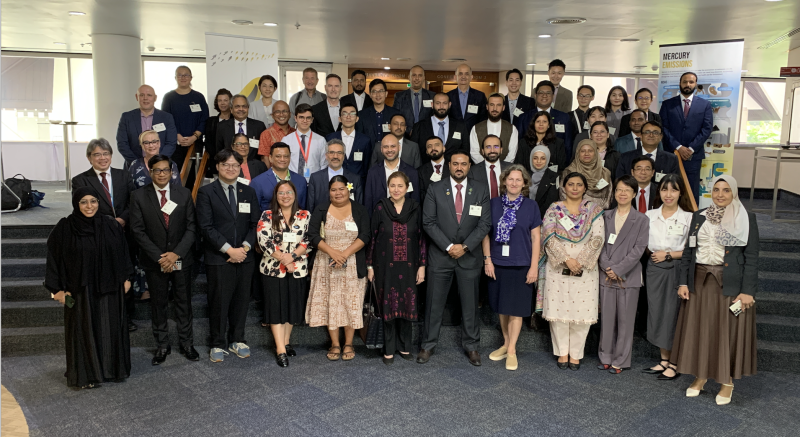
    On 23 and 24 September, the Asia-Pacific regional preparatory meeting for the sixth meeting of the Conference of the Parties to the Minamata Convention on Mercury (COP-6) was held at the United Nations ESCAP headquarters in Bangkok, Thailand.

    Special appreciation was expressed to co-chairs Saeed A. Alzahrani (Saudi Arabia) and Aisha Humera Moriani (Pakistan) for helping frame the discussions, and to all government delegates and civil society participants for their constructive engagement and valuable contributions.

    The preparatory meeting served as an important moment for dialogue, enabling participants to reflect on progress, consider challenges and align positions before negotiations begin in Geneva this November for COP-6. The meeting was organized thanks to the generous financial support provided by Switzerland.

    Check the Secretariat presentations and the photos of the meeting.

    To Top

    Eastern European States regional preparatory meeting

    EES meeting

    The Eastern European States regional preparatory meeting for the sixth meeting of the Conference of the Parties to the Minamata Convention on Mercury (COP-6) took place on 16 and 17 September in Geneva.

    The consultation provided governments and stakeholders with a space to prepare for the negotiations and exchange perspectives, building a shared understanding of regional priorities and supporting Parties in arriving in Geneva in November ready to work together for a successful COP-6.

    Appreciation was extended to all government delegates and civil society participants for their valuable contributions, in particular to co-chairs Claudia Dumitru (Romania) and Irma Gurguliani (Georgia) for guiding the discussions. The regional preparatory meeting was organized thanks to the generous financial support provided by Switzerland.

    Check the Secretariat presentations and photos of the meeting

    To Top

    GRULAC regional preparatory meeting

    GRULAC preparatory meeting

    On 3 and 4 September, Santiago de Chile hosted the regional preparatory meeting for Latin America and the Caribbean in the lead-up to the sixth meeting of the Conference of the Parties to the Minamata Convention on Mercury (COP-6).

    This was the first of the series of regional consultations, which continued in the following weeks with the meetings for Eastern Europe, Asia and the Pacific, and Africa. Through this constructive dialogue, countries of the region moved closer to arriving in Geneva in November prepared to negotiate and contribute to a successful COP-6.

    Sincere appreciation was extended to ECLAC for its hospitality, to the Chair of the meeting, Miriam Medel García, to COP-6 President Osvaldo Álvarez-Pérez, to Bureau member Linroy Christian, and to all government representatives and civil society participants for their active engagement and valuable contributions. The regional preparatory meeting was organized thanks to the generous financial support provided by Switzerland and Germany.

    The meeting also piloted the new training module for co-chairs and negotiators, based on the recently published manual. Check the Secretariat presentations and photos of the meeting.

    To Top
    Travaux intersessions

    Travaux intersessions et documents soumis en vue de la COP-6

    La Conférence des Parties a tenu sa cinquième réunion du 30 octobre au 3 novembre 2023 à Genève (Suisse) et a convenu d’un certain nombre de mesures à prendre. Le 22 janvier 2024, la Secrétaire exécutive a envoyé une lettre aux Parties et aux observateurs pour leur demander des informations sur les suites données à ces mesures.

    L’état d’avancement des mesures peut être consulté sur les pages dont les liens figurent ci-dessous. D’autres liens seront ajoutés en fonction des dernières informations disponibles.
     

    Peuples autochtones et communautés locales

    Décision MC-5/1

    Notant avec préoccupation que les peuples autochtones, ainsi que les communautés locales, sont particulièrement vulnérables à l’exposition au mercure et sont parmi les premiers à faire face aux graves effets sanitaires et environnementaux résultant de la pollution par le mercure, en raison de leur relation étroite avec l’environnement et ses ressources, et se félicitant de la contribution des peuples autochtones, ainsi que des communautés locales, et en particulier de la participation des femmes et des filles, qui ont fait face aux effets du mercure avec résilience, à la réalisation de l’objectif de la Convention de Minamata et des cibles et objectifs du Programme de développement durable à l’horizon 2030, la Conférence des Parties a noté qu’il importait d’élargir la participation des populations autochtones et des communautés locales à la mise en œuvre des projets et des programmes entrepris dans le cadre de la Convention de Minamata et a engagé les Parties à soutenir, le cas échéant, la participation des organisations autochtones, ainsi que des communautés locales et d’autres parties prenantes concernées, aux réunions de la Conférence des Parties et à d’autres processus connexes.

    Le secrétariat s’emploie actuellement à élargir son réseau et à améliorer la participation active des peuples autochtones et des communautés locales à la mise en œuvre des projets et programmes entrepris dans le cadre de la Convention de Minamata, ainsi qu’à préparer un rapport sur les besoins et les priorités des peuples autochtones et des communautés locales en ce qui concerne les effets du mercure sur leur santé, leurs moyens de subsistance, leur culture et leurs connaissances.

    Sources d’approvisionnement en mercure et commerce

    Décision MC-5/2

    Le Secrétariat mène les activités suivantes pour mettre en œuvre cette décision en 2024 :

    Grâce à la généreuse contribution de l’Union européenne et de l’Espagne, le secrétariat élabore des orientations pour aider les Parties à dépister, gérer et réduire les échanges commerciaux de mercure issu de l’extraction primaire.

    Les fonds européens permettent également au secrétariat d’aider les Parties à mieux comprendre les dispositions relatives au commerce, leurs relations avec d’autres articles de la Convention et l’utilisation des formulaires commerciaux au moyen de webinaires et de ressources qui seront élaborées avec des partenaires tels que l’École des cadres du système des Nations Unies, le Portail d’information des Nations Unies sur les accords multilatéraux relatifs à l’environnement (InforMEA) et l’Organisation mondiale des douanes.

    Le secrétariat collecte actuellement des fonds afin d’établir une version mise à jour des actuelles orientations relatives aux stocks adoptées dans la décision MC-1/2 afin d’y inclure les types de mesures qui pourraient être prises pour s’acquitter de l’obligation de s’efforcer de manière continue de recenser les stocks et sources.

    Dans la décision MC-5/2 sur les sources d'approvisionnement en mercure et le commerce, la COP-5 a invité les Parties à soumettre au Secrétariat, d'ici le 25 mars 2025, des informations sur les expériences et les défis rencontrés dans la mise en œuvre de l'article 3, ainsi que des informations sur les activités menées en lien avec la Déclaration de Bali sur la lutte contre le commerce illégal de mercure. Ces informations seront compilées par le Secrétariat pour examen lors de la COP-6. Les contributions peuvent être envoyées à l'adresse suivante : mea-minamatasecretariat [at] un.org (mea-minamatasecretariat[at]un[dot]org).

    Étude de l’offre, de la production, du commerce et de l’utilisation au niveau mondial de composés du mercure (décision MC-5/3)

    Grâce à la généreuse contribution du Canada, le Secrétariat développe l'étude mentionnée ci-dessus, qui sera terminée début 2025. Le plan de l'étude est disponible ici. Les Parties et les parties prenantes intéressées sont invitées à soumettre les informations pertinentes d'ici le 31 décembre 2024.

    Annexes A et B (produits et procédés)

    Cosmétiques (Décision MC-5/5)

    La Secrétaire exécutive a envoyé une lettre aux Parties et aux observateurs pour les inviter à communiquer des informations d’ici au 30 juin 2024 à l’aide du formulaire de communication d’informations. Les formulaires reçus ont été téléchargés et sont disponibles ici. Un consultant travaille avec l’Organisation mondiale de la santé (OMS) et le Programme des Nations Unies pour l'environnement (PNUE) à la rédaction d’un rapport, qui sera publié sur la même page début 2025 pour commentaires.

    Production de chlorure de vinyle (Décision MC-5/6)

    Les Parties et les organisations concernées sont invitées à communiquer à titre volontaire au secrétariat, d’ici au 31 mars 2025, des informations sur les solutions de remplacement du mercure et des composés du mercure dans la production de chlorure de vinyle qui sont techniquement et économiquement réalisables, conformément au paragraphe 8 de l’article 5 et au paragraphe 1 de l’article 17 de la Convention. Les informations reçues seront publiées sur la Web susmentionnée.

    Cosmetics (Decision MC-5/5)

    The Executive Secretary sent a letter to Parties and observers to invite the submission of information by 30 June 2024 using the submission format. The submissions received have been uploaded here. A draft report compiling and synthesizing the submitted information is available here, with Annex 1 (excel table) here. Parties and relevant stakeholders are invited to review and comment on the draft, using this comment form by Monday 28 April 2025.

    Extraction minière artisanale et à petite échelle d’or

    Les Parties qui ont notifié le secrétariat conformément au paragraphe 3 de l’article 7 et qui n’ont pas encore soumis leur plan d’action national relatif à l’extraction minière artisanale et à petite échelle d’or sont invitées à le faire dans les meilleurs délais. Les plans d’action nationaux reçus sont disponibles ici. Il est rappelé aux Parties qui ont soumis un Plan d’action national qu’elles sont tenues de fournir tous les trois ans un compte rendu des progrès qu’elles ont accomplis dans le respect de leurs obligations au titre de l’article 7 et de faire figurer ces comptes rendus dans leurs rapports soumis en application de l’article 21. Les prochains rapports nationaux complets doivent être soumis d’ici au 31 décembre 2025.

    La Conférence des Parties a prié le secrétariat d’élaborer des orientations supplémentaires sur la participation effective des peuples autochtones, des communautés locales et d’autres parties prenantes à l’élaboration et à la mise en œuvre des plans d’action nationaux. Les Parties, les peuples autochtones, les communautés locales et d’autres parties prenantes seront invités, en 2024, à fournir des informations permettant d’éclairer l’élaboration des orientations supplémentaires.

    Émissions de mercure

    Les Parties ayant de l’expérience dans l’utilisation des orientations adoptées par la Conférence des Parties conformément aux paragraphes 8 et 9 de l’article 8 sont encouragées à fournir au secrétariat des informations sur cette expérience. Les informations reçues seront publiées sur cette page Web. Les informations soumises d’ici au 31 mars 2025 seront compilées pour la sixième réunion de la Conférence des Parties.

    Déchets de mercure

    Parties are invited to submit information regarding their waste management regulations and programmes as mentioned in Article 11 (3) (a), with a focus on matters not addressed by the technical guidelines on the environmentally sound management of wastes consisting of, containing or contaminated with mercury or mercury compounds under the Basel Convention, by 31 October 2024. The following submissions have been received. The Secretariat is to collect and organize the information and make it available by 1 January 2025.

    Les Parties sont invitées à communiquer au secrétariat, avant le 31 octobre 2024, des informations sur leurs réglementations et programmes en matière de gestion des déchets, tels que mentionnés à l’alinéa a) du paragraphe 3 de l’article 11, en particulier concernant les questions qui ne sont pas traitées dans les directives techniques sur la gestion écologiquement rationnelle des déchets constitués de mercure ou de composés du mercure, en contenant ou contaminés par ces substances, élaborées au titre de la Convention de Bâle. Les soumissions suivantes ont été reçues. Le Secrétariat est chargé de collecter et d'organiser les informations et de les rendre disponibles d'ici le 1er janvier 2025.

    Financial mechanism

    The Secretariat of the Minamata Convention on Mercury is collecting proposals in relation to providing surge capacity in servicing the COP-6 and developing the report on relevant Convention obligations and deadlines and the extent to which such obligations and deadlines are being met by Parties. The deadline for submissions is 12 June 2025. Details can be found here.

    Première évaluation de l’efficacité

    Décision MC-14

    For the work between COP-4 and COP-5, please visit here.

    Les travaux menés entre les quatrième et cinquième réunions de la Conférence des Parties peuvent être consultés ici.

    Groupe d’évaluation de l’efficacité (EEG en anglais)

    Lors de sa cinquième réunion, par la décision MC-5/14, la Conférence des Parties (COP) a établi le Groupe d'évaluation de l'efficacité (EEG) pour travailler conformément au mandat défini à l'annexe I de cette décision. Elle a également convenu d'examiner les résultats de la première évaluation de l'efficacité de la Convention lors de sa septième réunion, provisoirement prévue pour 2027. Dans cette même décision, la COP a adopté les indicateurs pour la première évaluation de l'efficacité, tels qu'énoncés dans l'annexe II de la décision.

    Le Groupe d’évaluation de l’efficacité sera composé de 25 représentant(e)s désigné(e)s par les Parties de chacune des cinq régions des Nations Unies, à raison de cinq par région. La liste des membres de ce Groupe peut être consultée ici.

    Les coprésidents du Groupe scientifique à composition non limitée (voir ci-dessous) et le président du Comité de mise en œuvre et de conformité seront invités à participer au Groupe d’évaluation de l’efficacité en tant qu'observateurs. De plus, cinq observateurs provenant de pays développés et en développement seront également invités, issus de la société civile, des organisations autochtones, des organisations communautaires locales, des organisations intergouvernementales, de l'industrie et du Partenariat mondial sur le mercure, pour contribuer au travail de ce Groupe . Des observateurs supplémentaires pourront être invités sur une base ad hoc.

    Le Groupe d'évaluation de l'efficacité travaillera en ligne et tiendra jusqu'à deux réunions en présentiel. La première réunion du Groupe d'évaluation de l'efficacité a eu lieu en ligne le 25 juin 2024. Lors de cette première réunion, le Groupe a élu ses coprésidents : Mme Itsuki Kuroda, du Japon, et M. Linroy Christian, d'Antigua-et-Barbuda, et a convenu d'un calendrier provisoire pour le travail à accomplir pendant la période intersession actuelle, y compris des dates provisoires pour les réunions, les étapes importantes et l'examen par les Parties.

    Les deuxième et troisième réunions du Groupe auront lieu en ligne respectivement le 4 septembre et le 5 décembre 2024.

    Les documents relatifs aux réunions du Groupe d'évaluation de l'efficacité sont disponibles via son espace de travail en ligne.

    Groupe scientifique à composition non limitée (OESG en anglais)

    Le Groupe scientifique à composition non limitée a été créé en application de la décision MC-4/11. La liste actuelle des membres du Groupe et des experts appelés à contribuer aux travaux du Groupe est disponible ici. Les Parties qui n’ont pas désigné de membre peuvent soumettre une nomination en envoyant le formulaire de nomination au secrétariat. Les Parties et les parties prenantes qui le souhaitent peuvent également nommer des experts pour les inscrire sur la liste en remplissant un formulaire en ligne ou en utilisant le formulaire de nomination disponible ci-dessus. 

    Le Groupe scientifique à composition non limitée a préparé des plans pour appuyer ses travaux d’élaboration de résumés de données et a appelé les Parties et les parties prenantes à manifester leur intention de fournir des données sur la surveillance du mercure, les émissions et les rejets de mercure. Le secrétariat avait reçu 106 manifestations d’intérêt en mai 2024.

    Le secrétariat a conclu un contrat avec l’Institut de recherche sur la biodiversité (Biodiversity Research Institute – BRI) pour qu’il maintienne une base de données et pour qu’il reçoive et compile les données. L’Institut contacte, au nom du Groupe scientifique à composition non limitée, les points de contact indiqués dans les manifestations d’intérêt pour solliciter la soumission de données, et leur envoie un formulaire d’autorisation d’utilisation des données dans lequel ils peuvent indiquer les conditions dans lesquelles ils souhaitent que les données soient utilisées.    

    Le Groupe ayant constaté le manque actuel de données, il a renouvelé son appel à manifestation d’intérêt. Les Parties et les parties prenantes sont encouragés à soumettre leur manifestation d’intérêt au moyen d’un formulaire en ligne ; le Groupe se prépare à recueillir ces données, ainsi qu’à solliciter des manifestations d’intérêt supplémentaires. 

    En ce qui concerne la collecte et l'analyse des données sur les émissions et les rejets de mercure, le Secrétariat a organisé un atelier mondial sur la comparabilité des données sur les émissions et les rejets de mercure à Cape Town, Afrique du Sud, les 18 et 19 juillet 2024, avec le soutien financier de l'Union européenne(la note conceptuelle.) Le rapport sur le travail concernant les inventaires des émissions/libérations est disponible ici.

    Le Groupe prévoit sa deuxième réunion en présentiel à Minamata, au Japon, du 17 au 21 mars 2025. Des lettres ont été envoyées aux membres et aux experts inscrits sur la liste, les invitant à informer le Secrétariat de leur intention de participer d'ici le 25 novembre 2024.


    Genre

    Plan d’action relatif aux questions de genre (décision MC-5/15)

    Les Parties et les parties prenantes sont invitées à participer aux activités prioritaires du Plan d’action relatif aux questions de genre pour l’exercice biennal 2024–2025.

    Le secrétariat mène les activités prioritaires suivantes dans le cadre de la mise en œuvre du Plan d’action relatif aux questions de genre pour l’exercice biennal 2024-2025 :

    À l’occasion de la Journée internationale de la femme, le secrétariat a organisé le premier webinaire de la série de webinaires « Minamata Online 2024 » sur le thème « Intégration du genre dans les projets de renforcement des capacités : approches pratiques ». Ce webinaire a montré comment le Programme international spécifique, le Fonds pour l’environnement mondial et le Programme spécial de renforcement institutionnel pour les produits chimiques intègrent les questions de genre dans les critères de financement, les directives relatives à la présentation de projets, les propositions de projet, les formulaires d’établissement de rapports et les processus d’évaluation de projet. L’organisation du webinaire est l’une des activités prioritaires du Plan d’action relatif aux questions de genre de la Convention de Minamata pour l’exercice biennal 2024-2025.

    Grâce au généreux soutien de la Finlande, le secrétariat prévoit également la mise en œuvre de deux autres activités prioritaires relatives aux questions de genre en 2024 : l’examen des questions de genre prises en considération dans les plans d’action nationaux existants et l’élaboration d’études de cas sur la prise en compte des questions de genre dans les projets financés par le Programme international spécifique.

    Le Secrétariat examine également, en tenant compte des considérations de genre, les rapports nationaux soumis par les parties en vertu de l'article 21 afin d'identifier les mesures liées au contrôle des produits à base de mercure utilisés principalement par les femmes et les enfants, tels que les cosmétiques et les amalgames dentaires.

    Biodiversité

    Dans la décision MC-5/17, la Conférence des Parties a engagé les Parties et invité les États non parties et les autorités locales et infranationales, ainsi que les organisations et parties prenantes concernées, selon qu’il convient, à prendre les mesures suivantes :

    • Promouvoir la recherche concernant les effets du mercure sur la biodiversité et les fonctions et services écosystémiques ;
    • Inclure des cibles de réduction et de restriction du mercure au niveau national dans leurs stratégies et plans d’action nationaux pour la biodiversité, révisés ou mis à jour pour être harmonisés avec le Cadre mondial de la biodiversité de Kunming-Montréal ;
    • Partager l’expérience acquise, notamment les enseignements retenus et les difficultés rencontrées, afin de favoriser la coordination et l’intégration des priorités concernant la biodiversité et le mercure dans le cadre de l’élaboration et de la mise en œuvre des politiques ;
    • Diffuser des informations sur les mesures pouvant engendrer des avantages mutuels pour la Convention de Minamata et le Cadre mondial de la biodiversité de Kunming-Montréal.

    La Conférence des Parties a prié le secrétariat d’aider les Parties et autres parties prenantes à partager leur expérience, de compiler et de synthétiser les informations ainsi recueillies et d’élaborer un projet de feuille de route comprenant des mesures et des indicateurs envisageables pour permettre aux Parties de mettre en évidence et de maximiser les avantages mutuels découlant de la mise en œuvre de la Convention de Minamata et du Cadre mondial de la biodiversité de Kunming-Montréal, qu’elle examinera à sa sixième réunion.

    En conséquence, le secrétariat prévoit d’inviter, au cours du deuxième trimestre 2024, les Parties, les États non parties et les autorités locales et infranationales, ainsi que les organisations et parties prenantes concernées, à partager leur expérience en vue de préparer un premier projet de feuille de route d’ici la fin septembre 2024.

    Projet de document technique pour guider l'intégration des actions visant à réduire la pollution par le mercure provenant de l'exploitation minière artisanale et à petite échelle de l'or dans les stratégies et plans d'action nationaux révisés ou mis à jour en matière de biodiversité. Les Parties et les parties prenantes sont invitées à soumettre leurs commentaires et contributions en utilisant ce formulaire et en l'envoyant par courriel au Secrétariat (mea-minamatasecretariat [at] un.org) avant le 4 juillet 2025.

    Travaux intersessions précédents


    Information pur les participants
    Devenir Partie au moment de la sixième réunion de la Conférence des Parties

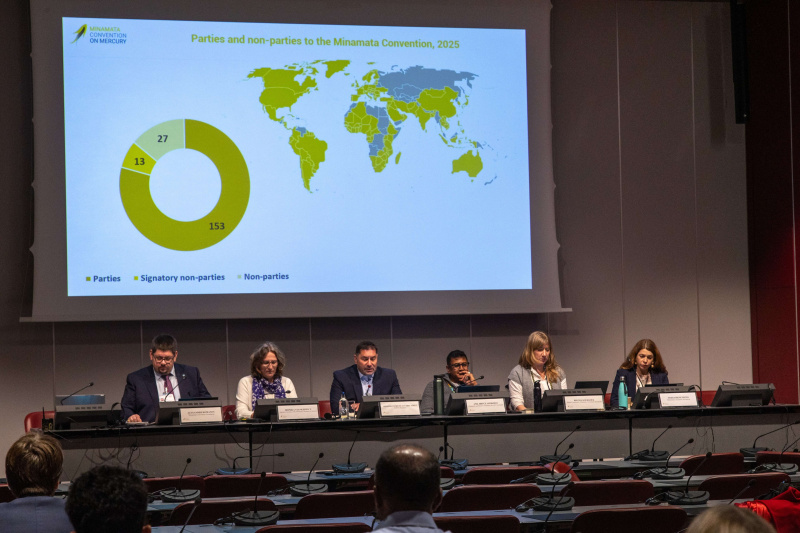
    La Convention de Minamata est entrée en vigueur le 16 août 2017, soit 90 jours après la date de dépôt du 50e instrument de ratification, d’acceptation, d’approbation ou d’adhésion. Pour chaque État ou organisation régionale d’intégration économique qui ratifie, accepte ou approuve la Convention ou y adhère après la date de dépôt dudit 50e instrument, la Convention entre en vigueur 90 jours après que l’État ou l’organisation régionale d’intégration économique en question a déposé son instrument de ratification, d’acceptation, d’approbation ou d’adhésion. Par conséquent, pour être Parties à la Convention de Minamata au moment de la cinquième réunion de la Conférence des Parties, les pays et les organisations régionales d’intégration économique qui ne l’ont pas encore fait doivent déposer leur instrument de ratification, d’acceptation, d’approbation ou d’adhésion auprès du Secrétaire général des Nations Unies, en sa qualité de dépositaire de la Convention, au plus tard le 4ème août 2025. a liste actualisée des Parties peut être consultée sur le site Web de la Convention.

    Inscription et soutien au voyage

    Comme les années précédentes, l'inscription des délégués se fait en deux étapes :

    1. Inscription en ligne : Les noms, titres et coordonnées de vos représentants désignés pour assister à la sixième réunion de la Conférence des Parties doivent être communiqués au Secrétariat à l'aide de la plateforme d'inscription en ligne Kronos qui sera disponible à partir du 7 juillet 2025. Le lien individuel permettant d'accéder à la plateforme d'inscription avec les instructions sera envoyé aux correspondants nationaux pour la Convention de Minamata sur le mercure et/ou aux missions permanentes auprès du Programme des Nations Unies pour l'environnement et des Nations Unies à Genève. Vous êtes invités à vérifier les coordonnées des correspondant nationaux et à informer le Secrétariat de toute mise à jour (si nécessaire).
    2. Envoi des pièces justificatives : En outre, les Parties sont priées d'envoyer au Secrétariat à l'MEA-MinamataMeetings [at] un.org (MEA-MinamataMeetings[at]un[dot]org) la lettre officielle de nomination du Ministère des affaires étrangères ou une note verbale de la Mission permanente de la Partie auprès de l'Office des Nations Unies à Genève avec les noms et coordonnées des représentants désignés. Veuillez noter que les documents émis par toute autre entité ne seront pas acceptés.

    La date limite pour l'inscription en ligne et l'envoi de la lettre de nomination officielle pour toutes les délégués autres que celles qui demandent un soutien au voyage est le 24 octobre 2025.

    Une aide financière peut être fournie pour appuyer la participation d'un délégué par pays en développement remplissant les conditions requises. L'aide au titre des frais de déplacement doit être clairement demandée et le participant désigné pour recevoir une assistance financière doit être clairement indiqué dans la lettre de nomination officielle. La date limite pour l'inscription en ligne et l'envoi de la lettre de nomination officielle pour les délégués parrainés est le 5 septembre 2025.

    Il sera possible de s'inscrire sur place au Centre de conférences et il faut s'attendre à des temps d'attente prolongés. Le Secrétariat encourage vivement tous les participants à s'inscrire avant la date limite.

    Veuillez noter que la finalisation du processus d'inscription est subordonnée à l’envoi de tous les renseignements requis et à la confirmation ultérieure par le Secrétariat. Les délégués sont invités à ne pas prendre de dispositions de voyage avant d'avoir reçu la confirmation d'inscription du Secrétariat. Une fois l'inscription validée dans Kronos, chaque membre de la délégation recevra un e-mail de confirmation avec des informations et des détails logistiques supplémentaires.

    Pouvoirs des Parties à la Convention de Minamata

    Afin de participer à la prise de décisions à la réunion de la Conférence des Parties, toutes les Parties à la Convention de Minamata devront être dotées de pouvoirs. Les pouvoirs des chefs de délégation, des représentants suppléants et des conseillers sont délivrés par le chef d’État ou de Gouvernement ou par le Ministre des Affaires Étrangères ou, dans le cas d’une organisation régionale d’intégration économique, par l’autorité compétente de cette organisation. Tout changement de composition de la délégation doit être communiqué selon la même procédure.

    Des modèles de pouvoirs sont disponibles en arabechinoisanglaisfrançaisrusse and espagnol.

    Les originaux des pouvoirs doivent être transmis au Secrétariat au plus tard 24 heures après l’ouverture de la réunion. Afin de faciliter le processus de validation, les gouvernements sont invités à communiquer une copie de leurs pouvoirs à l’avance, de préférence avant le 17 octobre 2025, à 4 l’adresse suivante :

    La Secrétaire exécutive
    Secrétariat de la Convention de Minamata sur le mercure
    Programme des Nations Unies pour l’environnement
    Avenue de la Paix 8-14, 1211
    Geneva 10, Switzerland

    S'ils ne les ont pas soumis avant la réunion, les Parties peuvent remettre les pouvoirs originaux de leurs représentants au bureau d'inscription à leur arrivée sur le lieu de la réunion le premier jour de la réunion.

    Des copies électroniques des pouvoirs peuvent être envoyées à l'adresse suivante : MEA- MinamataMeetings [at] un.org.

    Assistance Aux Voyages

    Une assistance financière peut être disponible pour soutenir la participation d'un participant par Partie de pays en développement éligible. L’assistance comprendra une indemnité journalière de subsistance au taux des Nations Unies et un billet aller-retour. Le participant parrainé doit être clairement désigné dans la lettre de nomination officielle.

    Important : la date limite d’inscription à la plateforme en ligne et d’envoi de la lettre de nomination officielle pour les délégués parrainés est le 5ème septembre 2025

    Une fois leur participation confirmée, les participants parrainés recevront des instructions supplémentaires sur l’organisation de leur voyage. Les voyages aériens seront organisés conformément aux règlements des Nations Unies, par les moyens les plus économiques et les plus directs possibles dans tous les cas. Veuillez noter qu’il n’est pas autorisé d’apporter des modifications aux billets d’avion après leur émission.

    Afin de faciliter le paiement de l’indemnité journalière de subsistance sur place, les participants parrainés devront remettre des copies de leur passeport et de leur carte d’embarquement au personnel du secrétariat à l’endroit et à l’heure indiqués pendant la réunion. Pour toute question relative au voyage et à l’indemnité journalière de subsistance, les participants parrainés sont invités à contacter le secrétariat à l’adresse suivante : mea-minamatameetings [at] un.org (mea-minamatameetings[at]un[dot]org).

    Hébergement

    Il incombe aux participants de prendre leurs propres dispositions en matière d'hébergement avant la réunion et de couvrir les frais encourus. Le Secrétariat encourage toutes les parties à prendre ces dispositions le plus tôt possible.

    Veuillez noter que le Centre d’accueil de la Genève internationale (CAGI) peut prendre en charge l’hébergement des représentants de gouvernements et d’ONG non financés participant à la COP-6. Veuillez consulter le site Web du CAGI website pour plus de détails sur les critères d’éligibilité et les conditions applicables.

    Une liste actualisée des hôtels offrant des tarifs préférentiels aux Nations Unies est disponible ici.

    Visas

    Il incombe aux participants d’obtenir leur visa d’entrée en Suisse ainsi que les éventuels visas de transit. Une lettre d’appui peut être délivrée par le Secrétariat sur demande.

    Observateurs

    L’article 6 du règlement intérieur de la Conférence des Parties prévoit que l’Organisation des Nations Unies, ses institutions spécialisées, l’Agence internationale de l’énergie atomique ainsi que tout État non Partie à la Convention et les organismes gérant le mécanisme visé au paragraphe 5 de l’article 13 de la Convention peuvent, sur l’invitation du Président, participer sans droit de vote aux délibérations d’une réunion, à moins qu’un tiers au moins des Parties présentes à la réunion n’y fasse objection.

    L’article 7 prévoit que tout organe ou organisme, national ou international, gouvernemental ou non gouvernemental, admis en qualité d’observateur peut, sur l’invitation du Président, participer sans droit de vote aux délibérations des réunions portant sur des questions qui présentent un intérêt direct pour l’organe ou l’organisme qu’ils représentent, à moins qu’un tiers au moins des Parties présentes à la réunion n’y fasse objection.

    Sur l’invitation du Président, les observateurs peuvent intervenir oralement. Le nombre d’interventions orales lors de la réunion dépend du temps disponible. En ce qui concerne les ONG, la préférence est accordée à celles qui s’expriment au nom de groupes d’organisations ou de coalitions. Des déclarations écrites peuvent également être soumises dans l’une des langues officielles des Nations Unies (anglais, arabe, chinois, espagnol, français ou russe).

    Les organisations dont la participation a été approuvée lors des réunions précédentes de la Conférence des Parties ne doivent pas soumettre à nouveau leur demande d’admission. Voir les organisations énumérées dans les documents UNEP/MC/COP.1/INF/16, UNEP/MC/COP.2/INF/19, UNEP/MC/COP.3/INF/27, UNEP/MC/COP.4/INF/28/Rev.1 et UNEP/MC/COP.5/INF/39.

    Les organisations devaient soumettre au secrétariat par courrier électronique, à l’adresse mea-minamatameetings [at] un.org (mea-minamatameetings[at]un[dot]org) et au moins deux mois avant l’ouverture de la réunion, une demande d’admission en tant qu’observateur aux réunions de la COP attestant qu’elles sont compétentes dans les domaines visés par la Convention. Le secrétariat examinera les demandes pour vérifier qu’elles sont complètes et conformes aux exigences de la Convention. Les candidatures retenues seront soumises à la COP-6.

    De plus amples informations concernant la participation des observateurs aux réunions de la Conférence des Parties sont disponibles sur le site web.

    Mèdia

    Des professionnels des médias qui représentent des organismes de presse reconnus (officiellement enregistrées en tant qu'organismes de presse dans un pays reconnu par l'Assemblée générale des Nations Unies) on été invités à assister à la cinquième réunion de la Convention de Minamata (COP-6) qui se tiendra à Genève, en Suisse, du 3 au 7 novembre 2025. A cours du processus d'accréditation, chaque journaliste s'est vu remettre une accréditation lui permettant d'accéder aux sessions plénières, aux événements parallèles et à la zone d'exposition.

    L’admission des médias est régie par les Directives relatives à l’accréditation et à l’accès des médias.

    Une accréditation a été accordée après réception d’une carte de presse en cours de validité et d’un dossier comprenant les éléments suivants :

    1. Le Formulaire D’Accréditation dûment rempli ;
    2. Lune lettre de mission sur papier à en-tête officiel d’un organe de presse signée par le rédacteur en chef ou le chef de bureau et précisant le nom et la fonction du journaliste. Les lettres ou courriers électroniques non signés seront refusés ;
    3. une photocopie d’une carte de presse/permis de travail en cours de validité ; et
    4. une photocopie du passeport/de la carte d’identité nationale.

    Veuillez soumettre le formulaire d’accréditation et les documents énumérés ci-dessus au secrétariat dès que possible par l’intermédiaire de la responsable de la communication et de la gestion des connaissances, Anna García Sans, à l’adresse suivante : anna.garcia [at] un.org (anna[dot]garcia[at]un[dot]org).

    Veuillez noter que la double accréditation n’est pas autorisée (par exemple, en tant que journaliste et délégué ou en tant que journaliste et organisation non gouvernementale).

    Lieu

    La sixième réunion de la conférence des parties à la convention de Minamata sur le mercure se tiendra à Genève, en Suisse, du lundi 3 novembre au 7 novembre 2025. Des consultations régionales et d'autres réunions préparatoires auront lieu dans l'après-midi du dimanche 2 novembre 2025.

    La réunion se tiendra à l’adresse suivante :

    Centre International de Conférences Genève (CICG) – Geneva International Conference Centre
    Rue de Varembé 17. 1211 Genève 20, Suisse
    Tél. : + 41 (0) 22 791 91 11, Fax : + 41 (0) 22 791 90 64
    Site Web : www.cicg.ch

    Accès à l’internet

    L’accès gratuit à l’internet sans fil est disponible dans toutes les salles de conférence et de réunion ainsi que dans les espaces publics du CICG.

    Restaurants / Services de restauration

    Le Centre International de Conférences de Genève proposera des services de restauration pour le déjeuner au bar et au restaurant situés au rez-de-chaussée et au premier étage. D’autres cafés, restaurants et magasins sont accessibles à pied depuis le lieu de réunion.

    Services bancaires

    Des services bancaires sont disponibles dans les environs, l’agence bancaire la plus proche étant UBS Switzerland AG Vermont-Nations, située au chemin Camille-Vidart 17b, 1202 Genève.

    Inscription sur place et délivrance des badges

    Les participants sont priés de s’inscrire en ligne avant la réunion et d’obtenir leur badge au bureau d’inscription sur place, sur présentation d’un des documents d’identité valides suivants, en alphabet latin:

    • passeport national en cours de validité délivré par un gouvernement reconnu par les Nations Unies ;
    • carte d’identité nationale en cours de validité délivrée par un État de l’espace Schengen ;
    • document de voyage valide reconnu par les Nations Unies.

    Le guichet d’inscription est situé au rez-de-chaussée du Centre International de Conférences de Genève et sera ouvert aux heures suivantes :

    • Dimanche 2 novembre : de 10h00 à 17h00
    • Du lundi au vendredi, du 3 novembre au 7 novembre : de 8h00 à 17h00

    L’accès au lieu de la réunion est subordonné à la présentation d’un badge valide. Pour des raisons de sécurité, le port du badge de conférence est obligatoire à tout moment pour accéder au lieu et aux salles de réunion. Toute perte d’un badge de conférence doit être immédiatement signalée au comptoir d’inscription.

    Nous encourageons les délégués à obtenir leur badge de conférence ou à s’inscrire avant le matin du 3 novembre afin de limiter les délais d’attente le jour de l’ouverture officielle.

    Seuls les noms des participants dûment inscrits seront inclus dans la liste des participants à la réunion.

    Horaire et diffusion en continu des sessions plénières

    L'ouverture officielle de la COP-6 aura lieu le lundi 3 novembre 2025 à 10 heures. Les sessions plénières de la réunion se tiendront tous les jours de 10 heures à 13 heures et de 15 heures à 18 heures. Les sessions plénières de la réunion seront diffusées en direct en 6 langues et la diffusion en continu sera disponible sur la page web de la COP-6 et sur la chaîne YouTube.

    Code de conduite pour prévenir le harcèlement lors d'événements organisés dans le cadre de la Convention de Minamata

    Les Nations Unies ont publié le Code de conduite pour prévenir le harcèlement, y compris le harcèlement sexuel, lors des événements du système des Nations Unies ; cela inclut les réunions, des conférences, des événements parallèles, des ateliers et d'autres événements organisés dans le cadre de la Convention de Minamata sur le mercure. Le Secrétariat de la Convention de Minamata s'engage à c. 5 permettre des événements auxquels tout le monde peut participer dans un environnement inclusif, respectueux et sûr. Les délégués sont invités à se familiariser avec le Code de conduite, qui peut être consulté ici.

    Pour une Conférence des Parties plus respectueuse de l’environnement*

    Le secrétariat de la Convention de Minamata a pris des mesures pour améliorer et promouvoir la durabilité environnementale de ses activités, y compris dans la préparation et la conduite de ses réunions.

    La sixième réunion de la Conférence des Parties à la Convention de Minamata (COP-6) se déroulera conformément aux efforts du secrétariat en matière de durabilité environnementale. Un certain nombre de mesures seront mises en place pour réduire l’incidence de la COP-6 sur l’environnement et compenser les émissions de gaz à effet de serre inévitables qui en découlent.

    En concertation avec le Centre International de Conférences de Genève (CICG) et le traiteur, le secrétariat examinera des mesures visant à réduire les répercussions de ses services sur l’environnement. Le CICG et le traiteur ont adopté plusieurs mesures pour réduire leur empreinte environnementale. Pour plus d'informations sur les mesures environnementales prises par le CICG, veuillez consulter la charte environnementale de la Fondation des immeubles pour les organisations internationales (FIPOI).

    Tous les participants ont un rôle essentiel à jouer dans la réduction de l'empreinte environnementale de la COP-6, et votre soutien dans cet effort important est grandement apprécié.

    Mesures de durabilité qui seront adoptées sur le site

    Réduction de la production de déchets : La COP-6 s'efforcera de réduire les déchets, en particulier les déchets plastiques, sur le lieu de la réunion, en collaboration avec le CICG et le traiteur :

    1. L'utilisation du plastique dans les conteneurs, les bouteilles, les emballages pour sandwichs, les couverts et les gobelets sera réduite au minimum et remplacée par des alternatives. Vous trouverez ci-dessous un tableau des articles qui seront disponibles lors de la COP-6, ainsi que des suggestions d'actions visant à réduire la production de déchets ;
    2. Les participants sont vivement encouragés à apporter des récipients réutilisables (tasses, gobelets, bouteilles) qui seront utilisés au café/restaurant et aux stations d'hydratation situées sur le site ;
    3. Une réduction sur les boissons chaudes sera offerte par le traiteur au Café le 6ème Continent (rez-de-chaussée) et au Restaurant (premier étage) aux participants qui utilisent leurs propres gobelets réutilisables ;
    4. Le site dispose d'un programme de recyclage et des poubelles de recyclage sont disposées à différents endroits du site.

    Réunion sans papier : La réunion se déroulera sans papier et aucun document imprimé ne sera fourni. Les documents de pré-session seront disponibles sur le site web de la réunion et les documents de session (tels que les documents de salle de conférence) seront disponibles électroniquement sur la page web de la COP-6. Les participants sont encouragés à apporter des ordinateurs portables ou des tablettes.

    Actions suggérées aux participants pour soutenir l'écologisation de la COP-6

    Les participants qui organisent eux-mêmes leur voyage vers et depuis Genève sont encouragés à prendre les mesures suivantes :

    1. Calculer les émissions de CO2 liées à leurs voyages, en utilisant le calculateur d'émissions de vol de l'OACI ;
    2. Compenser leurs émissions, en utilisant la plateforme de compensation carbone des Nations Unies et en envoyant une copie de l'attestation au Secrétariat à mea-minamatameetings [at] un.org pour aider à suivre les progrès dans la compensation des émissions de la COP-6 ;
    3. Remplacer les vols courts par des voyages en train, si possible ;
    4. Opter pour des itinéraires directs qui évitent les émissions supplémentaires associées à de multiples décollages et atterrissages ;
    5. Réduire volontairement la classe de vol pour éviter l'empreinte plus élevée des voyages en classe affaires ;
    6. Utiliser des moyens de transport durables, y compris les bus, le vélo, la marche ou le covoiturage pour les trajets locaux lorsque c'est possible ;
    7. Passer à des repas à base de plantes, produits localement, de saison ou des alternatives éco-certifiées lorsque c'est possible ;
    8. Rechercher des hébergements qui ont un programme d'invités verts ou qui ont obtenu une éco-certification ;
    9. Rester dans des hébergements qui sont à distance de marche du lieu de la réunion ;
    10. Réduire les déchets alimentaires et autres ;
    11. Apporter des récipients de boisson rechargeables (tasses, mugs, bouteilles) à utiliser au café/restaurant et aux stations d'hydratation ;
    12. Télécharger tous les documents électroniques pour les utiliser sur place. Aucune copie imprimée ne sera fournie, mais les participants pourront recharger leurs appareils ;
    13. Participer au programme de recyclage du lieu.


    Les articles suivants seront disponibles sur le site de la COP. Veuillez considérer les actions suggérées pour réduire les déchets et rendre la COP-6 plus verte.

    Articles

    Composition

    Disposition

    Actions suggérées pour #greeningCOP6

    Gobelets d'eau

    Papier

    Recyclage

    1. PRÉVENIR : apportez votre gobelet/tasse/bouteille réutilisable
    2. RÉUTILISER : réutilisez-les autant de fois que possible
    3. RECYCLER :  jetez le gobelet en papier dans la poubelle de recyclage du papier

    Gobelets pour boissons chaudes

    Bambo

    Incinération

    1. PRÉVENIR : optez pour les gobelets réutilisables de la cafétéria ou apportez votre propre tasse réutilisable
    2. RÉCUPÉRATION : jetez le gobelet en bambou dans la poubelle pour qu'il soit incinéré

    Emballage pour sandwichs

    Acide polylactique et papier

    Incinération

    1. RÉCUPÉRATION : jeter l'emballage du sandwich dans la poubelle pour incinération

    Serviette en papier

    Papier

    Incinération

    1. PRÉVENIR :  n'utiliser qu'en cas de besoin
    2. RÉCUPÉRATION : jeter la serviette en papier dans la poubelle pour incinération

    Emballage pour snacks

    Plastique (type)

    Incinération

    1. PRÉVENIR : opter pour des en-cas plus sains et non emballés tels que des fruits de saison et locaux
    2. RÉCUPÉRATION : jeter l'emballage plastique dans les poubelles pour incinération

    Bouteilles de boisson

    Verre


    1. RETOUR : au café/restaurant, car les bouteilles en verre sont réutilisables
      Boîtes de conserve

    Boîtes boisson

    Aluminum

    Recyclage

    1. RECYCLER : jeter les canettes en aluminium dans la poubelle de recyclage de l'aluminium

    Récipients en verre

    Verre


    1. RETOUR : au café/restaurant, car les récipients en verre sont réutilisables

    Assiettes en porcelaine

    Porcelaine


    1. RETOUR : au café/restaurant, car les assiettes en porcelaine sont réutilisables

    Couverts en acier inoxydable

    Acier inoxydable


    1. RETOUR : au café/restaurant, car les couverts en acier inoxydable sont réutilisables

    Couverts jetables

    Acide polylactique

    Incinération

    1. PRÉVENIR : optez pour des couverts en acier inoxydable réutilisables, dans la mesure du possible
    2. RÉCUPÉRATION : jetez les couverts dans les poubelles pour qu'ils soient incinérés

    Cocktail verrines

    Acide polylactique

    Incinération

    1. PRÉVENIR : opter pour des alternatives réutilisables si possible
    2. RETOUR : au café/restaurant, car les verrines peuvent être lavées et réutilisées si elles ne sont pas cassées ou endommagées
    3. RÉCUPÉRATION : si elles sont cassées ou endommagées, jeter les verrines dans les poubelles en vue de leur incinération

    Déchets alimentaires


    Incinération

    1. PRÉVENIR : tout déchet alimentaire
    2. RÉCUPÉRATION : jeter tout déchet alimentaire dans les poubelles en vue de son incinération


    Merci pour votre contribution à #greeningCOP6 !

    Pour plus d'informations, veuillez contacter Maria Irene Rizzo, experte associée, à l'adresse irene.rizzo [at] un.org.

    *Certaines de ces actions sont tirées du document “United Nations Ozone Secretariat Event EMS Green Travel and Event Tips”.

    Santé

    Des services de premiers secours et des services médicaux d'urgence sont disponibles au CICG. Les délégués atteints d'une maladie chronique doivent transporter tous les médicaments et articles médicaux nécessaires pendant toute la durée du voyage, dans leur contenant d'origine, clairement étiqueté.

    Il est conseillé aux délégués de souscrire une assurance médicale assortie d'une couverture appropriée à l'étranger, comme une assurance accident, maladie, de rapatriement médical et de décès. Les Nations Unies ne couvrent pas l'assurance vie ou l'assurance médicale des participants. Par conséquent, il est de la responsabilité des participants ou de leurs gouvernements de souscrire une assurance adéquate avant de se rendre en Suisse.

    Les participants ayant des problèmes de mobilité nécessitant des dispositions spéciales sont invités à contacter le Secrétariat de la Convention de Minamata avant la réunion à l'adresse suivante : mea- minamatameetings [at] un.org

    Plus d'informations

    Monnaie et Taux de Change

    Franc suisse (CHF). Taux de change moyens au 8 Avril 2025: 1 CHF ~1.17 USD. Les principales cartes de crédit sont acceptées dans la plupart des hôtels et restaurants de Suisse.

    Électricité

    Les participants sont priés d’apporter leurs propres adaptateurs électriques.

    Tension : 220 volts.
    Fréquence : 50 Hz.
    Prise de courant : C (CEE 7/16), J

    Fuseau Horaire

    La Suisse se trouve dans le fuseau horaire CET (UTC + 1).


    Pour de plus amples informations sur la réunion, n'hésitez pas à contacter le Secrétariat, par courrier électronique à l'adresse suivante :MEA-MinamataMeetings [at] un.org, ou consultez notre site web. 


    Online Events
    Introduction and calendar

    COP-6 events provide an informal platform for Parties and observers to share information and highlight advances in technology, research and policy for the attention of Parties and the global community that the Convention serves. Two types of COP-6 events are offered: online events and Knowledge Lab sessions.

    Online events run for one hour and are held virtually via the WebEx platform. The online events are scheduled for the week of 13-17 October. Check the full calendar here and register now.

    DISCLAIMER: The views expressed by speakers, moderators, and participants during the pre-COP-6 online events are those of the individuals concerned and do not necessarily reflect the views or policies of the Secretariat of the Minamata Convention on Mercury. Presentations delivered by representatives of the Secretariat reflect the official positions or perspectives of the Secretariat, unless otherwise stated.

    Monday 13 October
    Save the date and register now:
    • 13h00-14h00 CEST: The Hidden Threat in the Mirror: Ending Mercury in Skin-Lightening Products (SLPs) Now! (Environment and Social Development Organization - ESDO, Asian Center for Environmental Health), check the presentations here.

      Join the Pre-COP-6 Online Event on 13 Oct 2025, 13:00–14:00 CEST: “The Hidden Threat in the Mirror: Ending Mercury in Skin-Lightening Products Now!”. Environment and Social Development Organization (ESDO), in partnership with The Asian Center for Environmental Health (ACEH), presents this webinar to highlight urgent action, share new research, and inspire global collaboration. Don’t miss this vital dialogue!

    • 14h45-15h45 CEST: Integrating Chemicals and Waste Management into Biodiversity Conservation (UNEP, Convention on Biological Diversity), check the presentations and video recording here.

      This is an official online side event at the 2025 sixth meeting of the Conference of the Parties to the Minamata Convention on Mercury (COP-6) that aims to strengthen implementation of global environmental commitments through coherent and synergistic implementation of MEAs, the KMGBF and the Global Framework on Chemicals.

    • 16h30-17h30 CEST: Advancing Mercury Waste Management: Solutions and Actions (Global Mercury Partnership Waste Management Area - Japan), check the presentations and video recording here.

      Join the Global Mercury Partnership Waste Management Area (GMP-WMA) for an interactive event on mercury waste management. Explore practical tools, best practices, and real examples, with updates on GMP-WMA activities and perspectives from key sectors. Open to governments, industry, NGOs, experts & organizations - especially those facing challenges in mercury waste management. Let's connect, share, and learn together!

    • 18h00-19h00 CEST: Indigenous and Scientific Voices from the Amazon on Cross-Border Mercury Protection (Fundación Gaia Amazonas), check the presentations and video recording here.

      Amazonian indigenous leaders and scientists describe how mercury pollution from gold mining endangers vital ecosystems, indigenous territories, and human health. They will present firsthand evidence from the field, rigorous research, and possible solutions to protect the Amazon basin, focusing on border regions. Both traditional knowledge and Western science combine insights to tackle this serious crisis. This online event is conducted in Spanish.

    Tuesday 14 October
    Save the date and register now:
    • 11h00-12h00 CEST: Managing mercury wastes in the healthcare sector: from existing tools to inclusive applications (UNEP Global Mercury Partnership), check the presentations and video recording here.

      The management of wastes from mercury containing products has been raising increasing concerns. This event will present latest tools and case studies highlighting collaborative efforts to support the safe and sound handling of wastes resulting from dental amalgam and mercury containing medical devices, with an emphasis on actions to reduce mercury exposure to protect human health and the environment.

    • 13h00-14h00 CEST: Multi-country initiatives addressing air emissions of mercury (Minamata Convention Secretariat), check the presentations and video recording here.

      "Article 8 and Annex D of the Minamata Convention on Mercury address the emissions of mercury and mercury compounds to the atmosphere from specific point sources. The event will highlight initiatives supported by the Global Environment Facility (GEF), focusing on emissions from two major point source categories: 1. Coal-fired power plants in high-potential countries in Asia and Africa, and 2. Non-ferrous metals production facilities in six countries across Africa, Asia, and Latin America.

    • 14h45-15h45 CEST: Dental Amalgam phase down: alternatives, access, and implementation realities (FDI World Dental Federation, IADR), check the presentations and video recording here.

      Dental amalgam, valued for durability and affordability, is increasingly replaced by alternative restorative materials. This session unites global experts to review the clinical performance of these alternatives, address accessibility and affordability, and discuss the importance of collaboration for the successful implementation of dental amalgam phase-down or phase-out policies. Hear from leaders in government, research, and clinical practice to know the latest on dental amalgam and alternative restorative materials.

    • 16h30-17h30 CEST: Strengthening the Minamata Convention: A new approach to the global mercury trade and use in ASGM (International Pollutants Elimination Network), more information and video recording here.

      This webinar addresses the important need to strengthen the convention by accelerating the end of the legal trade of mercury and primary mercury mining while establishing a phase-out date for mercury use in the ASGM sector. New biomonitoring data from indigenous communities impacted by ASGM and mercury pollution in Peru and Nicaragua will also be presented to highlight the human rights implications of allowing mercury use in ASGM to continue indefinitely.

    Wednesday 15 October
    Save the date and register now:
    • 11h00-12h00 CEST: Overview of the Specific International Programme and sharing of lessons learned from completed projects (Minamata Convention Secretariat), check the presentations and video recording here.

      Article 13 of the Minamata Convention establishes a financial mechanism to support eligible parties to implement their Convention obligations. It includes the Specific International Programme (SIP) to support capacity-building and technical assistance which has to date supported 34 projects around the world. The side event will include remarks from a Co-Chair of the SIP Governing Board and presentations from project managers of Ecuador, North Macedonia, Senegal and Sri Lanka on the results and impacts of their SIP projects.

    • 13h00-14h00 CEST: Effectiveness Evaluation: Draft report of the Open-ended Scientific Group (Minamata Convention Secretariat), check the presentations and video recording here.

      The Open-Ended Scientific Group (OESG) was established by COP-4 in 2022 to put together the mercury monitoring data and develop a scientific report for evaluating the effectiveness of the Minamata Convention. At this event, lead scientists working on air, biota, human and other monitoring, as well as mercury emission and modelling will present the work of OESG.

    • 14h45-15h45 CEST: Actions and Measures to Phase Out Dental Amalgam by 2030 in the Arab Region (World Alliance for Mercury-Free Dentistry).

      Join us! In collaboration with the Arab Centre for Environmental Health and with the approval of the Minamata Secretariat, the World Alliance for Mercury-Free Dentistry is hosting a pivotal event ahead of COP 6: "Actions and Measures to Phase Out Dental Amalgam by 2030 in the Arab Region". This event aims to support and learn from the African Proposal, promoting strategies to eliminate dental amalgam for a healthier, mercury-free future. Be a part of the movement!

    • 16h30-17h30 CEST: Bridging Generations to #MakeMercuryHistory: New Tools and Partnerships for a Child- and Youth-Responsive Minamata Convention (Chemicals and Waste Youth Platform), check the presentations here.

      What will it take – technically, politically, and financially – to achieve a mercury-free future for all children and youth? Join this first-of-its-kind event spotlighting children & youth’s health, rights, and solutions to mercury pollution under the Minamata Convention. Youth leaders, UN partners and researchers will share the latest science and new resources, including the work to develop the Minamata Convention for Youth Toolkit and first Global Youth Declaration on Mercury.

    • 18h00-19h00 CEST: An Integrated Approach for the Amazon: International Synergies in Combating Mercury Pollution and Defending Human Rights (Foundation for Conservation and Sustainable Development Perú), check the presentations and video recording here.

      Join us for the online event “An Integrated Approach for the Amazon” on the road to COP-6! We will explore the proposal for an Amazon Chapter in the Minamata Convention and how it connects with other key international treaties, such as the Escazú Agreement and the Convention on Biological Diversity (CBD). The event is conducted in Spanish.

    Thursday 16 October
    Save the date and register now:
    • 11h00-12h00 CEST: From Science to Action: Insights from the Minamata Convention and Emerging Priorities (Intergovernmental Science-Policy Panel on Chemicals, Waste and Pollution), more information and video recording here.

      How can science better inform global action on chemicals, waste & pollution? Join our event exploring examples from the Minamata Convention and opportunities for the new Intergovernmental Science-Policy Panel on Chemicals, Waste and Pollution (ISP-CWP). Policymakers, scientists, and stakeholders will share experience, discuss emerging priorities, especially around metals, metalloids & minerals, and share actionable ideas for the Panel’s early work.

    • 13h00-14h00 CEST: The impacts of mercury exposure on the rights of Indigenous Peoples and ways to address them (Office of the United Nations High Commissioner for Human Rights), more information and video recording here.

      This event will explore how mercury exposure, particularly from artisanal and small-scale gold mining (ASGM), threatens the health, rights, and cultures of Indigenous Peoples, including those in voluntary isolation. Building on voices of the UN Special Rapporteur on toxics and human rights, Indigenous Peoples, and other experts, the discussion will highlight human rights impacts and pathways to strengthen Indigenous Peoples’ participation at the COP and in implementing the Minamata Convention.

    • 14h45-15h45 CEST: Review of the Implementation of the Article 7 on ASGM: from guidance to implementation (UNEP Global Mercury Partnership), check the presentations and video recording here.

      After establishing ASGM mercury baselines in 35+ countries, UNEP and the GEF, with the Minamata Convention Secretariat are now supporting Parties to review their National Action Plans. This side-event will present UNEP’s new guidance on the Review of the Implementation of the Article 7 (RIA) and the first GEF funded project supporting 23 countries to conduct their RIA, hearing from all the teams involved in their development as well as from countries participating in the first round of RIA.

    • 16h30-17h30 CEST: Measuring the Effectiveness of the Minamata Convention through Legal Indicators (International Center for Comparative Environmental Law).

      The Minamata Convention protects health and the environment from mercury. How to measure its effectivity? With innovative legal indicators, developed by experts and coordinated by CIDCE. Stay tuned — we will present them to you!

    • 18h00-19h00 CEST: Engaging Online Platforms in Enforcing Restricted Product Policies for Mercury-added Cosmetics (Sri Lanka Consumer Affairs Authority, Zero Mercury Working Group), check the presentations here.

      Despite health risks, mercury is frequently added to skin lightening products (Hg/SLPs). While the Convention bans manufacture and trade of Hg/SLPs, their production and distribution continue based on testing by ZMWG, Sri Lanka and others. To curtail online trade, actions may be necessary that go beyond the reach of national legislation. This event will showcase complementary regulatory and voluntary approaches and case law example (e.g. Amazon settlement) to prevent online sale of Hg/SLPs. Read the agenda here.

    Friday 17 October
    Save the date and register now:
    • 11h00-12h00 CEST: Managing Mercury in Offshore Oil and Gas: Risks, Challenges, and Opportunities (Global Mercury Partnership Oil & Gas Working Group), check the presentations and video recording here.

      Mercury is a significant issue for the offshore oil and gas industry, potentially released through emissions and discharges across the activity life cycle. This event will examine pathways to the marine environment from operations through to decommissioning, discuss challenges and opportunities for managing mercury, and conclude with envisaged opportunities, including the establishment an Oil & Gas working group under the UNEP Global Mercury Partnership.

    • 13h00-14h00 CEST: An evidence-based pathway to mercury-free materials for the prevention and management of dental caries (World Health Organization), check the presentations and video recording here.

      Join us to explore the latest evidence on mercury-free materials and techniques to prevent, arrest and restore carious teeth. Learn about the forthcoming WHO Guideline on Environmentally Friendly and Less Invasive Oral Health Care, and hear country success stories in transitioning away from dental amalgam. These efforts support the implementation of the Minamata Convention and are aligned with the Global Oral Health Action Plan 2023–2030, and the Bangkok Declaration—No Health without Oral Health.

    • 14h45-15h45 CEST: Pollution of Lufupa river by Mercury in Kasempa district (Save Environment and People Agency Zambia), check the presentations here.

      Mercury pollution from artisanal gold mining threatens communities along the Lufupa River in Zambia’s Kasempa district. With limited resources, Save Environment and People Agency (SEPA) has raised awareness and promoted safer practices, but expanding gold discoveries demand greater support to safeguard people and the environment. Join Mailes Zulu Muke (SEPA), Tukiya Muke (SEPA) and Vincent Kyamasengo (Vincent Green Environmental Foundation) to learn more.

    • 16h30-17h30 CEST: Evaluating Mercury’s Impact on the Food Chain Across Six Mining Regions in Ghana (Pure Earth), check the presentations and video recording here.

      Join this Minamata Convention Online Event: Evaluating Mercury’s Impact on the Food Chain Across Six Mining Regions in Ghana. Hosted by Pure Earth with the Environmental Protection Agency of Ghana and the UK’s Foreign, Commonwealth and Development Office, this virtual workshop will present findings from a new study on mercury contamination in artisanal and small-scale gold mining communities in Ghana.

    Organizers’ tasks and responsibilities
    It should be noted that organizers of the online events are fully responsible for the following tasks and responsibilities:
    • Organizing and promoting the event,
    • Mainstreaming the event beyond the Minamata Convention website so that it secures as broad an audience as possible,
    • Inviting panelists and speakers,
    • Ensuring that relevant team members (e.g. moderator and technical assistants) attend the training session arranged by the Secretariat,
    • Covering any expenses related to the participation of the panelists and speakers, e.g., communications allowance, etc. (if and as relevant),
    • Preparing a short final report with a summary of the outcomes of the event for the purpose of being published on the Minamata Convention website (if consent is not given to record and livestream), and
    • Giving due consideration to any media / social media activities relating to events, in cooperation with the Secretariat media team.
    NOTE:
    • Online events are limited to 60 minutes in duration, conducted using the WebEx platform and will be broadcasted on the Convention’s YouTube channel.
    • Organizers must make sure that all the panelists join at least 15 minutes before their respective events and test their Audio-Video settings.
    • Online Events seek to take account of global time zones. Organizers are expected to strictly keep to the schedule.


    Special Events
    Introduction

    online events

    Special events will be primarily in-person and held in Geneva alongside COP-6 (3–7 November), starting on the preceding day and continuing throughout the week. The programme will feature high-level discussions, thematic panels, movie screenings, and a photo exhibition displayed on the lakeshore of Geneva.

    Sunday 2 November 

    river

    Secretariat briefing on financial resources and mechanism

    This in-person briefing will provide detailed information in accordance with Article 13 of the Convention. It will be held from 13h00 to 14h30 CET at the International Conference Centre Geneva (CICG), Switzerland, level 0, Plenary C.

    This briefing will focus on Party obligations and deadlines under the Convention as well as related progress and identified challenges; status of the Global Environment Facility financing on mercury and the Specific International Programme; update on the GEF-9 replenishment process; and elements related to the third review of the financial mechanism. The session will include an interactive question and answer session. More information coming soon.


    river

    From Science to Action: Protecting the Amazon from Mercury Pollution

    This in-person event, organized in coordination with the Geneva Environment Network, will take place from 17h30 to 20h00 CET at the CICG, level 0, Room A.

    The event will highlight the work of Fernando Trujillo, conservation scientist and National Geographic Rolex Explorer of the Year, who will share insights from decades of research and his advocacy against mercury pollution. Aileen Mioko Smith, Executive Director of Green Action in Japan and co-author of Minamata with photographer W. Eugene Smith, will connect the legacy of Minamata disease to current challenges in the Amazon and introduce the COP-6 photo exhibit Minamata: Photographer’s Eye Project.

    The dialogue will be followed by a screening of the documentary Amazon, the New Minamata?, which portrays the impacts of mercury on Indigenous Peoples of Brazil’s Tapajós River. Learn more.

    Monday 3 November

    minamata

    Driving Effective and Inclusive Implementation of the Minamata Convention on Mercury

    This special event with high-level participation will facilitate the exchange of experiences and feature actions to implement the Minamata Convention that also bring other socio-economic, human and environmental benefits. It will take place in-person from 13h15 to 14h30 CET at the CICG, level 0, Room A.

    The event will feature diverse voices, including high-level representatives from Parties, IGOs and MEA secretariats, NGOs, Indigenous Peoples, youth and scientists engaged in environmental causes. Learn more.

    Tuesday 4 November

    planetgold

    The planetGOLD Programme – Learnings and Looking Ahead

    This in-person special event will share observations and lessons learned from an analysis of the first phase of the planetGOLD programme, from 13h15 to 14h45 CET at the CICG, level 0, Room A.

    The event will focus on best practices and challenges for formalization, technology transfer, and improving miner access to finance and markets, and will look ahead to the next phase of the programme. Lunch will be served. Information on speakers and additional details will be shared shortly. Learn more.

    Wednesday 5 November

    Launch of the Women Caucus of the Minamata Convention on Mercury

    For the first time, the Women's Caucus will participate to the sixth meeting of the Conference of the Parties to the Minamata Convention, which will be held from 3 to 7 November 2025 in Geneva. The launch will take place from 13h00 to 14h00 CET at the CICG, level 2, Room 14.

    The Women’s Caucus is a space for advancing the equality and empowerment of women within the implementation of the Minamata Convention on Mercury. It provides a self-organized framework for collective action guided by shared experiences and perspectives on preventing women’s exposure to mercury and driving positive change for women in mercury-related decision-making processes. Learn more.

    Thursday 6 November

    cosmetics

    Detoxifying Cosmetics​ and Beauty Ideals: Movie screening and panel discussion

    The Global Mercury Partnership together with the Graduate Institute, World Health Organization, and Biodiversity Research Institute will organize an in-person event from 18h15 to 20h15 CET at the Graduate Institute, Geneva, Switzerland.

    The panel will feature representatives of the Minamata Convention, influential artists, voices, and changemakers who will share stories, solutions, and a vision for a safer, more equitable future. The discussion will be followed by the screening of Timpi Tampa, a Senegalese film that uses humor and emotion to challenge toxic beauty standards and celebrates the power of diversity. Learn more.

    In the margins of COP-6

    Humanæ of Angelica Dass: photo exhibition 

    A photographic exhibition will be on display on the lakeshore of Geneva (Quai Gustave-Ador) by the Global Mercury Partnership from 27 October to 16 November.

    Humanæ of Angelica Dass is a reflection on the color of the skin, attempting to document humanity’s true colors rather than the untrue labels “white”, “red”, “black” and “yellow” associated with race. Challenging stereotypes and narrow beauty ideals, the exhibition reinforces that mercury has no place in cosmetics and calls for beauty standards that embrace uniqueness and diversity, not toxic chemicals. Learn more about the exhibiton.


    © Shiota Takeshi
    © Shiota Takeshi

    Minamata Photographers' Eye Project

    A photographic exhibition will be on display at the International Conference Centre Geneva, Switzerland, throughout COP-6 from 3 to 7 November.

    At COP-6, the Secretariat is proud to showcase the powerful photographic legacy of Minamata, the tragedy that sparked a global movement and the treaty to address mercury pollution. The images in the exhibit, captured over 65 years, reveal both the devastating impact of methylmercury poisoning and the resilience of affected communities. Through this exhibit, the organizer, Minamata Eye Project, aims to preserve these visual testimonies and engage participants in meaningful dialogue on how we can raise global awareness and prevent future environmental disasters. Join us in honoring Minamata’s story and shaping a safer, mercury-free future.


    Knowledge Labs
    Introduction

    online events

    Knowledge Lab sessions take place during the COP at the International Conference Centre Geneva (CICG) and are designed to provide an opportunity for organizers to engage with COP-6 participants and showcase their work in an open space set-up through a 45-minute knowledge-sharing session. You can check the calendar of knowledge labs here.

    Tuesday 4 November 
    Save the date:
    • 14:00–14:45: From Science to Policy – Integrating Data for the First Effectiveness Evaluation (Open-Ended Scientific Group, Minamata Convention Secretariat). Location: Room 3, Level -1. Watch the recording here and full presentations here.

      The first effectiveness evaluation of the Minamata Convention integrates science and policy. Our Knowledge Lab will provide an overview of the evaluation process and share findings from the scientific modelling community (MCHgMAP) on mercury trends in air, oceans & land to support long-term decision-making.

    • 18:00–18:45: Health, Human Rights and Mercury Impacts of ASGM: Prioritising health interventions (Office of the United Nations High Commissioner for Human Rights). Location: Room 3, Level -1

      This meeting, co-organized by IPEN, OHCHR, the UN Special Rapporteur on Toxics and Human Rights, and Mexico, will address the lack of implementation of Article 16 of the Minamata Convention on health. With a focus on the human rights of groups in vulnerable situations, especially women, children, and Indigenous Peoples, the event will highlight urgent health impacts of mercury, explore strategies for prevention, diagnosis, and treatment, and share guidance to strengthen health systems and professional capacity.

    • 18:00–18:45: InforMEA in Action: Supporting Minamata Convention Implementation through Digital Tools and Legal Transparency (UN Environment Programme Law Division). Location: Space A, Level 0

      At #MinamataCOP6, step into our Knowledge Lab. Discover how digital tools & legal transparency support the Minamata Convention; from aligning laws to tracking COP decisions and national reporting. With live demos, expert insights from other Conventions, and real-world cases, see how #InforMEA drives mercury reduction, justice & #SDG16.
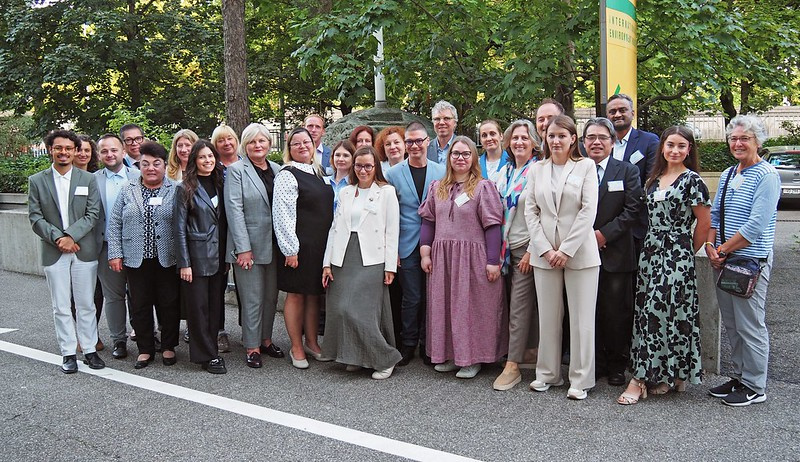
    • 18:00–18:45: Learning from the Past Experience and into the Future: from Minamata High School  (Minamata High School, Japan; Ministry of Environment, Japan). Location: Space B, Level 0

      Minamata High School students are turning their local history into global action! Hear from Norimi Motoyama on their intensive Mercury Studies curriculum, which includes expert lectures, visits to the JNC factory, and research into the science behind Minamata Disease. Additionally, Mio Iwasaka will share results from her critical survey on High School students' awareness and understanding of mercury in the affected community. Don't miss this presentation that connects education, local legacy, and global health.

    • 18:00–18:45: Mining Impacts Calculator: A Tool for Mercury Impact Assessment in ASGM (Brazil Ministry of Environment, Conservation Strategy Fund Brazil). Location: Room 4, Level -1

      Discover the Mining Impacts Calculator at #COP6! This innovative tool quantifies the social & environmental costs of artisanal gold mining, focusing on #mercury pollution. Learn how it helps calculate financial compensation, plan mitigation, including investigations and legal proceedings. Join our #KnowledgeLab to see a live demo and explore its application in the Amazon.

    Wednesday 5 November
    Save the date:
    • 14:00–14:45: Detoxifying Cosmetics and Beauty Ideals: Global voices and solutions to reduce demand for mercury and skin lightening (UNEP Chemicals and Health Branch). Location: Room 3, Level -1

      Mercury in skin lightening products threatens health, the environment, and human rights, yet harmful beauty norms drive their use. This panel unites governments, advocates, and the private sector to share solutions – from public education and policy change to ethical consumer engagement. Join us to spotlight the risks, challenge discriminatory beauty standards, and elevate global voices working to end mercury and colorism-fueled cosmetics.

    • 14:00–14:45: Minamata Disease: Bearing Witness through Photography - Lessons from Minamata for Tomorrow’s Challenges  (Minamata Photographers' Eye Project). Location: Space A, Level 0

      2026 marks the 70th anniversary of the official discovery of Minamata Disease. For over half a century, photographers have documented this devastating case of industrial pollution in Japan. Aileen Mioko Smith co-authored the landmark book Minamata, which inspired the 2020 Hollywood film. At the event, she will share images from her three years photographing the tragedy, reflect on its lessons, and introduce the other photographers of the Minamata Photographers’ Eye Project.

    • 14:00–14:45: How Partnerships and Research Infrastructures Enhance Implementation of the Minamata Convention (Czech Republic / RECETOX, Masaryk University). Location: Space B, Level 0

      This Knowledge Lab brings together three organizations to showcase innovative tools supporting the national implementation of Minamata Convention. GEO showcases GOS4M, a platform for real-time mercury data; PARC presents tools for population exposure and risk mitigation; and EIRENE offers open-access research infrastructure for labs and monitoring networks. Join this session to discover how science–policy partnerships are strengthening the global response to mercury challenges.

    • 18:00–18:45: Building the Evidence: Linking Human and Biota Mercury Monitoring under the Minamata Convention (Open-Ended Scientific Group, Jožef Stefan Institute, Biodiversity Research Institute, Dartmouth College). Location: Space A, Level 0

      This Knowledge Lab highlights how harmonized human biomonitoring and biota mercury monitoring provide complementary evidence to evaluate the effectiveness of the Minamata Convention. Presentations will show new data and tools developed through the OESG and UNEP collaborations, demonstrating how coordinated global measurements strengthen policy and community protection.

    • 18:00–18:45: Shaping Action: Confronting the Illegal Mercury Trade (Environmental Investigation Agency - US). Location: Room 3, Level -1

      Join our Knowledge Lab inspired by the Environmental Investigation Agency-US report, Traffickers Leave No Stone Unturned. We’ll discuss the role of illegal mercury flows--especially tied to illicit gold mining--in reducing the effectiveness of the Minamata  Convention  on  Mercury. Panelists will explore the scale of illicit trade, how to strengthen cooperation across Parties and stakeholders, and identify actionable steps for addressing criminal supply chains and supporting impacted communities.

    • 18:00–18:45: Technical Manual for the Care of Indigenous Peoples Exposed to Mercury: A Health-Based Approach Rooted in Rights and Territory (Secretariat of Indigenous Health - Brazilian Ministry of Health). Location: Space B, Level 0

      Brazil presents a new Technical Manual to guide health services in caring for Indigenous peoples exposed to mercury. Rooted in rights, territory and equity, the Manual translates evidence into clinical pathways, screening and follow-up within the SUS. Join us at COP-6 to discuss implementation and cooperation to protect communities and strengthen health responses.

    Thursday 6 November
    Save the date:
    • 14:00–14:45: Parties Perú and Bangladesh Present Prototypes for Mercury-Free Dentistry in the Americas and Asia (World Alliance for Mercury-Free Dentistry). Location: Space A, Level 0

      With the unanimous statement of the African Ministerial Conference on the Environment and amalgam bans across Europe, attention shifts to Asia and the Americas. Perú and Bangladesh have model plans! Perú adopted legislation, strictest in the mercury-laden Amazon. Bangladesh went step-by-step: military, dental schools, civil society MOU. Co-sponsored by the World Alliance for Mercury-Free Dentistry and with dentist speakers, this Knowledge Lab will show the world that amalgam can be phased out on a rapid timetable. Now is the time to end the amalgam era in dentistry.

    • 14:00–14:45: Fostering the integration of chemicals pollution into National Biodiversity Strategies and Action Plans (NBSAPs): latest tools and countries’ perspectives (UNEP). Location: Room 2, Level -1

      The world faces a triple planetary crisis, with biodiversity loss fueled by pollution and waste mismanagement. Mercury from artisanal and small-scale gold mining and other processes and uses contaminates ecosystems and species such as fish and seafood. This session will share guidance, country experiences, and feedback on integrating and mainstreaming pollution into National Biodiversity Strategies and Action Plans under the CBD and Kunming-Montreal Global Biodiversity Framework.

    • 14:00–14:45: Informing Integrated Chemicals Management: Data Needs and Experience from Mercury (UNEP Chemicals and Health Branch, Intergovernmental Science-Policy Panel on Chemicals, Waste and Pollution). Location: Space B, Level 0

      How can data drive better chemicals management? Join UNEP’s Knowledge Lab on 6 Nov to explore the power of data to support integrated chemicals management, learn from mercury success stories, and discover ideas in science-policy collaboration. 

    • 14:00–14:45: Advancing Gender-Inclusive Solutions in ASGM (Natural Resources Defense Council - planetGOLD programme). Location: Room 3, Level -1

      Join the planetGOLD Programme and the World Bank’s Africa Environmental Health and Pollution Management Programme (AEHPMP) on Thursday, November 6 at 14:00 in the exhibition area for a Knowledge Lab on empowering women in artisanal and small-scale gold mining. Hear from planetGOLD Bolivia and AEHPMP projects in Ghana and Tanzania as they share tools, strategies, and stories of partnering with women miners to improve opportunities and working conditions through training and technical support.

    • 18:00–18:45: Indigenous Peoples and Mercury Monitoring: Experiences in Promoting Human Rights and Co-production of Knowledge Approaches in the Arctic and the Amazon (Inuit Circumpolar Council, Federación Nativa del Río Madre de Dios y Afluentes). Location: Plenary C, Level 0

      This Knowledge Lab will showcase community-led mercury monitoring initiatives in Indigenous territories of the Arctic and the Amazon. It will highlight how these efforts contribute to safeguarding human rights, advancing environmental justice, and co-producing knowledge that strengthens global mercury governance.

    • 18:00–18:45: GEF-UNDP Experiences on the Elimination of Mercury from Consumer and Healthcare Products (United Nations Development Programme). Location: Room 3, Level -1

      Join us at #COP6Minamata! Discover GEF-UNDP experiences in eliminating mercury from consumer and healthcare products. Learn from China, Ecuador, and Ghana on their journey of phasing out mercury devices, promoting mercury-free alternatives, and managing wastes.

    Friday 7 November
    Save the date:
    • 14:00–14:45: Mercury Wastes Management in countries: latest advances and experience in protecting human health and the Environment (UNEP Global Mercury Partnership, BRS Conventions Secretariat). Location: Space A, Level 0

      Learn more about recent tools and projects on the environmentally sound disposal of mercury containing waste under both the Minamata and the Basel Conventions. The session will highlight progress made by sharing recent knowledge from countries involved in the phase out/down of mercury containing products, including on training tools developed by the Minamata Secretariat, the Basel, Rotterdam and Stockholm Conventions Secretariat in cooperation with the Global Mercury Partnership and its area of work on Mercury Waste Management.

    • 14:00–14:45: Mercury reduction in artisanal gold mining using local knowledge and practical strategies - from data to action (Alliance for Responsible Mining). Location: Space B, Level 0

      This presentation explores strategies to eliminate mercury use in Artisanal and Small-Scale Gold Mining through stakeholder engagement. It shows that effective mercury mitigation depends not only on data transparency and reliability, but also on technologies that incorporate local knowledge. Using real-life examples of community-led practices, it highlights why effective stakeholder engagement is critical for practitioners and decision-makers in mercury mitigation.


    Schedule

    Tentative schedule, additional details forthcoming. All times are in the Geneva time zone.

    Streaming