Reciba actualizaciones periódicas de la Convención de Minamata
Minamata Online
Virtual
24
-
24
Nov
2026
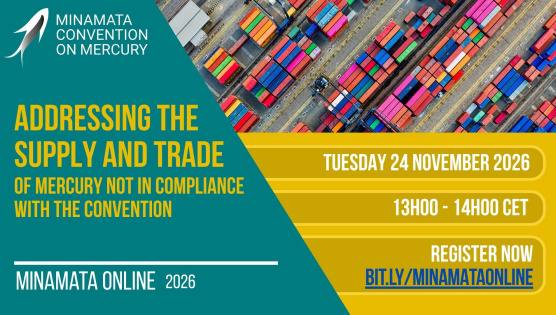
The webinar will be held on 24 November 2026 (13:00–14:00 CET) and will focus on strategies to address illegal or informal primary mercury mining as well as trade not in compliance with Article 3 of the Convention. It will offer preliminary findings of the report the Secretariat is developing on the matter for consideration by COP-7. The report, requested by COP-6, is being developed in collaboration with UNODC and thanks to the contribution of the European Union. The webinar will also draw on the experiences of UNODC, INTERPOL and CITES in combating illegal trade and international crime. Further details will follow soon.
Background:
While official primary mercury mining and trade have declined, Parties are increasingly reporting cases of informal or illegal primary mining as well as mercury trade not conforming with the Convention, illicit trafficking, illegal trade and smuggling of mercury, in particular for use in artisanal and small-scale gold mining.
Since Illegal mercury trade fuels illegal gold production, addressing mercury trafficking is essential to disrupting illicit gold supply chains. Organized crime groups have increasingly embedded themselves in gold supply chains, attracted by the sector’s high profitability and the rising value of gold. For example, drug trafficking organizations in Latin America have expanded into illegal gold mining, taking advantage of established drug smuggling routes and infrastructure. Revenues from gold are then reinvested into other criminal operations.
Considering that the same criminal networks trafficking mercury smuggle wildlife and narcotics, the experiences of major enforcement institutions in the field of the environment, such as UNODC, INTERPOL and CITES, in combating illegal trade and international crime are of great relevance.
At its sixth meeting in November 2025, the Conference of the Parties (COP) adopted decision MC-6/1 on supply sources and trade which recognized that informal or illegal primary mining and mercury trade not conforming with the Convention, illicit trafficking, illegal trade and smuggling of mercury, in particular for use in artisanal and small-scale gold mining represent a challenge to the implementation of the Convention. Furthermore, the COP requested the Secretariat to develop, in collaboration with Parties and organizations with expertise on illegal trade a report presenting strategies for addressing the supply and trade of mercury not in compliance with Article 3.
Speakers:
- Monika Stankiewicz - Executive Secretary, Minamata Convention on Mercury
- Tanya Wyatt - Lead Researcher, United Nations Office on Drugs and Crime (UNODC)
- Juan Martin Pastor - Programme Officer, United Nations Office on Drugs and Crime (UNODC)
- Michele Viale - Operations Coordinator, International Criminal Police Organization (INTERPOL)
- Lauren Lopes - Support Officer Enforcement Unit, Convention on International Trade in Endangered Species of Wild Fauna and Flora (CITES)
- Lara Ognibene - Legal Officer, Minamata Convention on Mercury
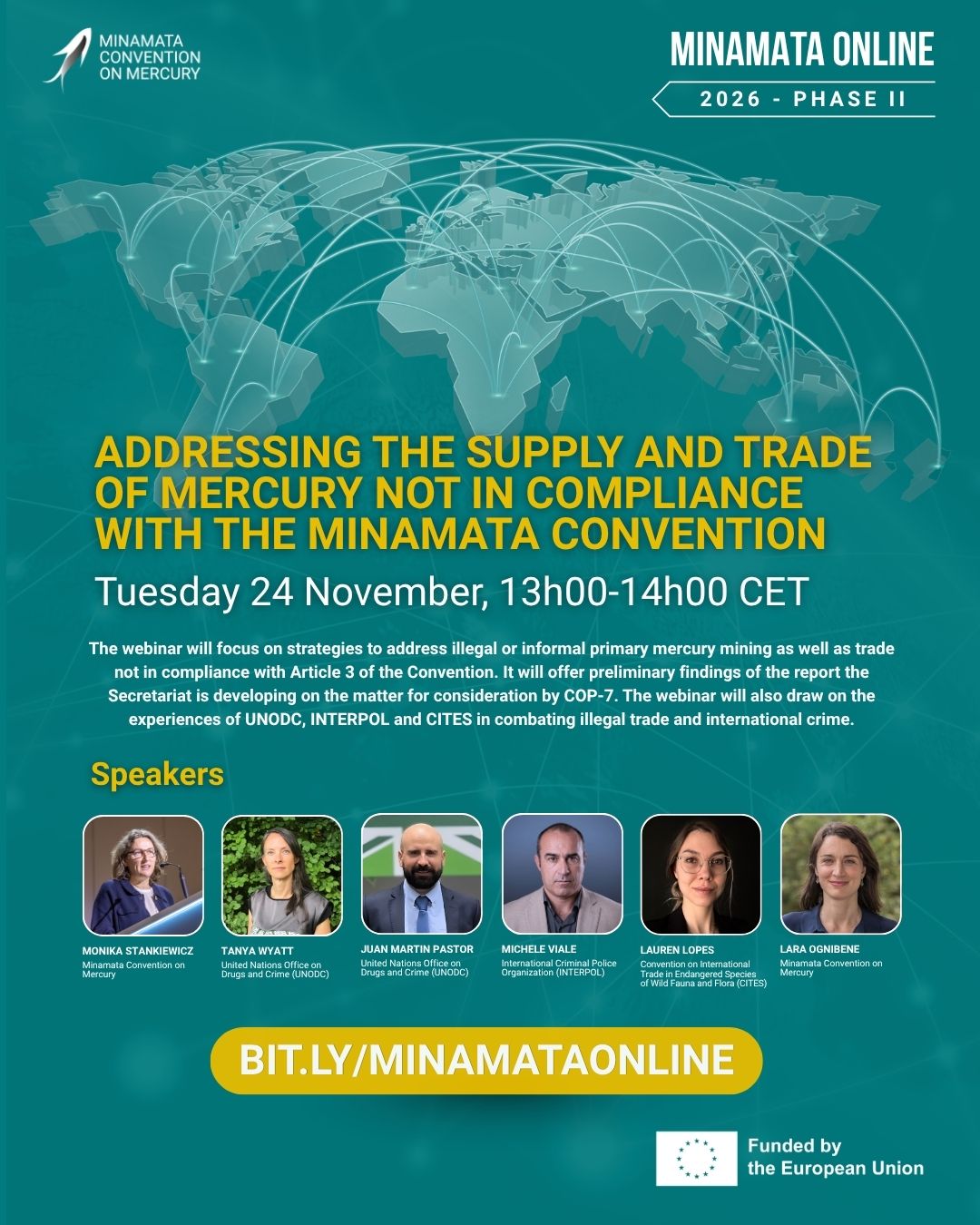
The activities that the Secretariat of the Minamata Convention showcased at this event are funded by the European Union.

Time and place
Takes place in
Virtual
Starts on
24 Nov 2026
1:00 PM CET
Ends on
24 Nov 2026
2:00 PM CET
2026-11-24T13:00:00 - 2026-11-24T14:00:00
Links