- Introduction
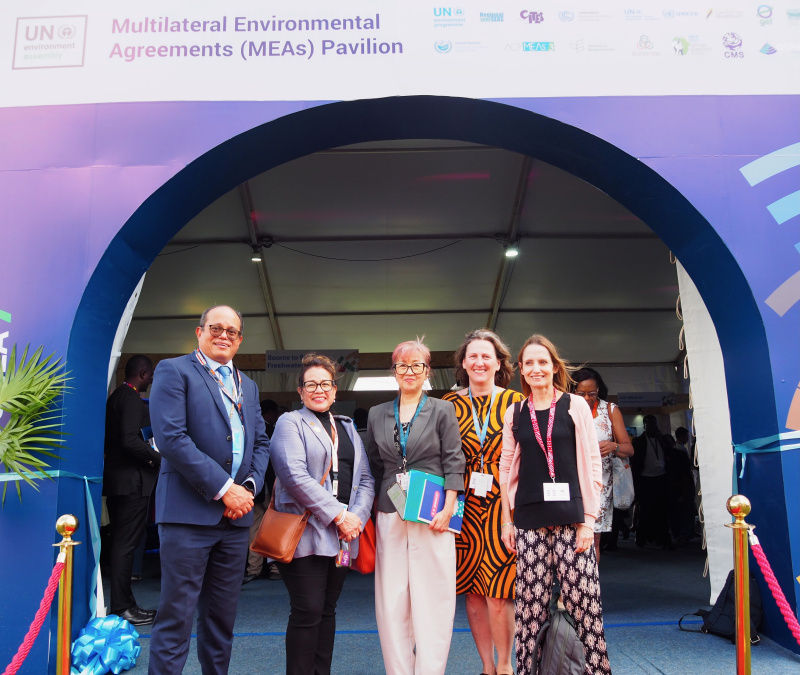
The Multilateral Environmental Agreements (MEAs) Pavilion will host exhibitions organized by the MEAs, serving as a dedicated space to showcase their work.
All side events will take place separately in the MEAs Side Events Tent, providing a venue for participants to connect and exchange ideas.
Participation in the MEAs Pavilion is open to all UNEA participants, including all Member States, Heads of MEA Secretariats and relevant UN entities and Specialized Agencies and intergovernmental/international organizations, as well as accredited major groups and stakeholders.
MEA side events
MEAs side events will be held from 8 to 12 December 2025 as part of the agenda item “Cooperation with Multilateral Environmental Agreements".
The side events will provide a platform to showcase partnerships and success stories in MEA implementation, promoting integrated approaches, collaboration, cooperation and synergies, in alignment with the UNEA-7 theme “Advancing sustainable solutions for a resilient planet”.
All MEAs side events can be viewed online: MEAs side events playlist.
See here the list of all MEA side events
MEA exhibitions
MEAs exhibitions will be organized during the whole week of UNEA-7. MEAs exhibitions will provide a platform for the MEA Secretariats and UNEP to showcase their work with key partners, promoting integrated approaches and solutions that advance cooperation, collaboration and synergies in implementing MEAs.
Official side events
Each of the Official Side Events is intended to enrich and complement the UNEA-7 session by providing a unique opportunity to discuss the theme, share experiences, find solutions and inspire partnerships towards tackling climate change, biodiversity loss and pollution.
All official side events can be viewed online: Official side events playlist.
See here the list of all official side events
Associated events
On the margins of UNEA-7, associated activities will take place and complement efforts to advance the UNEA mandate and theme towards "Advancing sustainable solutions for a resilient planet”
These related activities and events will provide a platform for diverse stakeholders to convene discussions. Find below the additional moments to look at in addition to the official UNEA programme.
See here the list of all associated events
Note: The list of side events and exhibitions might still change.
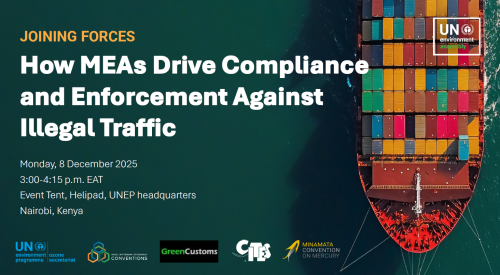
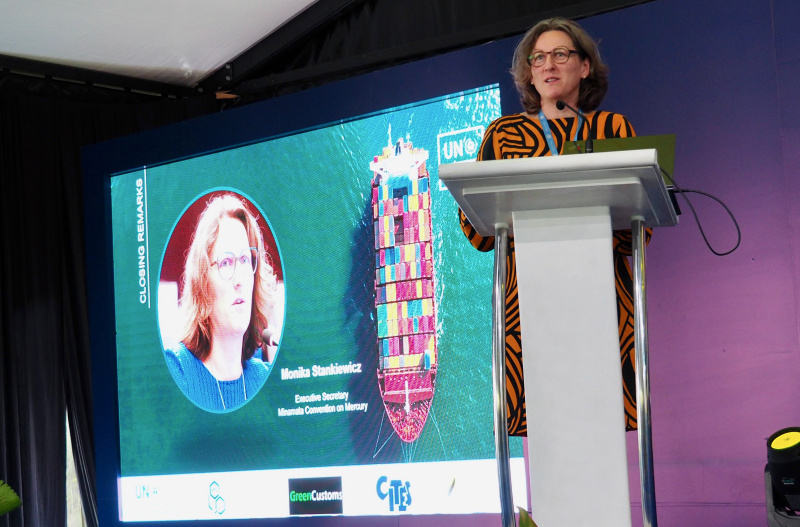
- Monday, 8 December - 15h00-16h15 EAT: MEAs Side Event: Joining Forces: How MEAs Drive Compliance and Enforcement Against Illegal Traffic
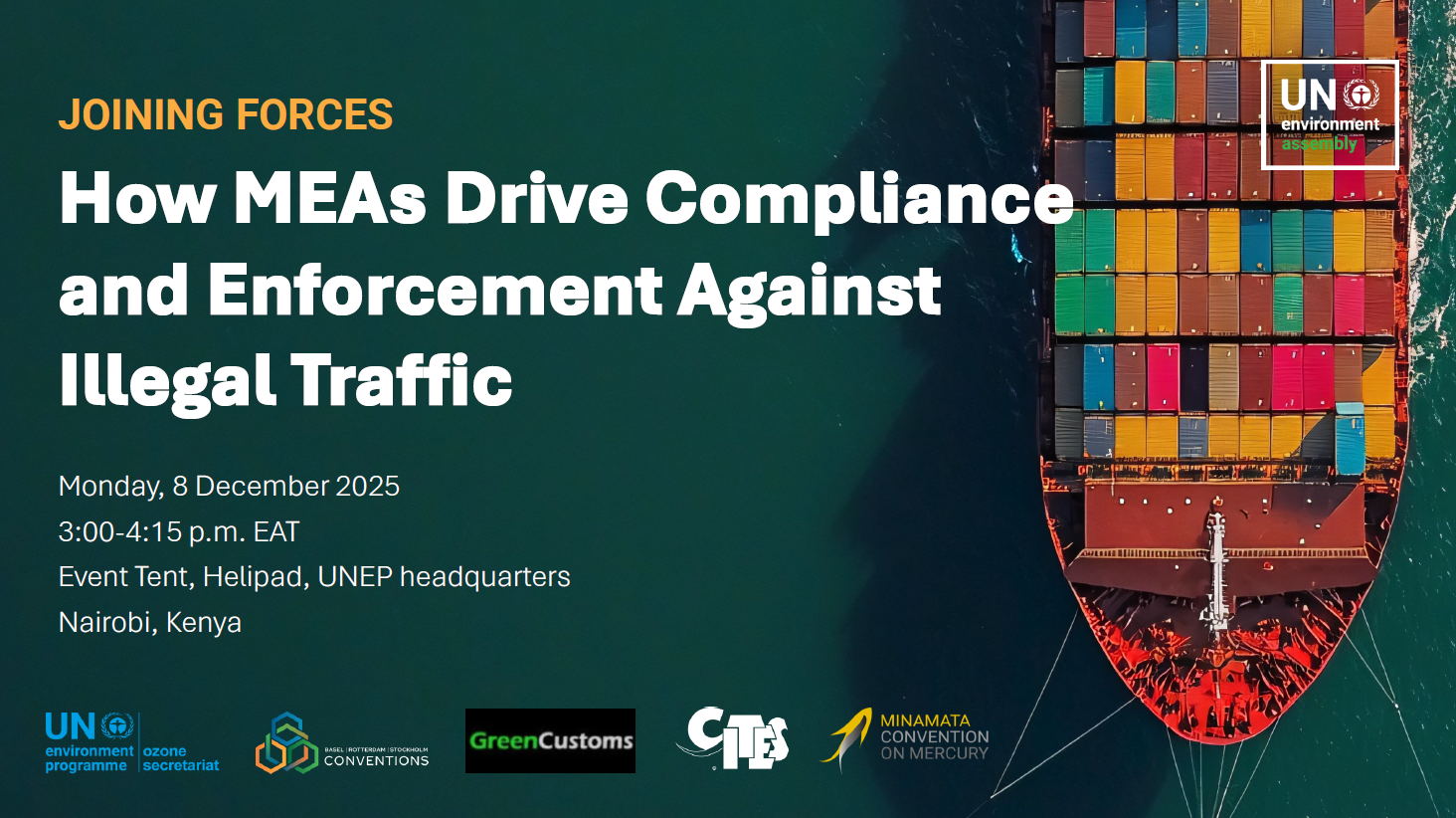
Many multilateral environmental agreements (MEAs) set out trade control provisions as a key approach to achieve their goals. The illegal trade of environmentally sensitive substances and commodities – ranging from hazardous substances, such as ozone-depleting substances and mercury, to hazardous wastes and endangered species pose serious threats to health, ecosystems, economies and security, and undermines individual and collective efforts.
MEAs with trade-control provisions play a central role in regulating international trade, including preventing and combatting illegal traffic. Strengthening compliance and enforcement mechanisms with trade-related provisions of MEAs is therefore essential to advancing sustainable solutions for a resilient planet, in line with the theme of UNEA-7.
This side event will spotlight the critical role of MEAs and their compliance committees in addressing illegal traffic and supporting Parties in ensuring that international trade takes place in a way that minimizes negative impacts to human health and the environment, and that illegal trade is prevented and addressed. The event will also emphasize the role of enforcement agencies, particularly customs and border authorities, as a first line of defense against illegal traffic, and showcase emerging tools by the MEAs secretariats and relevant international organizations for monitoring, detection, and enforcement at borders. Building on the longstanding cooperation among MEAs and the momentum of the UNEA-7 agenda item related to cooperation with MEAs, this event will present best practices on how MEAs can be implemented at the national level in a coordinated manner to facilitate trade control and address illegal traffic.
Speakers
- Megumi Seki Nakamura - Executive Secretary, Convention for the Protection of the Ozone Layer and Montreal Protocol on Substances that Deplete the Ozone Layer
- Rolph Payet - Executive Secretary, Basel Rotterdam and Stockholm Conventions (BRS)
- Ivonne Higuero - Secretary-General, Convention on International Trade in Endangered Species of Wild Fauna and Flora (CITES)
- Monika Stankiewicz - Executive Secretary, Minamata Convention on Mercury
- Sonja Dünnwald - Member, The Basel Convention’s Implementation and Compliance Committee
- Pablo Moscoso - Senior Legal Officer, Ozone Secretariat
- Haruko Okusu - Chief of the Governance Bodies Unit, CITES Secretariat
Organizers: Secretariat of the Basel, Rotterdam and Stockholm Conventions (BRS), Green Customs Initiative Secretariat, Secretariat of the Convention on International Trade in Endangered Species of Wild Fauna and Flora (CITES), Secretariat to the Minamata Convention on Mercury, UN Environment Programme-Ozone Secretariat
Official page
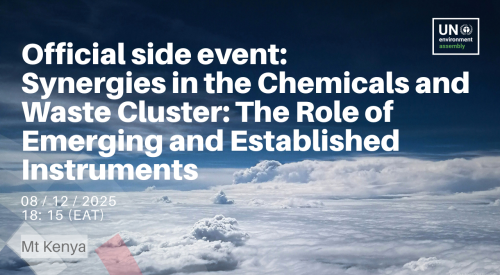
- Monday, 8 December - 18h15-19h45 EAT: Official Side event: Synergies in the Chemicals and Waste Cluster: The Role of Emerging and Established Instruments
The global governance cluster on chemicals and waste includes key instruments such as the Basel, Rotterdam and Stockholm Conventions, the Minamata Convention, the Global Framework on Chemicals, as well as the work and research of UNEP’s Chemicals and Health Branch and other institutions.
Collectively, these actors have played a decisive role in protecting human health and the environment. With the adoption of the new Intergovernemental Science-Policy Panel on Chemicals, Waste and Pollution (ISP-CWP) on June 20, 2025, a significant new instrument has joined this global governance cluster, and the forthcoming global treaty on plastic pollution will further reinforce it. To ensure the work within the growing chemicals and waste cluster is based on science and aligned with States’ needs, while also recognizing ongoing resource constraints, a good integration of the new instruments and enhanced coordination across all instruments is essential.
This event aims to initiate a dialogue on the strengthening of the chemicals and waste cluster and it’s science-policy interface. It further aims to explore approaches to enhancing synergies and efficiency and to ensuring the long-term strength of the cluster and its collaboration with other thematic clusters.
Moderator
- Jacqueline Alvarez - Chief Chemicals and Health Branch, UNEP
Speakers
- Rolph Payet - Executive Secretary, Basel Rotterdam and Stockholm Conventions (BRS)
- Monika Stankiewicz - Executive Secretary, Minamata Convention on Mercury
- Felix Wertli - Ambassador for the Environment, Switzerland
- Valentina Sierra - Second Secretary, Directorate of Environment, Ministry of Foreign Affairs of Uruguay
- Ermira Fida - Deputy Executive Secretary, Intergovernmental Panel on Climate Change
Organizers: Switzerland
Official page
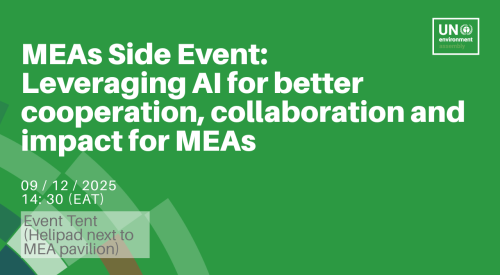
- Tuesday, 9 December - 14h30-15h45 EAT: MEAs Side Event: Leveraging AI for beter cooperation, collaboration and impact for MEAs
AI presents an unprecedented opportunity to strengthen the science-policy interface and accelerate the achievement of global environmental goals. For MEAs, responsible use of AI can streamline knowledge access, improve national reporting, and enhance transparency and compliance. At the same time, it raises questions about data governance, sovereignty, and ethics that must be addressed collectively within multilateral frameworks.
This event will:
• Enhance understanding of how artificial intelligence (AI) can be responsibly harnessed to support the mandates and implementation of Multilateral Environmental Agreements (MEAs).
• Facilitate shared learning across MEAs and partners on the deployment of digital innovation and AI for environmental monitoring, assessment, and policy support.
• Showcase innovative tools developed by UNEP and MEAs that leverage AI to strengthen the science–policy interface and enable data-driven decision-making.
• Promote recognition of the Global Environmental Data Strategy (GEDS) as a foundational enabler for trusted, interoperable, and AI-ready environmental data.
• Identify capacity-building needs, governance gaps, and collaborative opportunities to ensure the equitable and sustainable application of AI in multilateral and national environmental processes.
Organizers: Basel, Rotterdam and Stockholm Conventions (BRS), Cartagena Convention, Multilateral Fund for the Implementation of the Montreal Protocol, Secretariat of the Convention on Biological Diversity (CBD), Secretariat of the Convention on International Trade in Endangered Species of Wild Fauna and Flora (CITES), Secretariat to the Minamata Convention on Mercury, UN Environment Programme-Ozone Secretariat
Official page
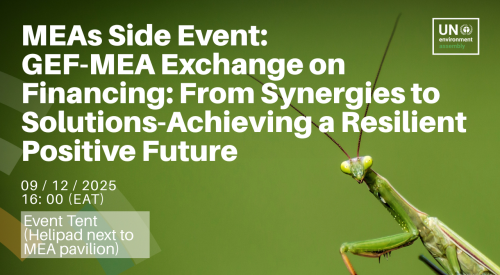
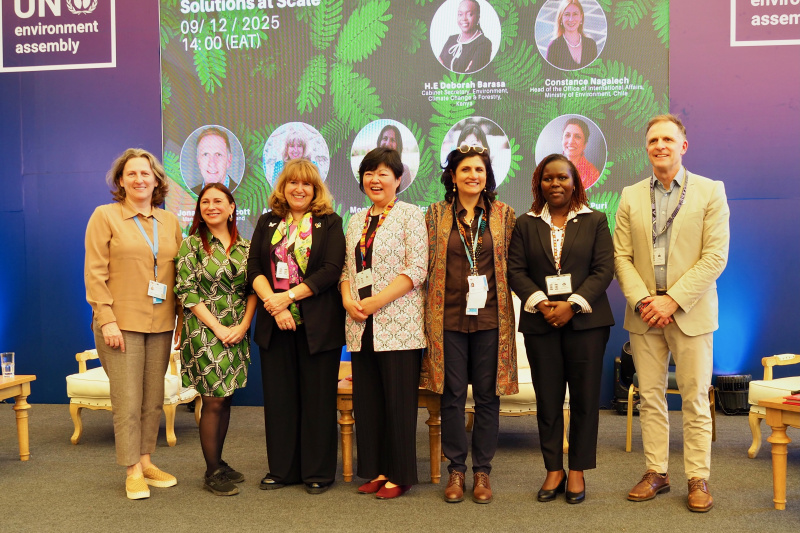
- Tuesday, 9 December - 16h00-17h15 EAT: MEAs Side Event: GEF-MEA Exchange on Financing: From Synergies to Solutions-Achieving a Resilient, Nature-positive, Pollution-free Future through GEF-9
As the world faces converging environmental crises, the Global Environment Facility (GEF) plays a pivotal role in advancing integrated, multilateral responses. With its mandate to finance the implementation of major multilateral environmental agreements (MEAs) addressing biodiversity, chemicals, waste, and pollution, the GEF remains a cornerstone of international environmental governance. Pollution undermines biodiversity by degrading ecosystems and affecting human health, economies and climate stability, while biodiversity loss threatens sustainable development through weakening ecosystem resilience. Addressing both challenges together is essential to building a resilient planet.
This side event takes place during UNEA-7, amid the negotiations for the ninth replenishment of the GEF Trust Fund (GEF-9) - a critical moment for aligning finance with the Kunming-Montreal Global Biodiversity Framework (KMGBF). Because GEF-9 covers the remaining five years of KMGBF implementation, the replenishment cycle offers a unique opportunity to integrate the biodiversity and pollution agendas and strengthen environmental resilience as the foundation of economies and societies.
Building on the inaugural GEF–MEA Exchange in 2025, the event will showcase how GEF-9 supports MEA implementation through cross-sectoral, cost-effective, and transformative approaches. It will highlight integrated programming across biodiversity, climate, chemicals, pollution, and land degradation; innovative finance strategies; and ongoing GEF reforms enhancing alignment with MEAs. By promoting cooperation, coherence, and collective advocacy, this event will contribute to UNEA-7’s objectives to scale up integrated action and financing for a nature-positive, net-zero, and pollution-free future.
Speakers
- H.E. Matthew Samuda, Minister responsible for Water, Environment, Climate Change, and the Blue and Green Economies, Jamaica
- Marjeta Jager, Deputy Director-General, Directorate-General for International Partnerships, European Commission
- Invited high-level government representative (to be confirmed)
- Invited high-level government representative (to be confirmed)
- Astrid Schomaker, Executive Secretary, Convention on Biological Diversity (CBD)
- Ivonne Higuero, Secretary-General, Convention on International Trade in Endangered Species of Wild Fauna and Flora (CITES)
- Musonda Mumba, Secretary-General, Convention on Wetlands (Ramsar Convention)
- Monika Stankiewicz, Executive Secretary, Minamata Convention on Mercury
- Chizuru Aoki, Manager Conventions and Funds Division, Global Environment Facility (GEF)
Organizers: Basel, Rotterdam and Stockholm Conventions (BRS), Cartagena Convention, Global Environment Facility (GEF), Secretariat of the Convention on Biological Diversity (CBD)
Official page
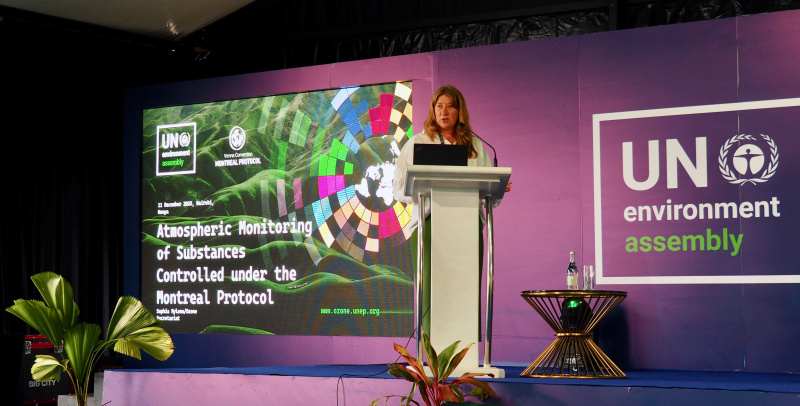
- Thursday, 11 December - 14h30-15h45 EAT: MEAs Side Event: Atmospheric Monitoring of Substances under Multilateral Environmental Agreements: Opportunities for Synergistic Action
Systematic observations and measurements of the Earth’s atmosphere are fundamental to understanding its composition and dynamics, and detecting any changes and their potential impacts In particular, the continuous monitoring of substances regulated under Multilateral Environmental Agreements (MEAs) and/or of measures taken under those is indispensable for safeguarding human health and ecosystems, ensuring compliance with international obligations, evaluating the effectiveness of treaties, and deterring illegal production and trade that could lead to unexpected emissions.
This side event will underscore the critical role of atmospheric monitoring in relation to substances regulated under the Montreal Protocol, the Stockholm and Minamata Conventions. It will examine the contributions of existing monitoring networks and review actions taken to address persistent gaps in coverage under these agreements.
Discussions will highlight the urgent need to strengthen global and regional monitoring of ongoing emissions, especially in under-sampled regions, inform on recent undertakings to close gaps in global atmospheric observations, and explore practical options for enhancing monitoring capacity.
The event will also consider possibilities for cooperation among the existing monitoring programmes and networks of the above-mentioned treaties and the World Meteorological Organization (WMO). The objective is to identify opportunities to build synergies across conventions, optimize the use of the existing monitoring capacity such as the Global Atmosphere Watch (GAW), and improve access to global resources and expertise. By fostering integration and collaboration, the event aims to advance a more comprehensive and efficient global monitoring framework for treaty-related substances.
Moderator
- Ms Stephanie Haysmith, Ozone Secretariat
Speakers
- Megumi Seki Nakamura, Executive Secretary, Convention for the Protection of the Ozone Layer and Montreal Protocol on Substances that Deplete the Ozone Layer
- Rolph Payet, Executive Secretary, Basel Rotterdam and Stockholm Conventions (BRS)
- Monika Stankiewicz, Executive Secretary, Minamata Convention on Mercury
- Paolo Laj, Chief, Atmospheric Environment Research, Global Atmosphere Watch (GAW) Programme, World Meteorological Organization
- Sophia Mylona, Senior Environmental Affairs Officer, Convention for the Protection of the Ozone Layer and for the Montreal Protocol on Substances that Deplete the Ozone Layer (Ozone Secretariat)
- Marylene Beau, Head of Legal and Policy Unit, Basel, Rotterdam and Stockholm (BRS) Conventions
Organizers: Basel, Rotterdam and Stockholm Conventions (BRS), Secretariat of the Minamata Convention on Mercury, Vienna Convention - Montreal Protocol, World Meteorological Organization (WMO)
Official page
- Thursday, 11 December - 16h00-17h15 EAT: MEAs Side Event: Integrated Actions for a Resilient Planet - ACP-MEAs III Achievements and Pathways Forward
For over sixteen years, the ACP-MEAs Programme has strengthened environmental governance across 79 countries in Africa, the Caribbean, and the Pacific through a unique partnership between the OACPS Secretariat, UNEP, and FAO with regional partners and funded by the European Commission. Now in its third phase (2020–2025), ACP-MEAs III has advanced compliance with biodiversity- and chemicals-related MEAs, enhanced ocean governance through Regional Seas Conventions, and supported the integration of biodiversity, chemicals and waste, and sustainable agriculture into national policies and institutions. This side event will present the Programme’s key achievements, innovations, and lessons learned, highlighting how regional leadership, capacity-building, and practical tools have helped countries translate global commitments into coherent national actions. It will also showcase institutional frameworks, policy instruments, and knowledge products developed under the Programme.
Objectives
* Highlight major results and impact of ACP-MEAs III in advancing MEA synergies, ocean governance, and integrated environmental management across ACP regions.
* Showcase practical tools, policy solutions, and institutional mechanisms developed through the Programme.
* Facilitate dialogue on sustaining and scaling MEA synergies beyond the Programme’s lifetime.
Anticipated Outcomes
* Recommendations for integrating MEA synergies into national and regional policies.
* Strengthened networks among ACP governments, regional bodies, MEA Secretariats, and development partners.
* Enhanced visibility of ACP-MEAs III contributions to a resilient and sustainable future.
Speakers
- H.E. Matthew Samuda, Minister of Economic Growth and Job Creation, Jamaica
- H.E. Mosese Bulitavu, Minister of Environment and Climate Change, Republic of Fiji
- H.E. Ms. Evelyn Ndlovu Minister of Environment, Water and Climate Change Republic of Zimbabwe
- Ms. Marjeta Jager, Deputy Director-General, Directorate-General for International Partnerships, European Commission
- Ms. Patricia Mbote, Law Division Director, UNEP
- Mr Jeffrey Griffin, Executive Coordinator of the GEF Coordination Unit, Office of Climate Change, Biodiversity and the Environment, FAO
- H.E. Mr. Moussa S. BATRAKI, Secretary General, OACPS (video message)
Organizers: Basel, Rotterdam and Stockholm Conventions (BRS), Cartagena Convention, European Union, Secretariat of the Convention on Biological Diversity (CBD), Secretariat of the Convention on the Conservation of Migratory Species (CMS), Secretariat to the Minamata Convention on Mercury, United Nations Environment Programme (UNEP)
Official page
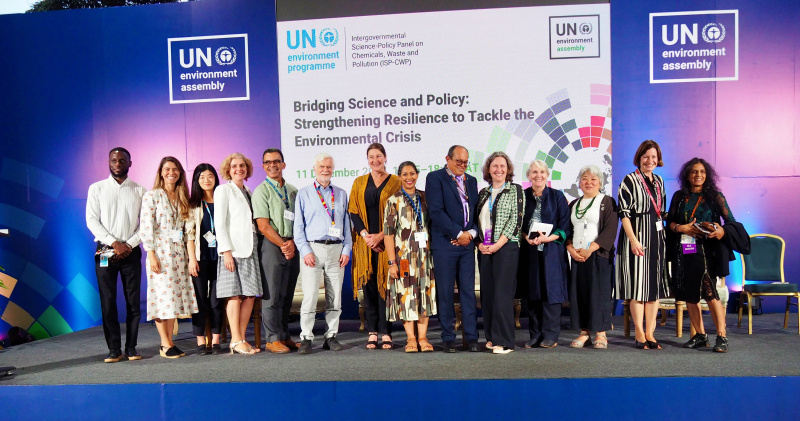
- Thursday, 11 December - 16h45-18h30 EAT: Associated event: Bridging Science and Policy: Strengthening Resilience to Tackle the Environmental Crisis
On 20 June 2025 in Punta del Este, Uruguay, the Intergovernmental Science-Policy Panel on Chemicals, Waste and Pollution (ISP-CWP) was established. The founding of this new global science-policy panel dedicated to the sound management of chemicals and waste and the prevention of pollution against a challenging geopolitical backdrop is major win for multilateralism. In a world that faces the escalating impacts of climate change, biodiversity loss and pollution, the new Panel joins the Intergovernmental Panel on Climate Change (IPCC) and the Intergovernmental Science-Policy Platform on Biodiversity and Ecosystem Services (IPBES) in addressing today’s global environmental challenges and crises through the strengthening of the science-policy interface.
With preparations underway for the first session of the ISP-CWP Plenary, that will take place from 2 – 6 February 2026 in Geneva, this side event will focus on relevant examples and experiences from IPCC and IPBES that the new Panel could build on and foster an early start of the work. It will also provide an opportunity to explore the potential for cooperation and collaboration between science-policy panels as well as with relevant Multilateral Environmental Agreements (MEAs). Finally, the event allows governments and stakeholders to share their expectations for the new Panel, identify synergies and highlight needs and priorities.
The expected outcomes of the event include:
- Relevant examples and experiences that can help expedite the work of the new ISP-CWP in the start-up phase are shared by other science-policy panels.
- Science-policy needs, priorities and expectations of the new Panel are shared by Governments and Multilateral Environmental Agreements.
- Opportunities to strengthen collaboration among science-policy bodies and with international organizations to find science-based solutions to the triple planetary crisis are identified.
This side event directly supports the UNEA-7 theme, “Advancing Sustainable Solutions for a Resilient Planet,” by fostering dialogue on the role of science-policy interfaces in addressing the environmental crises. By spotlighting the recently established Intergovernmental Science-Policy Panel on Chemicals, Waste and Pollution (ISP-CWP), and drawing examples from the IPCC and IPBES relevant to the Panel as well as experiences from other international organizations, the event highlights how robust frameworks can drive effective, science-based solutions to policy challenges grounded in local realities.
The discussion will empower governments, stakeholders and MEAs to contribute to strengthening science-policy interfaces that are responsive to real-world needs, enhance global cooperation, and support sustainable solutions for a resilient planet.
Moderator
- Andrea Hinwood - Chief Scientist, UNEP
Speakers
- H.E. Thierry Aartsen - Minister for the Environment and Public Transport, Kingdom of the Netherlands
- Inger Andersen - UN Under-Secretary-General and Executive Director, UNEP
- Monika Hencsey - Director, DG ENV, Green Diplomacy & Multilateralism, European Commission
- Ilka Hirt - Deputy Director General, International Policy, Germany's Environment Ministry
- Valentina Sierra - Second Secretary, Directorate of Environment, Ministry of Foreign Affairs of Uruguay
- Rolph Payet - Executive Secretary, Basel Rotterdam and Stockholm Conventions (BRS)
- Monika Stankiewicz - Executive Secretary, Minamata Convention on Mercury
- Haruko Okusu - Chief of the Governance Bodies Unit, CITES Secretariat
- David Obura - Chair, Intergovernmental Platform on Biodiversity and Ecosystem Services (IPBES)
- Prof. Jim Skea - Chair, Intergovernmental Panel on Climate Change (IPCC)
- Tessa Goverse - Principal Coordinator and Head of the Interim Secretariat, Intergovernmental Science-Policy Panel on Chemicals, Waste and Pollution
Official page
- Thursday, 11 December - 18h15-19h45 EAT: Official Side event: GEF State of Play and Next Cycle – Opportunities for Developing Countries, LDCs, and SIDS
Join senior representatives from across the GEF partnership as we present the state of play of the GEF-8 period, and provide a briefing on the strategic direction under negotiation for the Family of Funds for GEF-9.
This session will give countries an inside view on the current status of GEF-8, including the Integrated Programs, and direction of the GEF – from the GEF-9 Programming and Policy Directions and replenishment milestones, to the Least Developed Countries Fund and Special Climate Change Fund negotiations, and the road toward the 2026 GEF Assembly.
We’ll also share short updates on key decisions by major multilateral environmental agreements served by the GEF and what they mean for countries. A special focus will be placed on how LDCs and SIDS can stay closely engaged and make the most of support opportunities.
Moderator
- Sékou Touré - Advisor, GEF
Speakers
- Rolph Payet - Executive Secretary, Basel Rotterdam and Stockholm Conventions (BRS)
- Monika Stankiewicz - Executive Secretary, Minamata Convention on Mercury
- Jonathan Caldicott - Head, GEF Operations and Policy Division, GEF
- Chizuru Aoki - Head, GEF Division of the Multilateral Environmental Agreements
- Mohamed Bakarr - Head, Integration and Knowledge Division, GEF
Organizers: Global Environment Facility (GEF)
Official page